


Cover Crops for Pacific Northwest Gardens: Protect and Improve Your Soil Over Winter
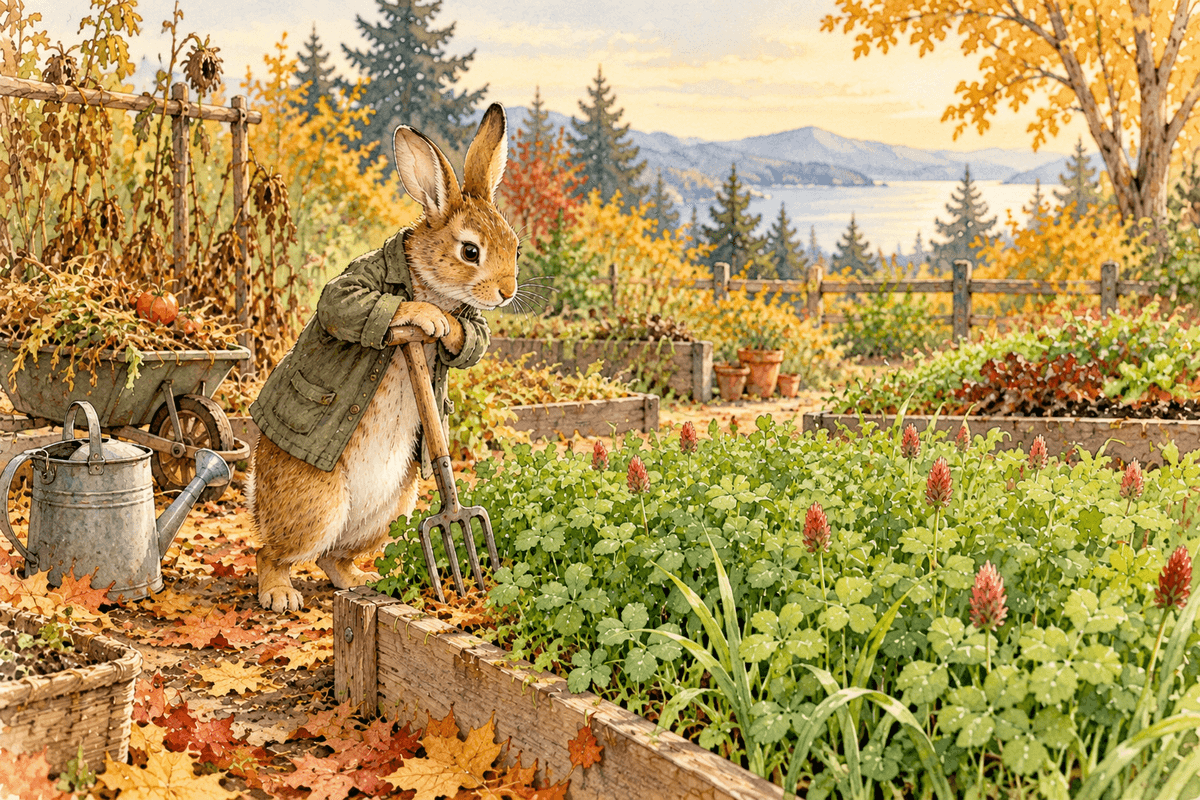
Your vegetable garden may be finished for the season, but the soil beneath it doesn't have to stop working.
The tomatoes have been pulled, the beans are finished, and the last of the summer squash has finally surrendered. Across the Pacific Northwest, vegetable gardens are beginning to look a little bare.
For many gardeners, autumn means clearing the beds, putting away the tools, and waiting for spring.
But there's another option.
Instead of leaving your soil exposed to months of Pacific Northwest rain, you can plant something that works quietly through the colder seasons, protecting and improving the ground beneath your feet.
These plants are called cover crops, and they're one of the simplest ways to build healthier garden soil naturally.
The best part? You don't need a farm, a tractor, or even a particularly large vegetable garden. A single raised bed is enough to get started.
What Are Cover Crops?
Cover crops are plants grown primarily for the benefits they provide to the soil rather than for harvesting.
Unlike tomatoes, carrots, or lettuce, their purpose isn't to end up on your dinner plate. Instead, they help protect the ground, capture nutrients, suppress weeds, and improve soil structure.
Some, particularly legumes such as clover and vetch, can even add nitrogen to the soil through a partnership with beneficial bacteria living in their roots.
When cover crops are cut down and allowed to decompose, they return organic matter to the garden.
This practice is sometimes called green manure, although technically that term refers to plant material grown and incorporated into the soil.
Think of cover crops as a living blanket for your vegetable beds.
And in the Pacific Northwest, where autumn and winter bring months of rain, that blanket can be particularly useful.
Why Cover Crops Are Especially Useful in the Pacific Northwest
Our relatively mild, wet winters create conditions that are both helpful and challenging for gardeners.
While some plants continue growing through winter, heavy rainfall can leave unprotected garden soil vulnerable to erosion, nutrient loss, and surface compaction.
Cover crops can help in several ways.
1. They Protect Soil From Heavy Rain
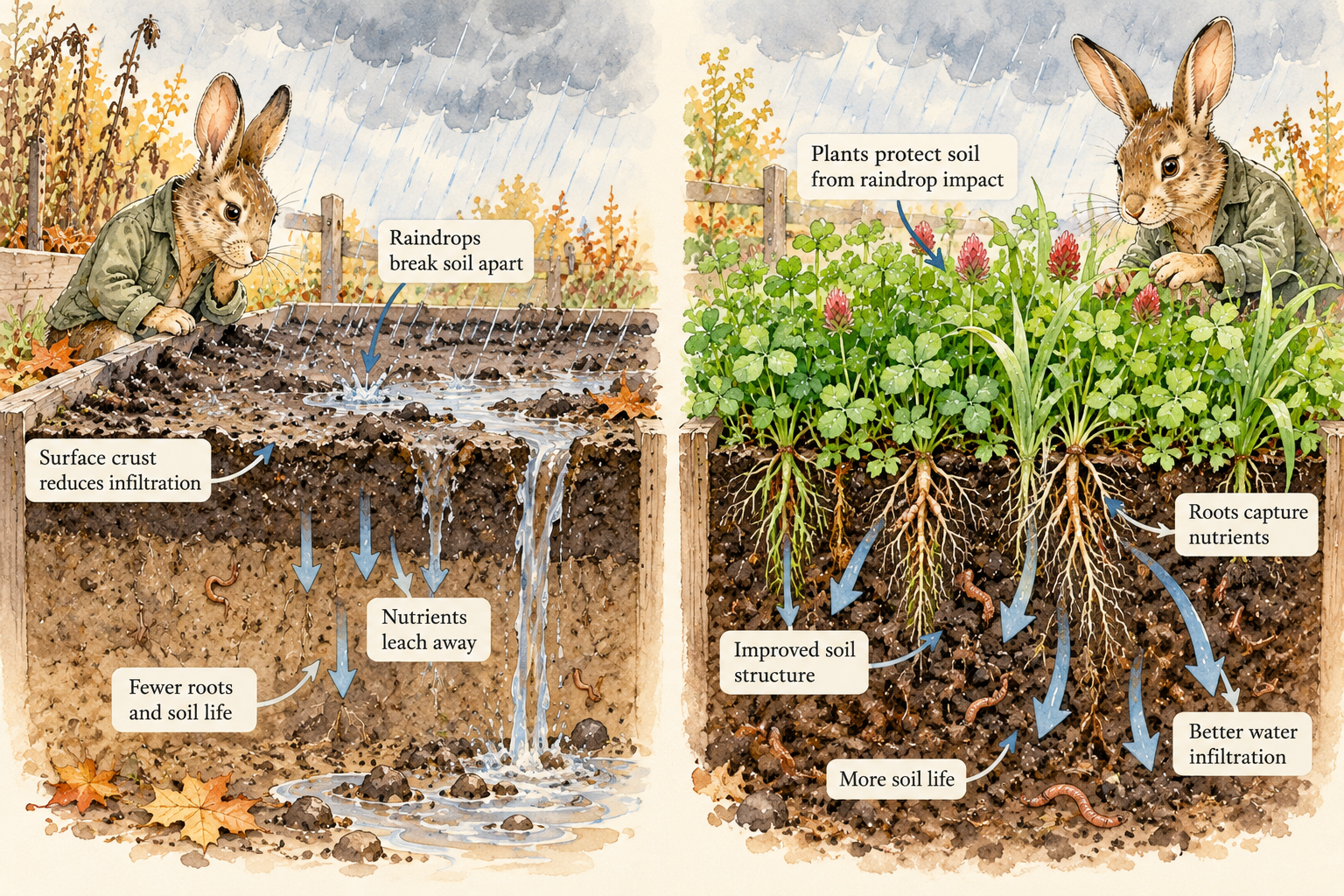
When raindrops strike bare soil, they can dislodge tiny soil particles, creating a crust on the surface.
Over time, this can reduce water infiltration and contribute to erosion.
Cover crop leaves intercept some of that rainfall, while their roots help hold soil in place.
2. They Capture Leftover Nutrients
After summer vegetables finish growing, nutrients can remain in the soil.
Winter rainfall can carry soluble nutrients, particularly nitrate, below the reach of plant roots.
Cover crops such as winter rye absorb some of these nutrients and hold them in their tissues until the plants decompose.
They don't necessarily create new nutrients, but they can help prevent existing ones from being lost.
3. They Improve Soil Structure
Healthy soil contains a network of tiny spaces that allow water and air to move between soil particles.
Cover crop roots contribute to this structure as they grow.
When those roots eventually die and decompose, they leave behind channels that can help water penetrate the soil.
Over time, repeated cover cropping can improve soil aggregation and resilience.
4. They Help Suppress Weeds
An empty garden bed is an invitation for weeds.
Cover crops occupy some of that space, competing with unwanted plants for light, water, and nutrients.
Dense-growing species, such as winter rye, are particularly useful for suppressing weeds.
However, cover crops aren't completely weed-proof, especially when planted too late to establish good growth.
5. Some Can Add Nitrogen Naturally
Legumes, including clover and vetch, form relationships with nitrogen-fixing bacteria in specialized root nodules.
These bacteria convert atmospheric nitrogen into forms the plants can use.
When the cover crop decomposes, some of that nitrogen may eventually become available to subsequent crops.
It's worth remembering that nitrogen fixation depends on suitable soil conditions and the presence of compatible bacteria. Not every legume will fix substantial amounts of nitrogen in every garden.
The Best Cover Crops for Pacific Northwest Vegetable Gardens
Not all cover crops behave the same way.
Some survive winter and resume growing in spring. Others are killed by freezing temperatures, leaving their dead leaves and stems to protect the soil.
Some are particularly good at capturing nutrients, while others are better at supplying nitrogen.
Here are five useful options for gardens in western Washington and Oregon.
1. Crimson Clover (Trifolium incarnatum)
Best for: Adding nitrogen, supporting pollinators, and improving soil.
Crimson clover is one of the prettiest cover crops you can grow.
In spring, it produces upright, deep-red flower heads that attract bees and other pollinators.
As a legume, it can also fix atmospheric nitrogen through its root bacteria.
When to plant: Generally late August through September in western Washington, with earlier sowing preferable in cooler locations.
Winter survival: Often survives mild coastal winters, although severe freezes can damage it.
What to do in spring: Cut it down before mature seeds form. If you want the flowers for pollinators, allow some plants to bloom, but be prepared to manage the additional growth.
One thing to know: Crimson clover needs time to establish before winter. October sowing is less reliable, especially in colder or poorly drained gardens.
2. Winter Cereal Rye (Secale cereale)
Best for: Protecting soil, capturing nutrients, and suppressing weeds.
If you're looking for a dependable winter cover crop, cereal rye is difficult to beat.
It germinates in relatively cool conditions, tolerates cold weather, and develops a substantial root system.
Its vigorous growth makes it especially effective at capturing leftover soil nitrogen.
When to plant: September through October is a common window in mild western Washington gardens. Later sowing may be possible, but establishment becomes less reliable as temperatures fall.
Winter survival: Very winter-hardy.
What to do in spring: Terminate it before it produces viable seed and manage the residue before planting vegetables.
One thing to know: Winter rye can grow rapidly in spring and become surprisingly difficult to remove.
For small raised beds, this may be more work than expected.
Also, make sure you're buying cereal rye, not annual ryegrass. They're different plants with different management requirements.
3. Oats (Avena sativa)
Best for: Beginners and gardeners who want an easier spring cleanup.
Oats are an excellent introduction to cover cropping.
They grow quickly when planted in late summer or early autumn, producing foliage that helps protect the soil.
In colder winters, oats are often killed by freezing temperatures.
The dead plants then remain on the soil surface as a natural mulch.
When to plant: Ideally August through early September, allowing enough time for substantial growth before winter.
Winter survival: Frequently winterkills, although survival varies with winter temperatures and location.
What to do in spring: If the oats have died, leave the residue as mulch or move it aside to create planting rows.
One thing to know: Oats planted too late may produce very little growth before winter.
They are not a dependable October option in much of western Washington.
4. Hairy Vetch (Vicia villosa)
Best for: Nitrogen fixation and producing organic matter.
Hairy vetch is a vigorous, climbing legume that can produce a considerable amount of foliage.
Its purple flowers are attractive to pollinators, and its ability to fix nitrogen makes it useful before nitrogen-hungry vegetables.
It is sometimes grown alongside cereal rye, which provides support for its climbing stems.
When to plant: Late summer through early fall, ideally early enough to establish before cold weather.
Winter survival: Generally winter-hardy once established.
What to do in spring: Cut down or otherwise terminate the vines before seed production.
One thing to know: Hairy vetch can be difficult to manage in a small garden. It may regrow after cutting and can self-seed if allowed to mature.
For beginners with small raised beds, crimson clover or oats may be easier choices.
5. Forage Radish (Raphanus sativus var. longipinnatus)
Best for: Developing deep roots and capturing nutrients.
Sometimes sold as tillage radish or daikon-type cover crop radish, this plant develops a substantial taproot.
Those roots can help create channels through certain compacted soil layers.
When winter temperatures are sufficiently cold, the plants die and the roots begin decomposing.
When to plant: Usually August through early September for good root development.
Winter survival: Often winterkills in colder locations but may survive mild coastal winters.
What to do in spring: If winterkilled, allow the roots and remaining foliage to decompose. Remove or terminate surviving plants before they set seed.
One thing to know: Decomposing forage radishes can produce a noticeable smell.
They also belong to the brassica family, so consider your vegetable crop rotation if you grow cabbage, broccoli, kale, or related crops.
Quick Comparison: Which Cover Crop Should You Choose?
Cover crop | Main benefit | Best planting period | Spring effort |
|---|---|---|---|
Crimson clover | Nitrogen fixation | Aug–Sep | Moderate |
Winter cereal rye | Soil protection and nutrient capture | Sep–Oct | Higher |
Oats | Easy winter mulch | Aug–early Sep | Low if winterkilled |
Hairy vetch | Nitrogen fixation | Aug–Sep | Higher |
Forage radish | Root channels and nutrient capture | Aug–early Sep | Low if winterkilled |
These are general planting windows for mild western Washington and Oregon gardens. Local temperatures, elevation, drainage, and the arrival of cold weather can shift the ideal dates.
My recommendation for beginners: Start with oats if you're planting early enough in fall, or consider crimson clover where you can establish it before winter. If you're planting in October, winter cereal rye is often the more practical living-cover option, provided you're comfortable managing its spring growth.
When Should You Plant Cover Crops in the Pacific Northwest?
Timing matters more than many gardeners realize.
Most cover crops need to establish a reasonable root system before colder temperatures and shorter days slow their growth.
A plant that germinates in September may have several weeks of productive growth ahead of it.
The same plant sown in November may barely establish before winter.
August to Early September
This is an excellent time for many fall cover crops.
Oats, crimson clover, forage radish, and hairy vetch all benefit from an early start.
If a summer crop has already finished, consider planting a cover crop immediately rather than waiting for the entire vegetable garden to be cleared.
Mid-September to Early October
Winter cereal rye becomes an increasingly useful option as temperatures cool.
Some legumes may still establish in mild locations, but their performance becomes less predictable.
Mid-October to November
By this point, the choices narrow.
Winter rye may still germinate and establish in mild, coastal gardens, particularly if soil temperatures remain favorable.
However, germination alone doesn't guarantee meaningful winter soil protection.
If the weather has turned cold and wet, or your beds are already saturated, a layer of shredded leaves, straw, or finished compost may be the better choice.
A useful rule: Don't plant a cover crop simply because the calendar says you can. Plant it when there's still enough growing season left for it to do some good.
How to Plant Cover Crops in Five Easy Steps
You don't need specialized equipment.
For most backyard vegetable gardens, a rake, some seeds, and a watering can are enough.
Step 1: Clear the Bed
Remove finished vegetable plants, especially those showing signs of serious disease.
Healthy plant material can be composted.
There's no need to strip the soil completely bare or remove every old root. Roots left in the ground can contribute organic matter as they decompose.
Step 2: Prepare the Surface
Lightly loosen or rake the top layer of soil if necessary.
Avoid deep digging, particularly when the ground is wet.
The goal is simply to create enough contact between the seeds and the soil for germination.
Step 3: Scatter the Seeds
Broadcast the seed evenly across the bed.
Use the seeding rate recommended for the particular species and the size of your garden.
More seed isn't always better. Overcrowding can create weak plants and waste money.
Step 4: Cover the Seeds Lightly
Most cover crop seeds need some soil contact and a suitable planting depth.
Small seeds such as clover generally need shallower covering than larger cereal grains.
Follow the seed packet instructions, then gently firm the soil.
Step 5: Water Until Established
Keep the seedbed consistently moist during germination.
In the Pacific Northwest, autumn rain often takes care of much of this work.
However, early fall can still be surprisingly dry, so check the soil rather than assuming nature has everything under control.
Once established, many winter cover crops require little additional care.
Can You Grow Cover Crops in Raised Beds?
Absolutely.
In fact, raised beds are a great place to experiment because they're small enough to manage by hand.
A four-by-eight-foot raised bed can support a useful cover crop.
However, the smaller the bed, the more important it becomes to choose a species that's easy to remove in spring.
For example, winter cereal rye may be excellent at protecting soil, but its dense root system and vigorous spring growth can make it challenging to manage without digging.
Oats that winterkill are often simpler.
You can also grow a cover crop in just one raised bed and compare the results with a neighboring bed protected by mulch.
It's a useful little gardening experiment.
What Do You Do With Cover Crops in Spring?
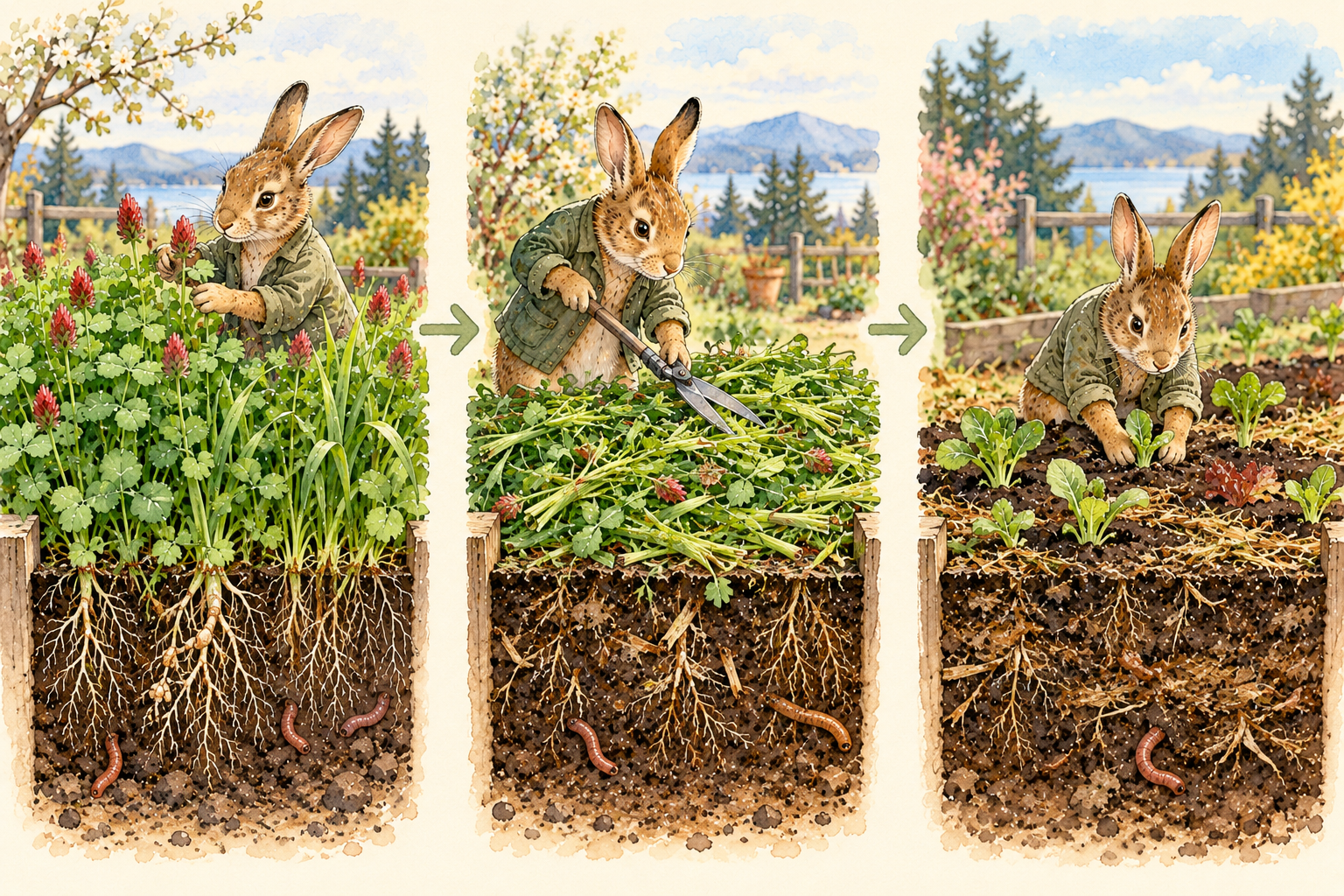
This is the part that sometimes catches new gardeners by surprise.
Planting cover crops is relatively straightforward.
Managing them before the next growing season requires a little planning.
The approach depends on whether your cover crop survived winter.
If the Cover Crop Died Over Winter
Winter-killed oats and forage radishes often leave behind plant residue.
You can usually leave this material on the soil surface to continue decomposing.
When you're ready to plant, simply move the residue aside where necessary.
There's generally no need to dig it all into the soil.
If the Cover Crop Is Still Growing
Overwintering crops such as cereal rye, crimson clover, and hairy vetch need to be terminated before the next vegetable crop is planted.
You may be able to cut plants down with garden shears, a string trimmer, or other hand tools.
But here's an important distinction:
Cutting a cover crop down doesn't always kill it.
Winter rye cut while still young may regrow. Hairy vetch can also survive cutting.
Some cover crops are easier to terminate after reaching a particular growth stage, while others may require repeated cutting, digging, tarping, or another management method.
For a small vegetable bed, choose a method that reliably kills the plants without creating unnecessary soil disturbance.
How Long Should You Wait Before Planting Vegetables?
A common starting point is to allow roughly two to four weeks between successful cover crop termination and planting, particularly when dealing with substantial residues.
However, the necessary interval depends on the species, the amount of plant material, soil temperature, and the vegetables you're planning to grow.
Cereal rye deserves particular attention because fresh residues can temporarily affect nitrogen availability and inhibit the germination or early growth of some small-seeded crops.
If you're planning early spring carrots, lettuce, or other direct-sown vegetables, a vigorous rye cover crop may complicate your schedule.
That brings us to an important question.
Cover Crops or Mulch: Which Is Better?
Cover crops have plenty of benefits, but they aren't always the best solution for every garden.
Sometimes, a simple layer of organic mulch is the more practical choice.
Cover crops | Organic mulch |
|---|---|
Living roots can support soil structure | Protects soil without living plants |
Some species fix nitrogen | Adds organic matter as it decomposes |
Can capture leftover soil nutrients | Reduces erosion and surface crusting |
May suppress weeds through competition | Blocks light from reaching weed seeds |
Often requires spring termination | Usually easier to manage before planting |
If you have a large vegetable garden with beds that won't be planted until late spring, cover crops can be an excellent investment.
If you have a few small raised beds that you want to plant with lettuce and peas in March, mulch may be more convenient.
And there's nothing wrong with using both approaches in different parts of the garden.
The real goal isn't to grow cover crops everywhere. It's to keep your soil protected and healthy.
Five Common Cover Crop Mistakes to Avoid
1. Planting Too Late
A cover crop that barely germinates before winter won't provide the same protection as one that has established substantial growth.
Choose species appropriate for your planting window.
2. Letting Plants Produce Mature Seeds
Some cover crops can become persistent volunteers if allowed to set seed.
Terminate them before viable seeds develop.
3. Choosing a Crop That's Difficult to Remove
Winter rye and hairy vetch can be wonderful soil-building plants, but they're not necessarily the easiest choices for small gardens.
Consider spring management before sowing.
4. Working Wet Soil
Pacific Northwest soil can become saturated during winter and early spring.
Digging, tilling, or walking on wet beds can damage soil structure.
Wait until the soil is workable.
5. Forgetting About Crop Rotation
Cover crops belong to botanical families, just like vegetables.
Forage radish is a brassica, for example, and may share some pests and diseases with cabbage, kale, and broccoli.
Consider the crops you're planning to grow next before choosing a cover crop.
Frequently Asked Questions About Cover Crops
- Do cover crops need fertilizer?
Often, they don't require much additional fertilizer when grown after a well-fertilized vegetable crop.
In fact, one purpose of cover cropping is to capture nutrients already present in the soil.
However, growth may be poor in severely nutrient-deficient soil. A soil test can help determine whether amendments are needed.
- Can I mix different cover crops together?
Yes.
Mixtures can combine different benefits, such as the nitrogen fixation of legumes and the nutrient capture of grasses.
Winter rye and hairy vetch are one common combination.
However, mixtures can also complicate spring management, especially when the species mature or terminate at different times.
For beginners, a single species is often easier.
- Will cover crops attract pests?
They can provide habitat for both beneficial organisms and unwanted pests.
Dense vegetation may shelter slugs in our wet climate, and certain species can host pests or diseases that also affect vegetable crops.
This doesn't mean cover crops should be avoided, but it's worth monitoring beds and considering crop rotation.
- Can I leave cover crops growing all year?
You can maintain living cover in some areas, but annual vegetable beds usually need space for the next crop.
If you allow a cover crop to grow indefinitely, it may compete with vegetables or produce seeds.
For pathways, orchard areas, or permanent garden spaces, perennial groundcovers may be more appropriate.
- Can I just use fallen leaves instead?
Absolutely.
Shredded autumn leaves make an excellent protective mulch.
They help shield soil from rainfall, moderate temperature changes, and gradually contribute organic matter as they decompose.
If it's too late to establish a cover crop, leaves are often one of the easiest and most affordable alternatives.
- Do cover crops replace compost?
Not entirely.
Cover crops and compost perform overlapping but different roles.
Cover crops provide living roots and plant biomass, while finished compost contributes decomposed organic matter and nutrients.
Using both, where appropriate, can be beneficial.
A Simple Cover Crop Plan for a Pacific Northwest Garden
If you're new to cover crops, there's no need to transform your entire vegetable garden at once.
Start small.
If it's August or early September: Try oats in a raised bed that has finished producing vegetables. In a cold enough winter, they'll die naturally and leave behind a layer of organic material.
If it's September: Consider crimson clover for a bed that won't be needed until later in spring, or winter rye where stronger winter soil protection is the priority.
If it's October: Winter cereal rye may still be an option in mild western Washington gardens. If temperatures are falling and the soil is becoming saturated, protect the bed with mulch instead.
If it's November or later: Focus on covering exposed soil with shredded leaves, straw, or compost rather than trying to establish a late cover crop.
In spring, observe what happened.
Did the cover crop survive? Was the soil easier to work? Did weeds appear? How difficult was it to prepare the bed for planting?
These observations will help you decide what works best in your particular garden.
The Garden Doesn't Really Sleep
There's something satisfying about the idea of a garden resting through winter.
The tools are put away, the beds are quiet, and the rain settles in for its long Pacific Northwest visit.
But the soil isn't really sleeping.
Beneath the surface, roots are decomposing, microorganisms are processing organic matter, and countless small interactions continue shaping the ground that will support next year's plants.
Cover crops give us a way to participate in that process without demanding a harvest.
Sometimes the best thing we can grow isn't something we'll eat or admire in a vase.
Sometimes it's simply healthier soil.
And come spring, that's a harvest worth having.
Gardening in the Pacific Northwest? Explore The Odd Garden's Pacific Northwest Gardening Calendar for more seasonal planting advice, garden maintenance tips, and practical ideas for growing in Zones 8a–8b.
Further Reading
For regional cover cropping recommendations, research, and species-specific planting guidance, consult:
Related reads
A few more posts that pair well with this one.
What to Plant in June in Washington State (PNW Guide)
→A simple guide to what to plant in June in Washington State. Vegetables, flowers, herbs, and succession planting tips for Pacific Northwest gardens.
What to Plant in March in Washington State (PNW Gardening Guide)
→Wondering what to plant in March in Washington State? A practical Pacific Northwest gardening guide covering vegetables, flowers, herbs, and trees you can plant now — indoors and out.
Pacific Northwest Gardening Calendar (Zone 8a–8b)
→A month-by-month Pacific Northwest gardening calendar for Zone 8a–8b. What to plant, prune, and watch for in real PNW conditions.
Not finding the answers?
Have a gardening question or topic you'd like me to write about? Send a request and I'll see what I can dig up.
Enjoying this post?
If you love the whimsy and want to support more PNW garden guides, you can buy me a coffee.
🌼 Buy Me a Coffee