
Learning the Garden by Studying the Wild
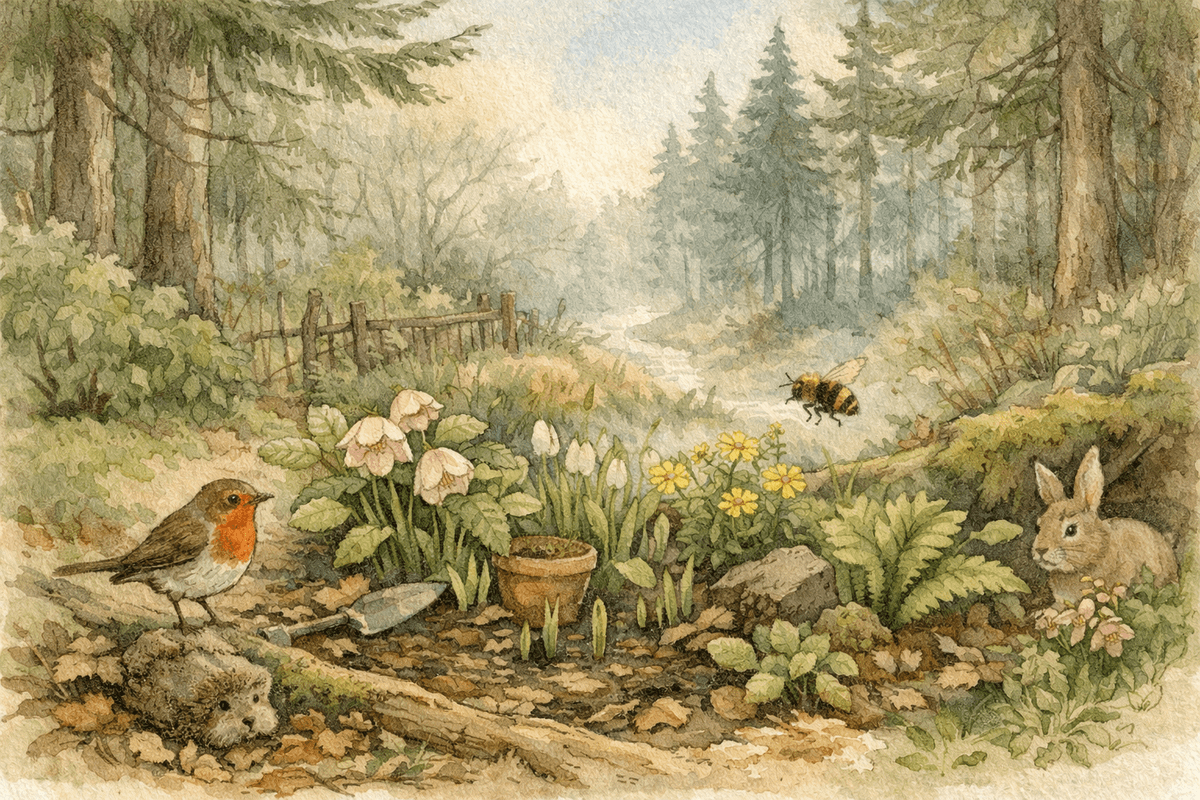
One of the most powerful ways to become a better gardener isn’t found in a seed catalog, a trending plant list, or a perfectly timed fertilizer schedule—it’s found just beyond the garden gate.
Here in the Pacific Northwest, the land is constantly offering lessons to anyone willing to slow down and pay attention. Forest edges, damp ravines, meadows, shorelines, and even roadside ditches are living classrooms. They show us how plants want to grow, how they support one another, and how life unfolds when it isn’t overly managed or controlled.
When we observe the wild closely, patterns begin to emerge. We notice how towering conifers create cool, protected understories where ferns, mosses, and woodland perennials thrive. We see how fallen leaves become mulch, how decaying wood becomes habitat, how water lingers in low places and drains quickly from slopes. We notice when things look lush—and when they struggle.
These same patterns exist in our gardens, whether we acknowledge them or not.
When we fight them—planting sun-loving species in deep shade, demanding thirsty plants survive dry summers, or stripping the soil bare—we often end up frustrated. But when we learn from the wild, gardening becomes less about control and more about collaboration.
That’s why I’m so drawn to the work of Northwest Natura.
Their focus on understanding local wild spaces—native plants, regional ecology, and the animals that depend on them—offers gardeners something far more valuable than quick fixes: context. By learning how ecosystems function here, in this place, we gain insight into why certain plants flourish effortlessly while others require constant intervention.
Understanding native flora helps us choose plants that are already adapted to our soils, rainfall patterns, and seasonal rhythms. Learning about local fauna—pollinators, birds, amphibians, insects—reveals how deeply interconnected our gardens are with the surrounding landscape. A garden doesn’t exist in isolation; it’s part of a larger living network.
When we garden with this awareness, small shifts make a big difference:
We stop seeing fallen leaves as mess and start seeing them as nourishment
We allow seed heads to remain through winter, knowing birds rely on them
We design gardens with layers, shelter, and continuity rather than empty gaps
We accept a bit of wildness as a sign of life, not neglect
Over time, gardens shaped by ecological understanding become more resilient. They need less water, fewer inputs, and less correction. They change with the seasons instead of fighting them. They invite birds, bees, and beneficial insects to stay—not just pass through.
Most importantly, they feel alive.
The wild reminds us that beauty doesn’t come from perfection. It comes from balance, diversity, and relationship. When we carry those lessons home—into our backyards, balconies, and community spaces—we stop trying to recreate gardens from somewhere else and instead grow gardens that belong here.
If you’re curious about native plants, regional ecosystems, or simply want to see the landscape around you with new eyes, I highly recommend exploring https://www.northwestnatura.com/
Because the more we learn from the wild spaces around us, the better gardeners—and caretakers—we become.
Related reads
A few more posts that pair well with this one.
The Garden Is Not Sleeping: What’s Actually Happening in January
→Your garden isn’t asleep in January. Discover the quiet work happening underground, from roots and buds to soil life and winter wildlife.
The Winter Witch: Why Witch Hazel Deserves a Place in Every PNW Garden
→Discover the quiet winter magic of witch hazel — a fragrant, cold-season bloomer that brightens the PNW garden and supports wildlife when it needs it most.
The PNW Winter Bird Buffet: Planting Food When the Garden Sleeps
→Create a winter wildlife sanctuary in your PNW garden. Discover the best plants for feeding birds with berries, seeds, and shelter from December to spring.
Not finding the answers?
Have a gardening question or topic you'd like me to write about? Send a request and I'll see what I can dig up.
Enjoying this post?
If you love the whimsy and want to support more PNW garden guides, you can buy me a coffee.
🌼 Buy Me a Coffee