
Why Is My Lawn Turning Brown in Summer? (Pacific Northwest Guide)
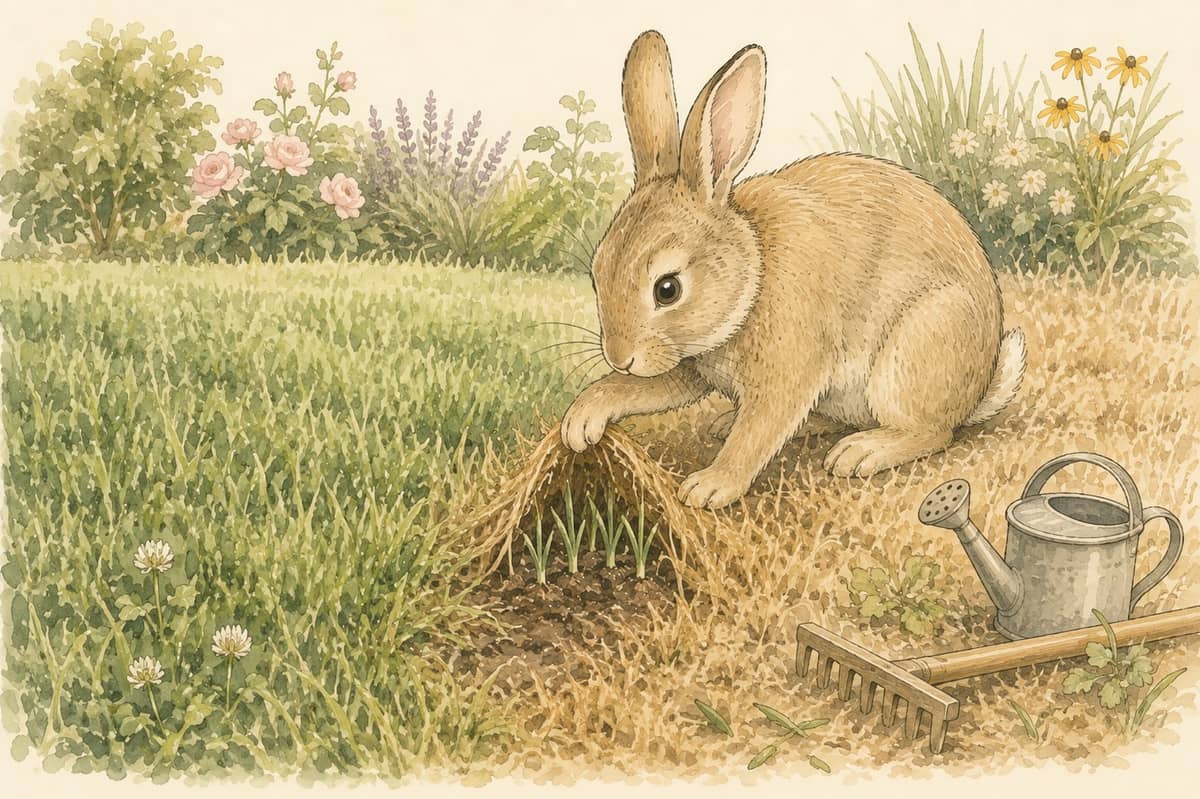
Every summer, it happens across the Pacific Northwest.
A lawn that looked lush and green in May suddenly turns patchy, dry, or completely brown by August. It's easy to assume the grass has died—but in many cases, it's simply taking a summer nap.
If you live in western Washington or western Oregon, there's a good chance your lawn is made up of cool-season grasses such as perennial ryegrass, tall fescue, or Kentucky bluegrass. These grasses naturally slow down or go dormant during prolonged heat and dry weather to conserve energy.
The good news? A brown lawn isn't always a dead lawn.
Why lawns turn brown
1. Summer dormancy (most common)
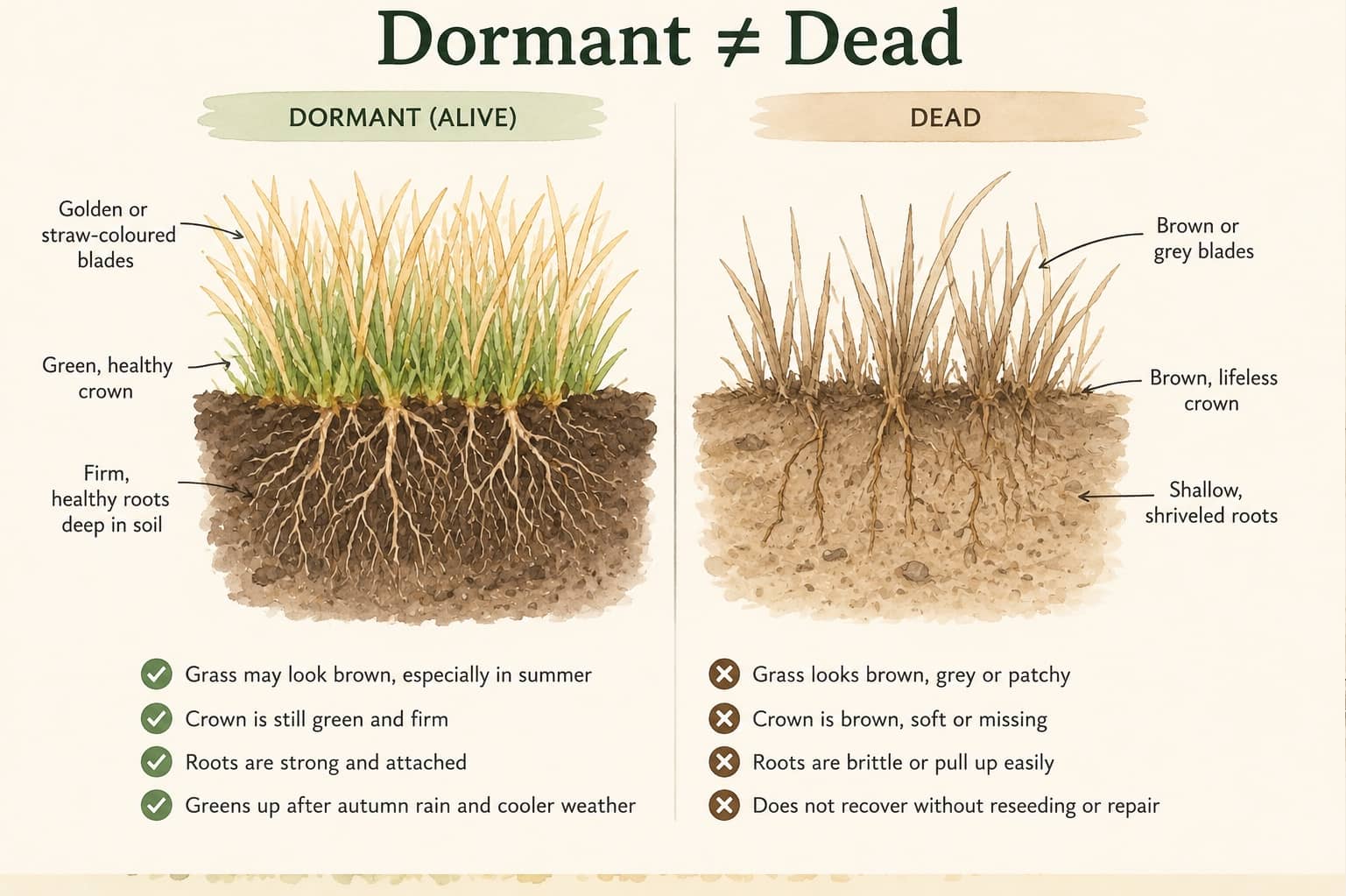
During extended hot, dry weather, cool-season grasses reduce growth and allow their blades to turn brown while keeping the crown and roots alive.
This is completely normal.
Once autumn rain returns, most healthy lawns green up again within a couple of weeks.
2. Not enough water
If drought continues for many weeks, grass may begin to suffer.
Signs include:
footprints remain visible
curled leaf blades
brittle grass
soil pulling away from edges
Deep watering once or twice a week is far better than daily sprinkling.
3. Mowing too short
Cutting grass too low removes the leaf area that shades the soil.
This causes:
faster evaporation
hotter soil
shallower roots
increased drought stress
Raise your mower during summer.
4. Dog urine
Small circular patches with dark green edges usually point to dog damage rather than drought.
5. Lawn diseases
Although less common during dry weather, fungal diseases can also create brown patches.
If the patches spread rapidly or show rings or unusual discoloration, investigate further.
Dormant or dead?
Should you water?
You have two options.
Let it go dormant
Perfectly acceptable.
Provide around ½–1 inch of water every 3–4 weeks to keep the crowns alive during extended dry spells.
Keep it green
Water deeply once or twice a week.
Aim for about 1 inch of water per week, including rainfall.
Avoid light daily watering.
Should you fertilize?
No.
Avoid fertilizing during hot weather.
The best time to fertilize lawns in the Pacific Northwest is early autumn when cooler temperatures return and grass begins actively growing again.
Should you mow?
Yes—but mow high.
Recommended mowing heights:
Tall fescue:
3–4 inches
Perennial ryegrass:
2.5–3.5 inches
Kentucky bluegrass:
2.5–3 inches
Never remove more than one-third of the blade at a time.
Five things to do in August
Raise your mower.
Water deeply if keeping the lawn green.
Leave clippings on the lawn.
Avoid fertilizing.
Plan overseeding for September.
When will it recover?
For most western Washington and western Oregon lawns, recovery begins with the first consistent autumn rain, usually during September or October.
As temperatures cool and soil moisture returns, dormant lawns often green up surprisingly quickly.
Related reads
A few more posts that pair well with this one.
What to Plant in August (Zone 8a & 8b Pacific Northwest Guide)
→Discover what to plant in August in the Pacific Northwest (Zone 8a & 8b). Find the best vegetables, herbs, and flowers to sow now for autumn and winter harvests.
What to Plant in May in Washington State (PNW Guide)
→May is prime planting time in Washington gardens. Here’s what to plant now in the PNW—vegetables, flowers, and tips for a successful growing season.
What to Plant in April in Washington State
→Not sure what to plant in April in Washington? Here’s a simple guide to vegetables, flowers, and seeds to start now in the Pacific Northwest.
Not finding the answers?
Have a gardening question or topic you'd like me to write about? Send a request and I'll see what I can dig up.
Enjoying this post?
If you love the whimsy and want to support more PNW garden guides, you can buy me a coffee.
🌼 Buy Me a Coffee