

Filling In Your Garden (Without Overplanting It)
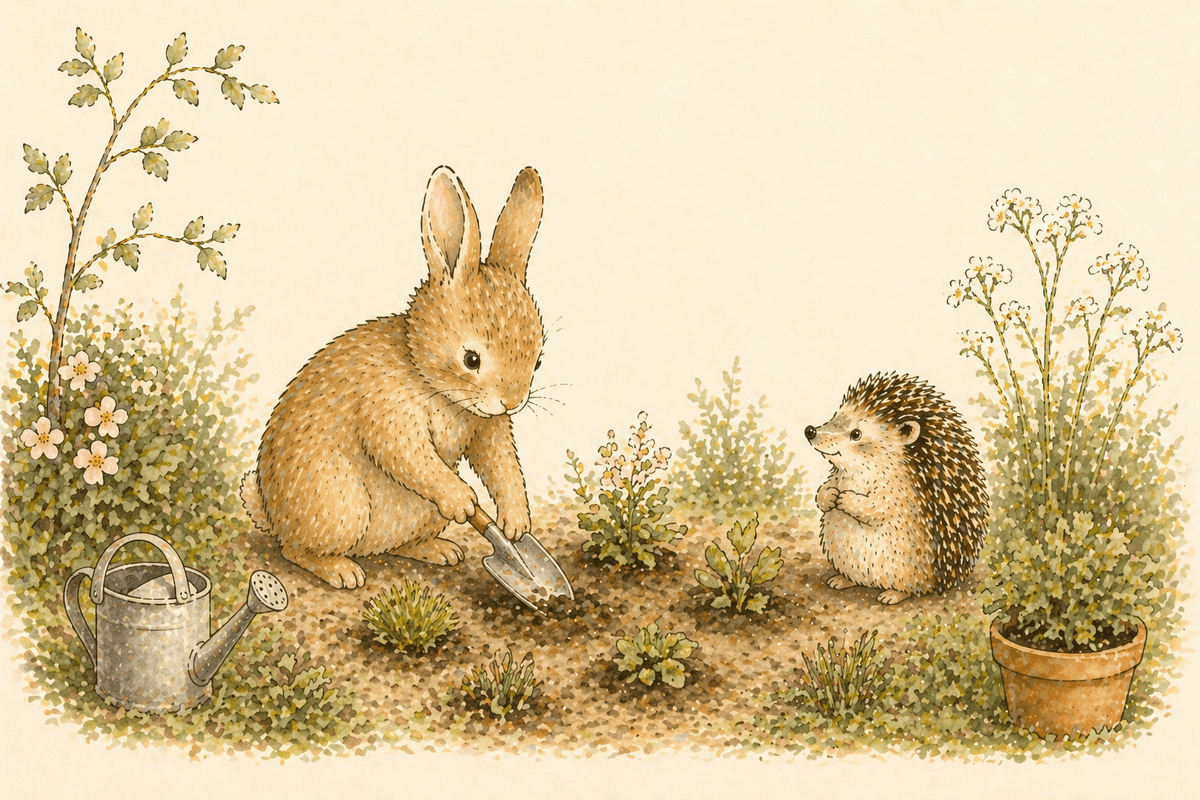
There’s a moment where your garden suddenly feels… unfinished.
You’ve got:
your paths
your edges
your anchor plants
And then there are all these empty spaces.
It’s tempting to fix that quickly.
“I just need more plants.”
So you add a few here.
A few there.
Maybe a whole tray, just to be safe.
And for a little while, it looks full.
But a season later?
Everything is competing.
Crowded.
A bit chaotic.
The Shift That Makes This Easy
Instead of trying to fill space…
Start thinking about softening space.
You’re not packing things in.
You’re:
connecting
blending
easing transitions
The goal isn’t “more plants”
It’s “better relationships between plants”
Step 1: Work Around Your Anchors
Look at your tree or shrub.
That’s your starting point.
Now ask:
What sits in front of it?
What fills the space beside it?
What softens the edges around it?
You’re building outward—not randomly placing things.
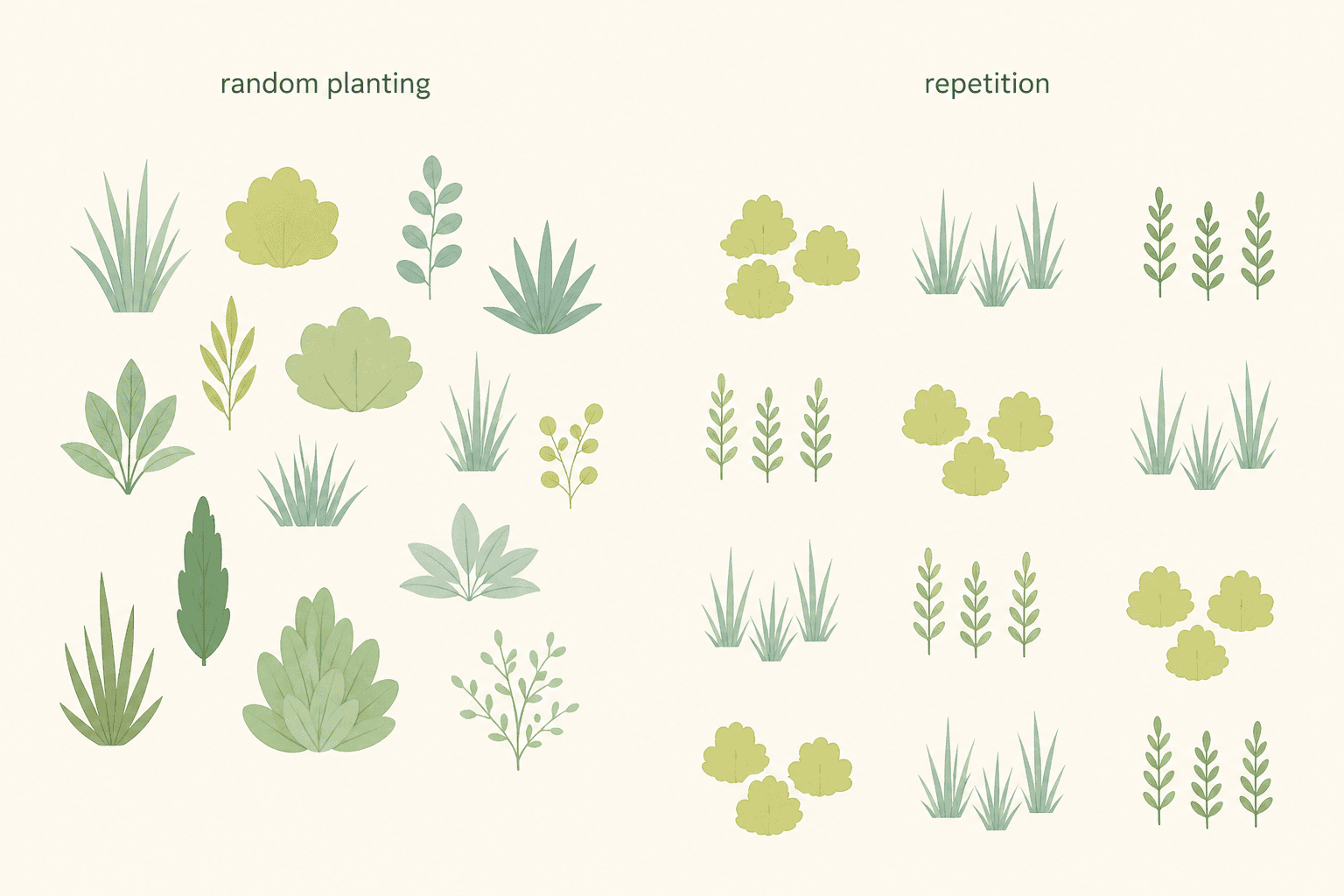
Step 2: Use Repetition (This is the secret)
Most beginner gardens feel messy because every plant is different.
Try this instead:
Pick:
2–3 main plants
repeat them in small groups
This creates:
rhythm
calm
a sense that everything belongs
Step 3: Think in Drifts, Not Dots
Avoid:
single plants scattered everywhere
Instead:
small clusters
loose shapes
gentle curves
Plants should feel like they belong together.

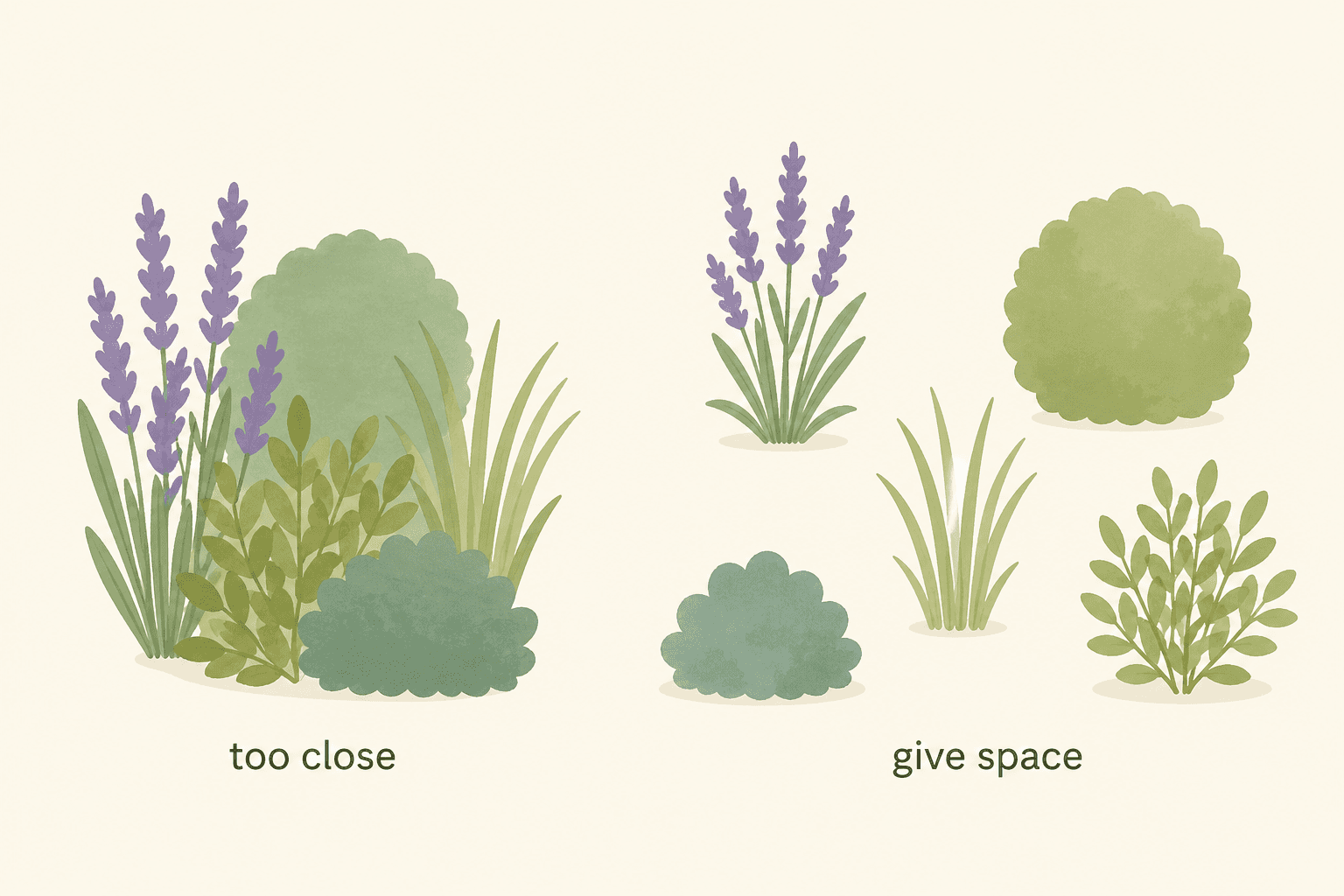
Step 4: Leave Space (Again)
This will feel familiar.
Because it matters again here.
Even when filling in:
don’t plant edge-to-edge
let soil show
let shapes breathe
A garden that has space will always feel more natural than one that is packed full.
A Simple Way to Check Yourself
Stand back and ask:
Does this feel calm or busy?
Can I see shapes, or just plants?
Is there repetition, or randomness?
What Comes Next
In the next post, we’ll look at the final layer:
The details.
seasonal interest
color
small touches that bring everything to life
A Gentle Reminder
You don’t need to finish your garden in one go.
Add a few plants.
See how they grow.
Adjust as you go.
That’s how a garden becomes something you actually enjoy 🌿
Related reads
A few more posts that pair well with this one.
Garden Design for Beginners
→A step-by-step series to help you move from an empty space to a garden that works—covering planning, structure, planting, and the final details.
Why Your Garden Needs Structure Before Plants
→A beautiful garden doesn’t start with plants—it starts with structure. Discover how to shape your space first so everything else falls into place.
Garden Mistakes I Still Make Every June
→Even experienced gardeners make mistakes. Here are the common June gardening mistakes I still catch myself making in the Pacific Northwest—and what I'm trying to do differently.
Not finding the answers?
Have a gardening question or topic you'd like me to write about? Send a request and I'll see what I can dig up.
Enjoying this post?
If you love the whimsy and want to support more PNW garden guides, you can buy me a coffee.
🌼 Buy Me a Coffee