

The Final Layer: Color, Seasons, and Making It Yours
By now, your garden has shape.
You’ve:
decided what you want
understood your space
created structure
placed your anchors
started filling things in
And something important has happened.
It no longer feels overwhelming.
It feels like a garden.
The Last Layer Isn’t Structure
It’s not paths.
It’s not layout.
It’s not even the big plants.
It’s the part that makes your garden feel alive:
color
seasonal change
small details
This is where your garden starts to feel like yours.
Step 1: Think Beyond One Moment
It’s easy to design a garden that looks good once.
Spring, maybe.
Or the day you plant it.
But gardens change.
So instead of asking:
“What looks good now?”
Ask:
“What happens here across the year?”
What blooms in spring?
What carries through summer?
What still looks good in autumn?
What holds the space in winter?
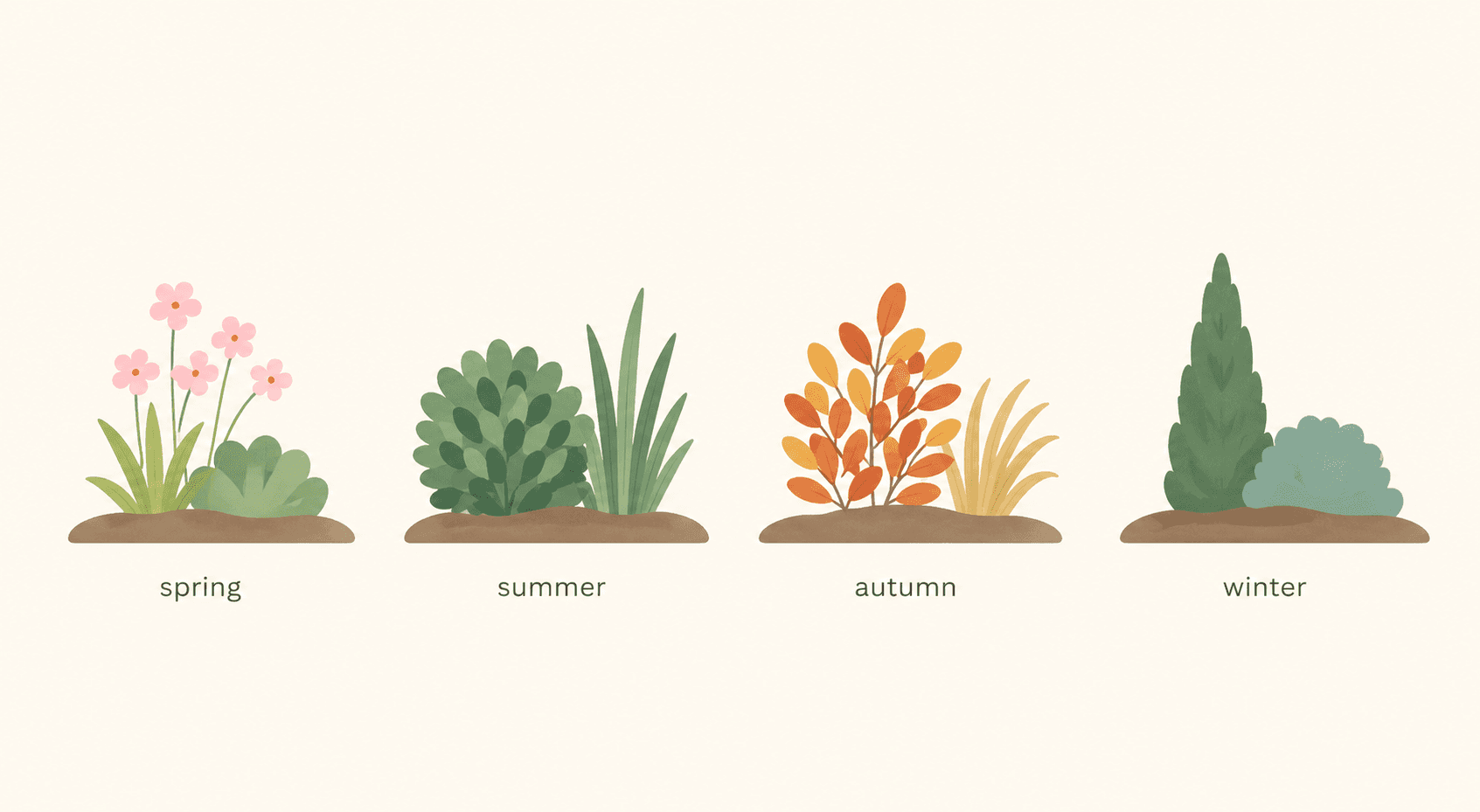
A Simple Way to Plan Seasons
You don’t need a complicated chart.
Just aim for:
something blooming early
something at its best in summer
something that holds into autumn
something that stays through winter
It doesn’t have to be perfect.
Just intentional.
Step 2: Use Color Gently
This is where it’s easy to go too far.
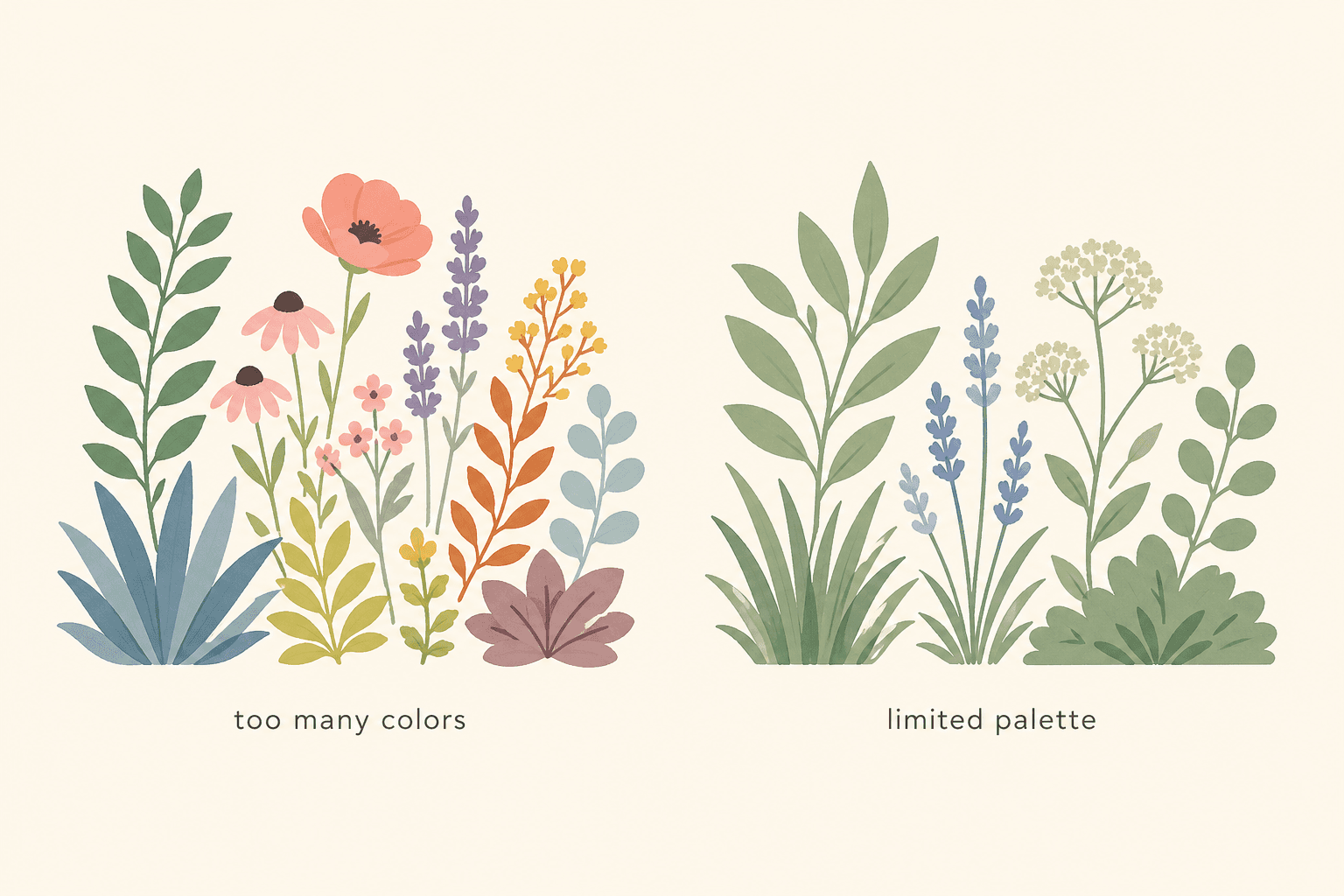
Too many colors…
Too many contrasts…
And suddenly the garden feels busy again.
Try this instead:
pick a small color palette
repeat it across the space
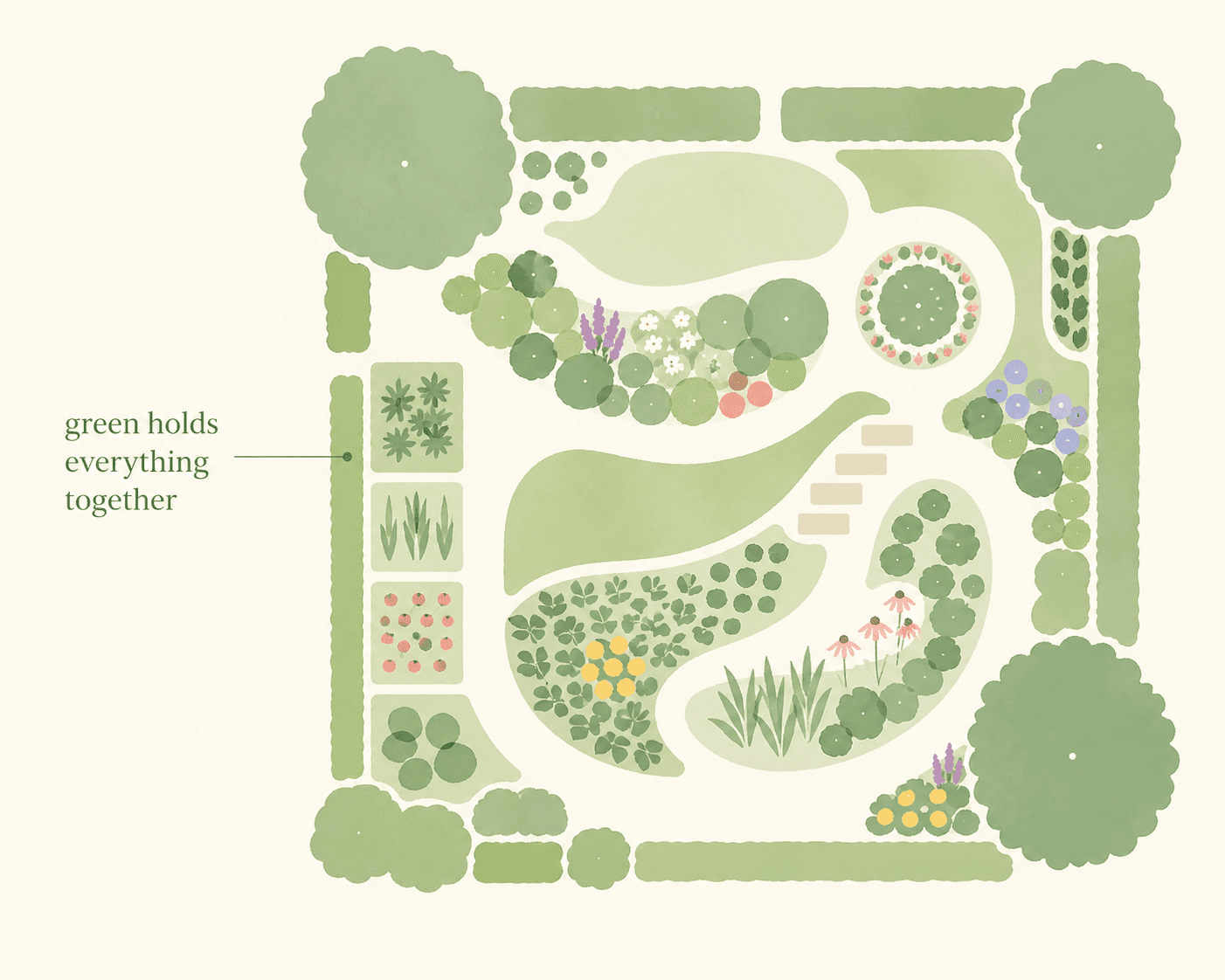
let green do most of the work
Green is what holds everything together.
Step 3: Add the Details Slowly
This is the part that never really ends.
A pot here.
A new plant there.
A small change after a season or two.
These are the things that make a garden feel personal.
But they don’t need to happen all at once.
A Different Way to See It
Your garden isn’t something you finish.
It’s something you return to.
You adjust it.
Shape it.
Let it grow into itself.
Looking Back
If you started with an empty space, you’ve now:
decided what you want
understood your space
created structure
placed anchor plants
filled things in
added life and personality
That’s the whole process.
A Gentle Reminder
There’s no perfect garden.
Only one that works for you.
And one that changes over time.
What Comes Next
Keep going.
Plant something new.
Move something if it’s not working.
Notice what thrives.
That’s how your garden becomes something real.
Related reads
A few more posts that pair well with this one.
Garden Design for Beginners
→A step-by-step series to help you move from an empty space to a garden that works—covering planning, structure, planting, and the final details.
Planting the Big Stuff First (And Why It Matters)
→Start your garden the right way by planting trees and shrubs first. Learn how anchor plants shape your space and make everything else easier.
Why Your Garden Needs Structure Before Plants
→A beautiful garden doesn’t start with plants—it starts with structure. Discover how to shape your space first so everything else falls into place.
Not finding the answers?
Have a gardening question or topic you'd like me to write about? Send a request and I'll see what I can dig up.
Enjoying this post?
If you love the whimsy and want to support more PNW garden guides, you can buy me a coffee.
🌼 Buy Me a Coffee