


Planting the Big Stuff First (And Why It Matters)
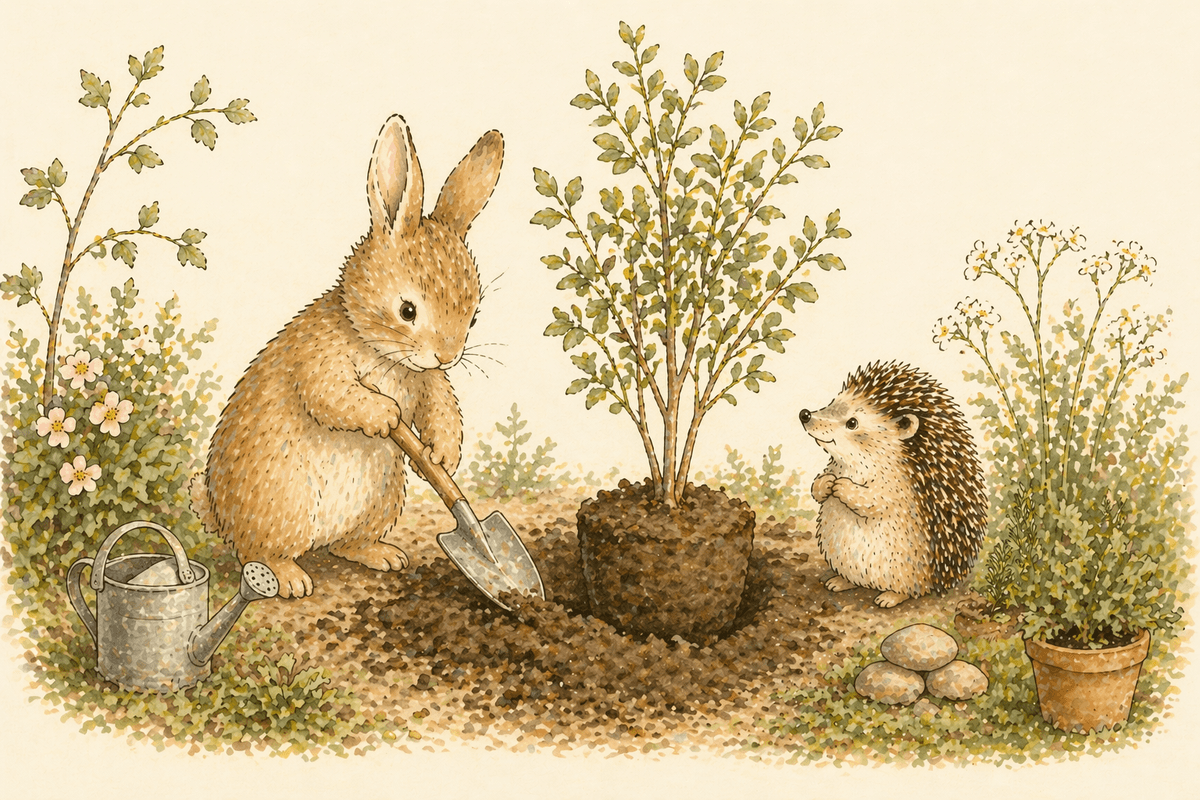
There’s a moment when your garden finally feels ready.
You’ve thought about it.
You’ve sketched it.
You’ve shaped the space.
And now, standing there with soil in front of you, it’s tempting to do what most people do:
Go to the garden center… and buy a bit of everything.
A few flowers.
A couple of grasses.
Something that looks nice in a pot.
It feels like progress.
But it often leads to something else entirely:
A garden that never quite comes together.
The Step That Changes Everything
Before you plant anything small…
Start with the big things.
Trees.
Shrubs.
The plants that stay put and grow into the space.
Because these are what give your garden:
shape
height
structure
a sense of permanence
These aren’t just plants—they’re anchors.
Why This Matters So Much
Small plants are flexible.
You can move them.
Replace them.
Fill gaps later.
But big plants?
They define everything around them.
Where shade falls
Where your eye goes
Where other plants can live
If you place them first:
👉 everything else becomes easier
If you don’t:
👉 you’ll constantly be rearranging
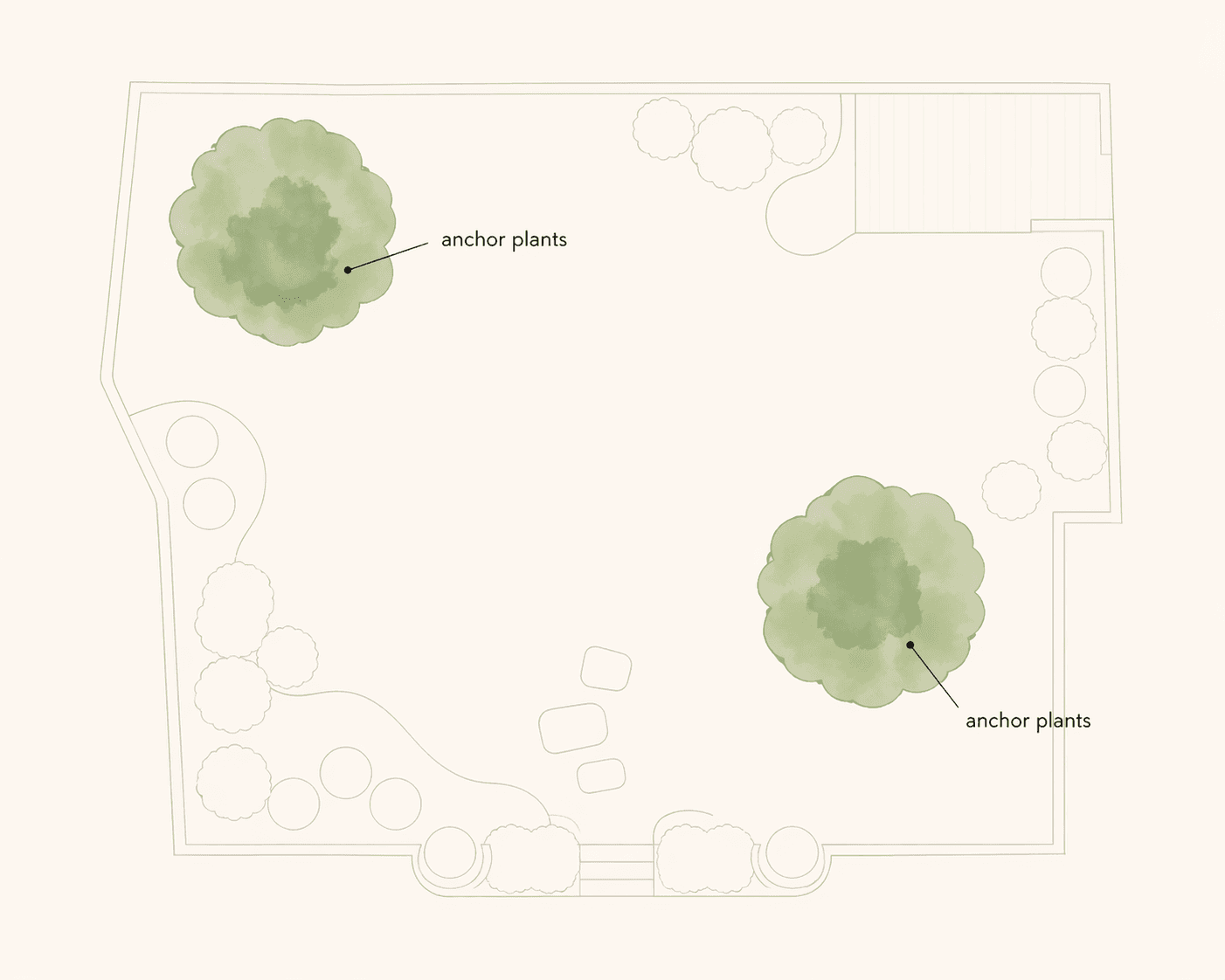
Step 1: Place Your “Anchors”
Look at your plan (or even just your space) and ask:
Where do I want height?
Where do I want something to draw the eye?
Where do I want a sense of structure year-round?
This might be:
a small tree
a statement shrub
a grouping of something evergreen
You don’t need many.
One or two well-placed anchors can shape an entire garden.
What Makes a Good Anchor Plant
You’re looking for plants that:
hold their shape well
look good most of the year
grow slowly and predictably
feel right in your space
Think:
a Japanese maple
a hydrangea
a small evergreen
Not because they’re trendy—
but because they give your garden something to build around.
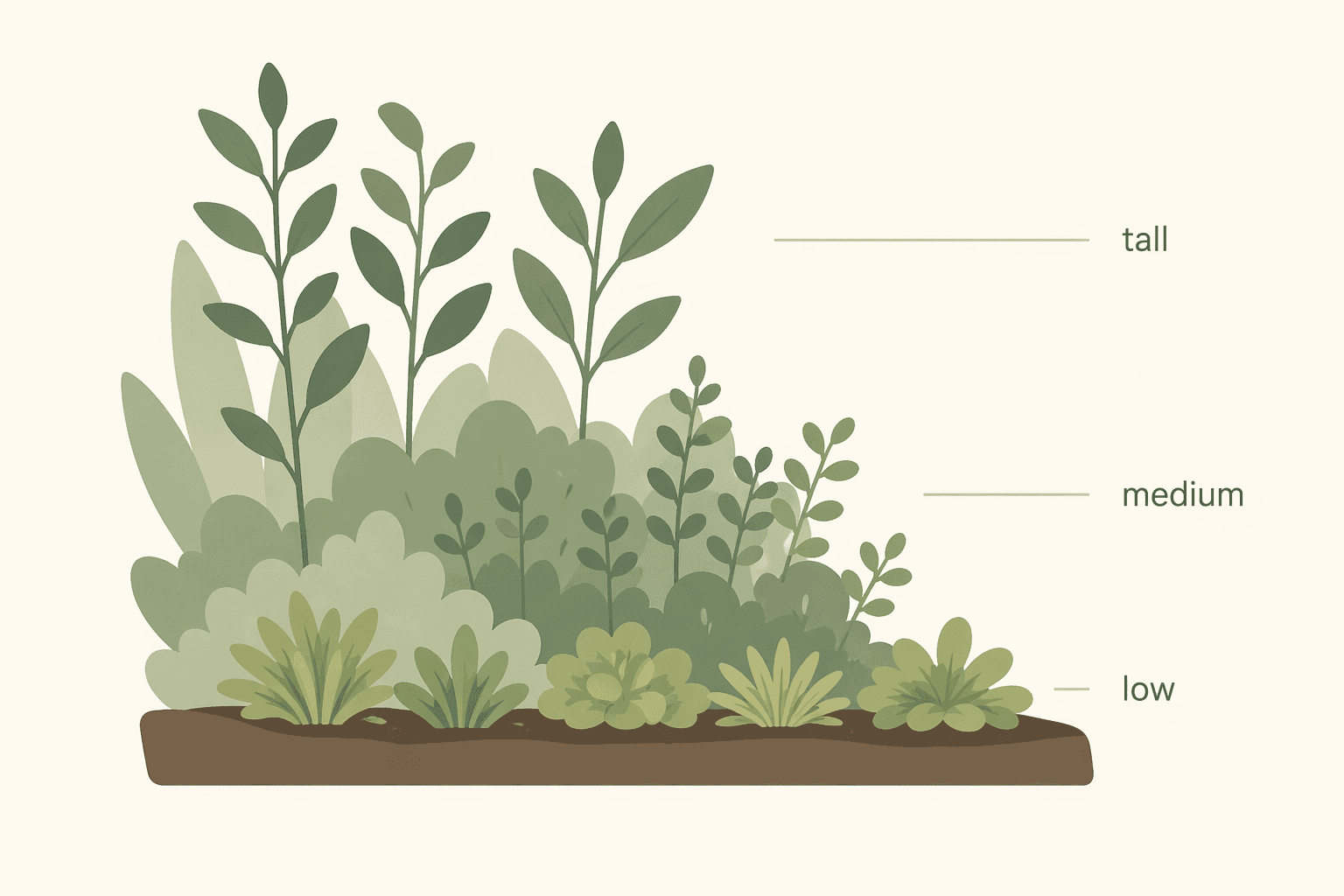
Step 2: Think in Layers
Once your anchors are in place, everything else starts to fall into layers.
Tall (trees / large shrubs)
Medium (smaller shrubs)
Low (perennials / groundcover)
You don’t need to plant all of these yet.
You just need to see where they will go.
Step 3: Give Them Space
This is where most beginners go wrong.
You plant a small shrub…
and it looks a bit lonely.
So you add more.
And more.
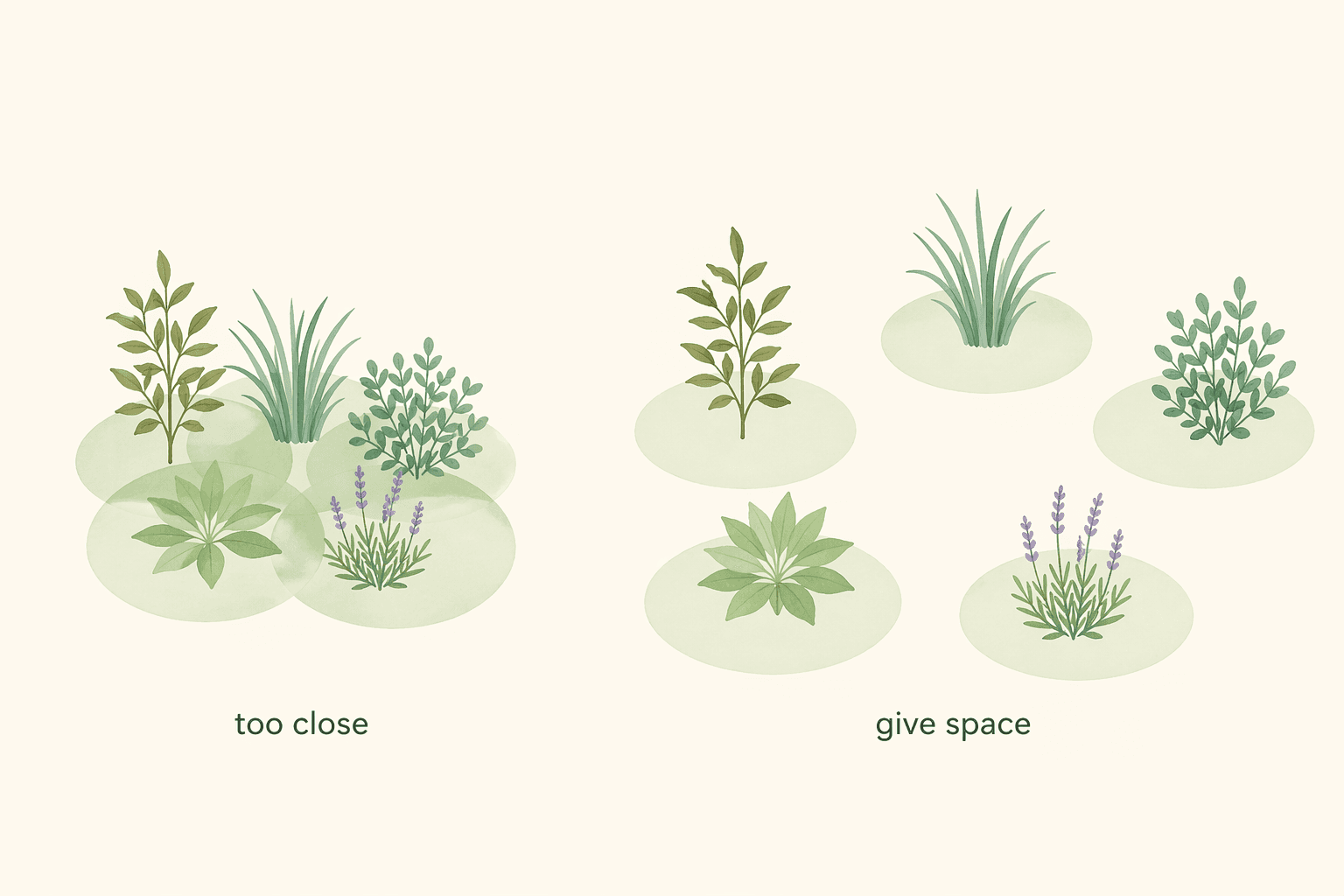
And a year later, everything is crowded.
Plants grow. Your garden should have room for that.
When placing anchors:
imagine them at full size
leave space around them
resist the urge to fill gaps
A Different Way to Think About It
Instead of asking:
“What should I plant here?”
Try asking:
“What is this space waiting for?”
A tree?
A shape?
A sense of height?
What Comes Next
In the next post, we’ll start filling things in.
We’ll look at:
perennials
groundcover
the plants that soften everything
But by then, your garden won’t feel overwhelming anymore.
Because the hard part—the structure and the anchors—will already be in place.
A Gentle Reminder
You don’t need to plant everything at once.
One tree.
One shrub.
One good decision.
That’s how gardens grow
Related reads
A few more posts that pair well with this one.
The Final Layer: Color, Seasons, and Making It Yours
→Bring your garden to life with color, seasonal interest, and small details. A simple guide to creating a garden that feels personal and evolves over time.
Garden Design for Beginners
→A step-by-step series to help you move from an empty space to a garden that works—covering planning, structure, planting, and the final details.
Why Your Garden Needs Structure Before Plants
→A beautiful garden doesn’t start with plants—it starts with structure. Discover how to shape your space first so everything else falls into place.
Not finding the answers?
Have a gardening question or topic you'd like me to write about? Send a request and I'll see what I can dig up.
Enjoying this post?
If you love the whimsy and want to support more PNW garden guides, you can buy me a coffee.
🌼 Buy Me a Coffee