What to Buy at the Garden Center in Early Spring
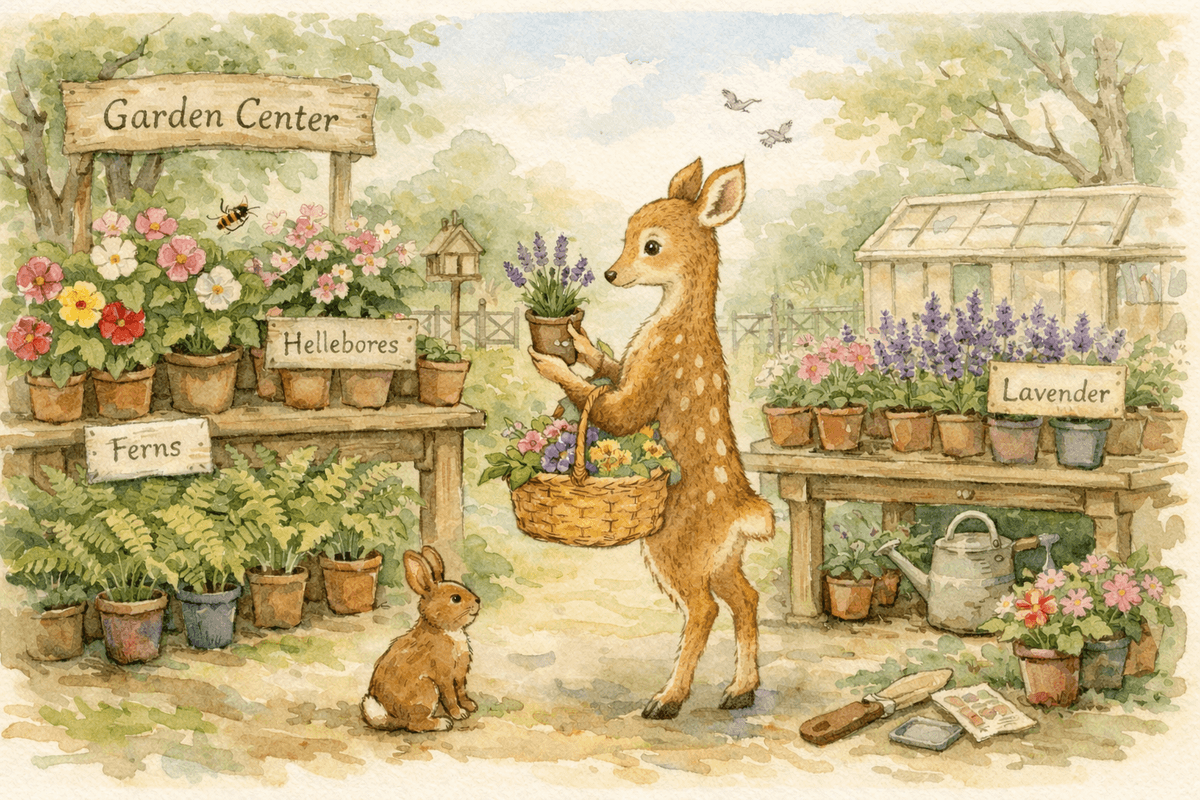
A simple guide for wandering gardeners
The first warm day of spring arrives and suddenly everyone has the same idea:
“Let’s go to the garden center.”
You wander past rows of plants — bright flowers, fresh herbs, trays of seedlings — and something catches your eye. You want to take it home.
But then the questions begin.
Will this grow in my yard?
Does it need sun or shade?
Will it survive the Pacific Northwest?
Most gardeners have stood in the middle of a nursery holding a plant and wondering the same thing.
So here’s a simple approach. If you’re heading to the garden center this week, these are the types of plants that are easy, beautiful, and almost always succeed in Pacific Northwest gardens.
And once something catches your fancy, I’ll show you how to read the plant label so you know it will work.
Before You Buy: Three Quick Things to Check
When you pick up a plant at the garden center, you really only need to check three things.
These three clues tell you almost everything about whether the plant will thrive.
1. Sun or Shade
This is the most important detail.
Look at the label for one of these phrases:
Label | What it Means |
|---|---|
Full Sun | Needs at least 6 hours of direct sun |
Part Shade | Morning sun or bright shade |
Shade | Happy under trees or north-facing areas |
Most planting mistakes happen when a sun-loving plant is placed in shade or a shade plant is baked in afternoon sun.
A good rule of thumb:
Sunny front yard? Choose sun plants.
Wooded backyard? Choose shade plants.
2. How Big It Gets
The tiny plant in the nursery pot is not its final size.
For example:
Lavender may grow 2–3 feet wide
Hydrangeas can grow 4–6 feet tall
Salvia spreads into a large flowering clump
Always check:
Height
Spread
That tells you how much space it will eventually need.
3. Water Needs
Most plants you’ll see at Pacific Northwest garden centers fall into one easy category:
“Average water.”
That means they’ll be happy with normal watering while establishing and then rainfall for much of the year.
You may want to avoid plants labeled:
bog plant
alpine
cactus or desert
Those usually have very specific needs.
Easy Plants That Catch Your Eye (And Actually Work)
These are plants you’ll often see at garden centers in early spring — and they’re great choices for beginner gardeners.
Hellebores (Lenten Rose)
Hellebores are one of the quiet stars of Pacific Northwest gardens.
They bloom in late winter and early spring when almost nothing else is flowering.
Why gardeners love them:
Thrive in shade
Evergreen foliage
Long-lasting flowers
Deer resistant
They’re perfect planted beneath trees, along shady paths, or near an entryway where you can see the early blooms.
If you see them blooming at the nursery, they’re already proving they like your climate.
Lavender
Lavender is one of those plants that seems to attract people instantly.
The scent alone is enough to convince you to take one home.
Lavender thrives in:
Sunny locations
Well-drained soil
Warm spots near paths or patios
It also happens to be one of the best plants for pollinators.
In the Pacific Northwest, look for varieties labeled:
Lavandula angustifolia (English lavender)
They handle our winters better than many others.
Primroses
Primroses are often the first burst of cheerful color at garden centers.
They thrive in the cool, moist conditions we get in early spring.
Why they work well:
Bright spring color
Perfect for part shade
Ideal for containers or borders
They pair beautifully with ferns and other woodland plants.
Salvia
Salvia is one of the easiest perennial flowers you can grow.
It forms a tidy clump of foliage and sends up spikes of flowers that bees absolutely love.
Benefits:
Long blooming period
Excellent pollinator plant
Very drought tolerant once established
Plant it somewhere sunny and enjoy months of color.
Ferns
If your garden has a lot of shade, ferns are one of the easiest and most beautiful solutions.
They bring that classic Pacific Northwest woodland feeling to a garden.
Ferns are great because they:
Love shade
Require little maintenance
Provide lush texture
They combine beautifully with hellebores and hostas.
How to Read a Plant Label (In About 10 Seconds)
Once you’ve found a plant you like, the label tells you everything you need to know.
Look for these four pieces of information.
Label Info | What It Tells You |
|---|---|
Sun | Where to plant it |
Height | How tall it grows |
Spread | How wide it gets |
Water | How often it needs watering |
If the sun requirements match your garden, you’re already most of the way to success.
A Simple Garden Center Rule
Here’s a helpful trick many gardeners use:
If a plant is blooming happily at a local garden center, it probably grows well in your area.
Garden centers choose plants that perform well locally.
So if something catches your eye — and the label matches your conditions — it’s usually a safe choice.
A Gentle Start
You don’t need to know everything about gardening before buying your first plant.
In fact, most gardens begin the same way:
You walk into a nursery,
something catches your eye,
and you decide to take it home.
A single plant is often how a garden begins.
Related reads
A few more posts that pair well with this one.
What to Plant in August (Zone 8a & 8b Pacific Northwest Guide)
→Discover what to plant in August in the Pacific Northwest (Zone 8a & 8b). Find the best vegetables, herbs, and flowers to sow now for autumn and winter harvests.
Garden Mistakes I Still Make Every June
→Even experienced gardeners make mistakes. Here are the common June gardening mistakes I still catch myself making in the Pacific Northwest—and what I'm trying to do differently.
Garden Design for Beginners
→A step-by-step series to help you move from an empty space to a garden that works—covering planning, structure, planting, and the final details.
Not finding the answers?
Have a gardening question or topic you'd like me to write about? Send a request and I'll see what I can dig up.
Enjoying this post?
If you love the whimsy and want to support more PNW garden guides, you can buy me a coffee.
🌼 Buy Me a Coffee