


Beginner Raised Bed Garden

Raised beds are one of the easiest ways to start gardening in the Pacific Northwest.
Our native soils are often heavy clay, slow to drain, and difficult for new gardeners to work with. A raised bed lets you start with good soil, control drainage, and grow vegetables almost anywhere there is sun.
The good news is that a beginner raised bed can be very simple.
You do not need complicated designs, expensive kits, or perfect carpentry.
You just need a sunny spot, a simple frame, and good soil.
Step 1: Choose the Right Location
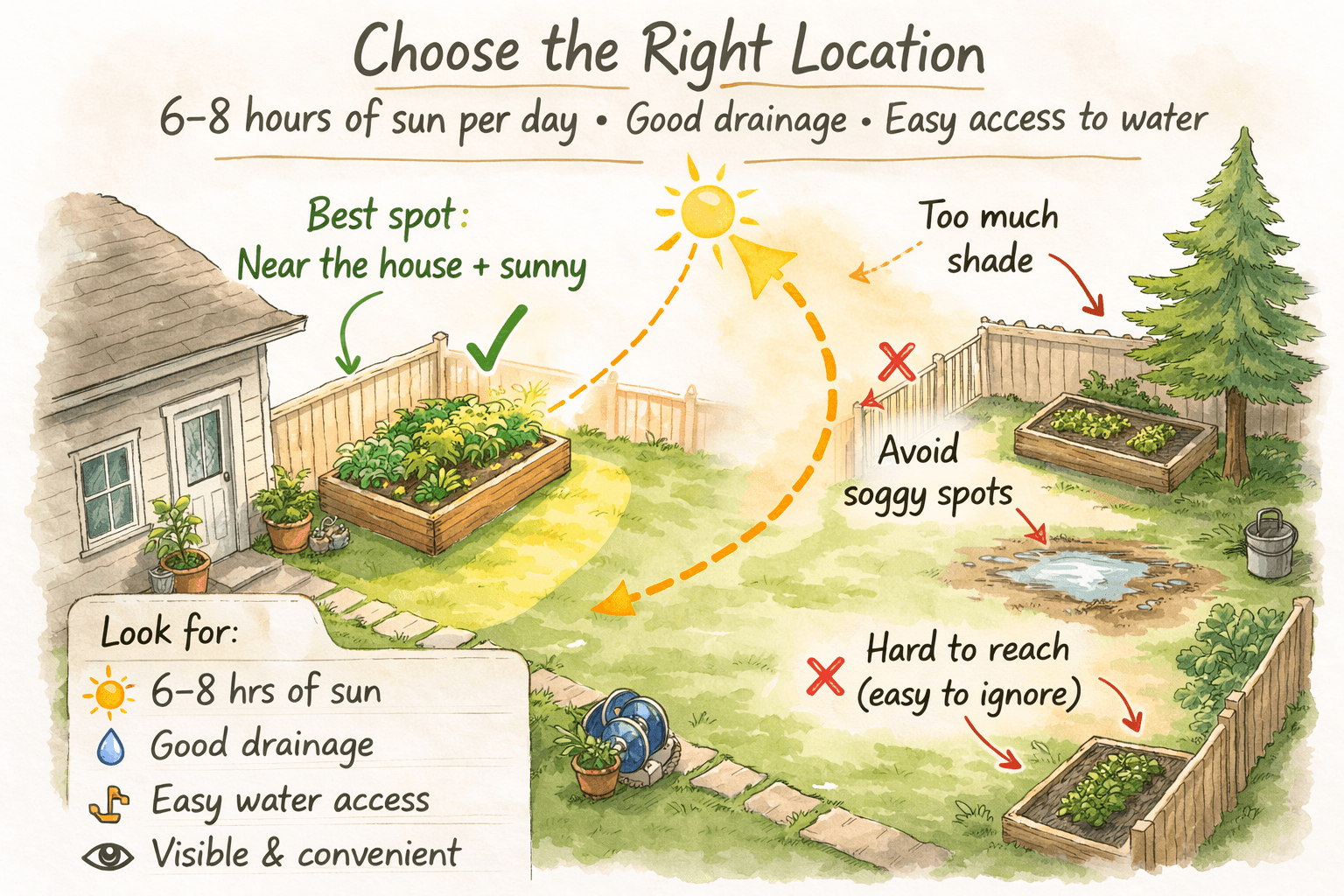
This is the most important decision.
Most vegetables need:
6–8 hours of sun per day
When choosing a spot, look for:
the sunniest area of your yard
good drainage (avoid soggy spots)
easy access to water
somewhere you’ll see it often
A bed near the house is usually better than one hidden in the far corner of the yard.
Gardens you walk past every day get cared for.
Step 2: Wood vs Metal Raised Beds
People often ask which material is best.
The truth is both work well.
Wood Raised Beds
Pros
natural appearance
easy to build
inexpensive
blends into the garden
Cons
eventually rots (typically 7–10 years)
Best woods for the PNW
cedar
untreated douglas fir
Avoid pressure-treated lumber for food gardens if you prefer natural materials.
Metal Raised Beds
Pros
extremely long lasting
modern look
easy to assemble kits
Cons
more expensive
can heat up slightly in strong sun
Many gardeners like metal beds because they last decades with little maintenance.
Recommendation for Beginners
If you like building things:
wood
If you want quick and easy:
metal kit
Both grow excellent vegetables.
Step 3: How Big Should a Raised Bed Be?
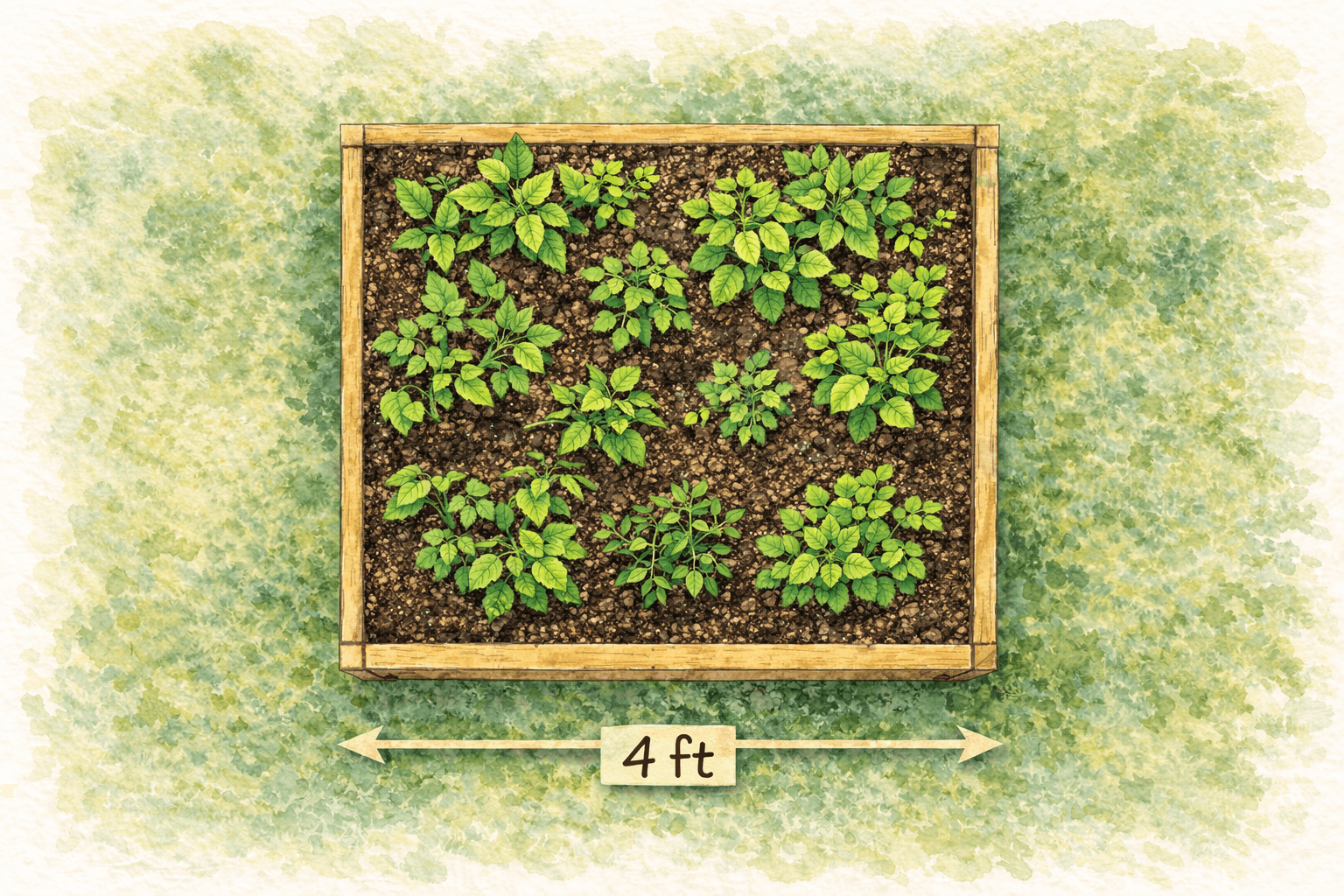
The ideal beginner size is:
4 feet wide
This allows you to reach the center from either side without stepping on the soil.
Common lengths:
4 × 4
4 × 6
4 × 8
Depth:
10–12 inches is perfect for most crops.
Step 4: What to Fill Raised Beds With
This is where many beginners get confused.
You do not want to fill raised beds with garden soil alone.
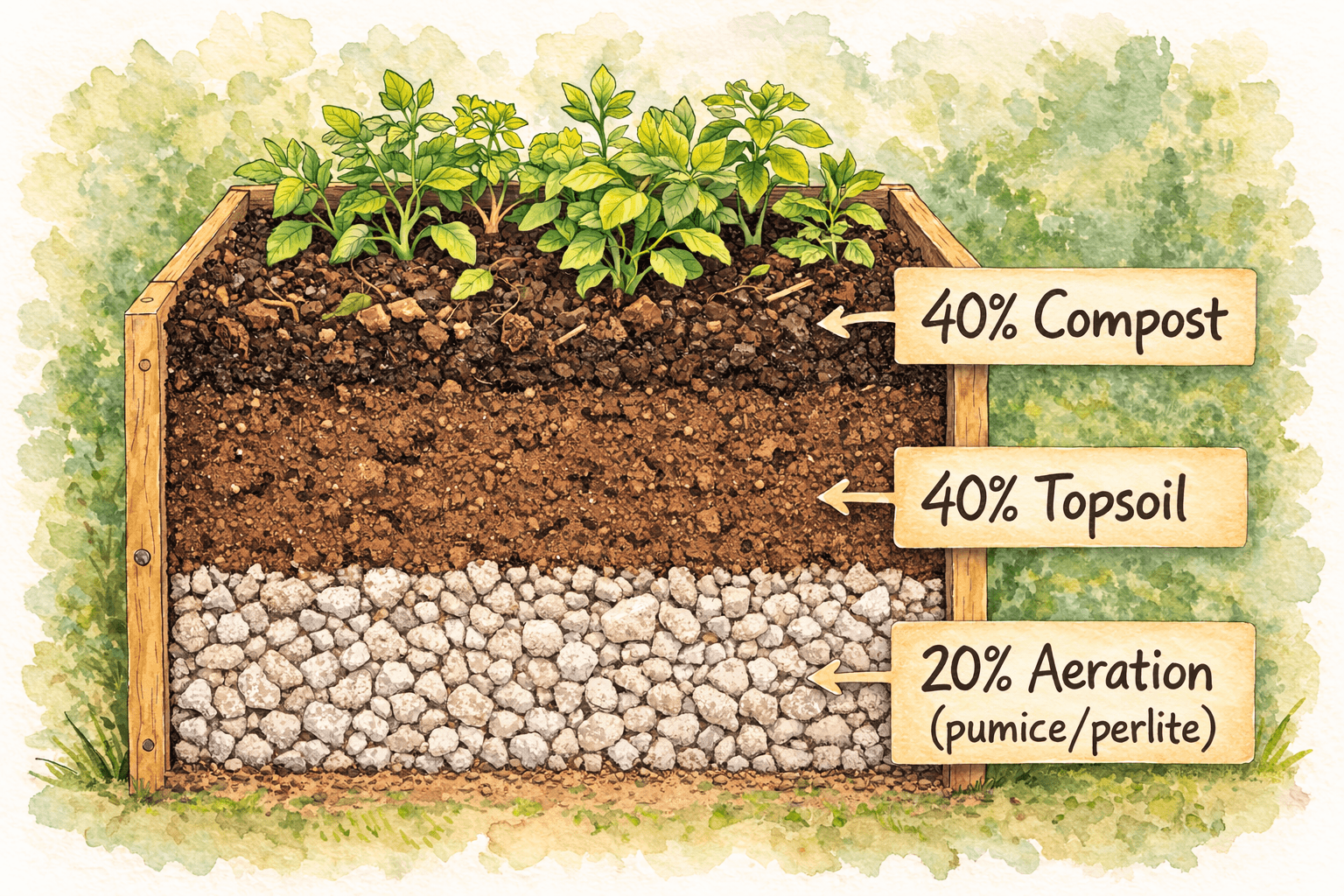
The best mix is:
Raised Bed Soil Mix
40% compost
40% topsoil
20% aeration material
Examples:
compost
screened topsoil
pumice or perlite
In the Pacific Northwest many nurseries sell “raised bed mix” that works perfectly.
PNW Soil Brands You Could Mention
Examples gardeners often find locally:
Cedar Grove Garden Soil
Tagro Mix (Tacoma area)
Pacific Topsoils raised bed mix
Bulk soil from a landscape yard is usually cheaper than bags.
Step 5: What to Plant in a Beginner Raised Bed
Start with easy crops.
Good beginner vegetables for raised beds:
lettuce
kale
spinach
radishes
bush beans
herbs
These grow quickly and give early success.
Step 6: Watering Raised Beds
Raised beds drain faster than ground soil.
Expect to water:
every few days in spring
daily during summer heat
A simple hose or watering can works fine for small beds.
Common Beginner Mistakes
Placing beds in shade
Making beds too wide
Using poor soil
Planting too many plants
Start simple.
A single raised bed can produce a surprising amount of food.
Just Start Small
Gardens do not need to be perfect.
A small raised bed filled with good soil and a handful of seedlings is more than enough to begin.
Once you harvest your first handful of lettuce or watch bees visit your herbs, you will understand why gardeners love raised beds.
The hardest part is simply starting.
Related reads
A few more posts that pair well with this one.
Why Your Tomato Plants Have Flowers but No Fruit
→Tomato plants full of flowers but no tomatoes? Learn the most common reasons tomatoes fail to set fruit and what you can do to encourage a healthy harvest in the Pacific Northwest.
What to Plant in August (Zone 8a & 8b Pacific Northwest Guide)
→Discover what to plant in August in the Pacific Northwest (Zone 8a & 8b). Find the best vegetables, herbs, and flowers to sow now for autumn and winter harvests.
Garden Mistakes I Still Make Every June
→Even experienced gardeners make mistakes. Here are the common June gardening mistakes I still catch myself making in the Pacific Northwest—and what I'm trying to do differently.
Not finding the answers?
Have a gardening question or topic you'd like me to write about? Send a request and I'll see what I can dig up.
Enjoying this post?
If you love the whimsy and want to support more PNW garden guides, you can buy me a coffee.
🌼 Buy Me a Coffee