


The Odd Garden Guide to Aphids on Roses
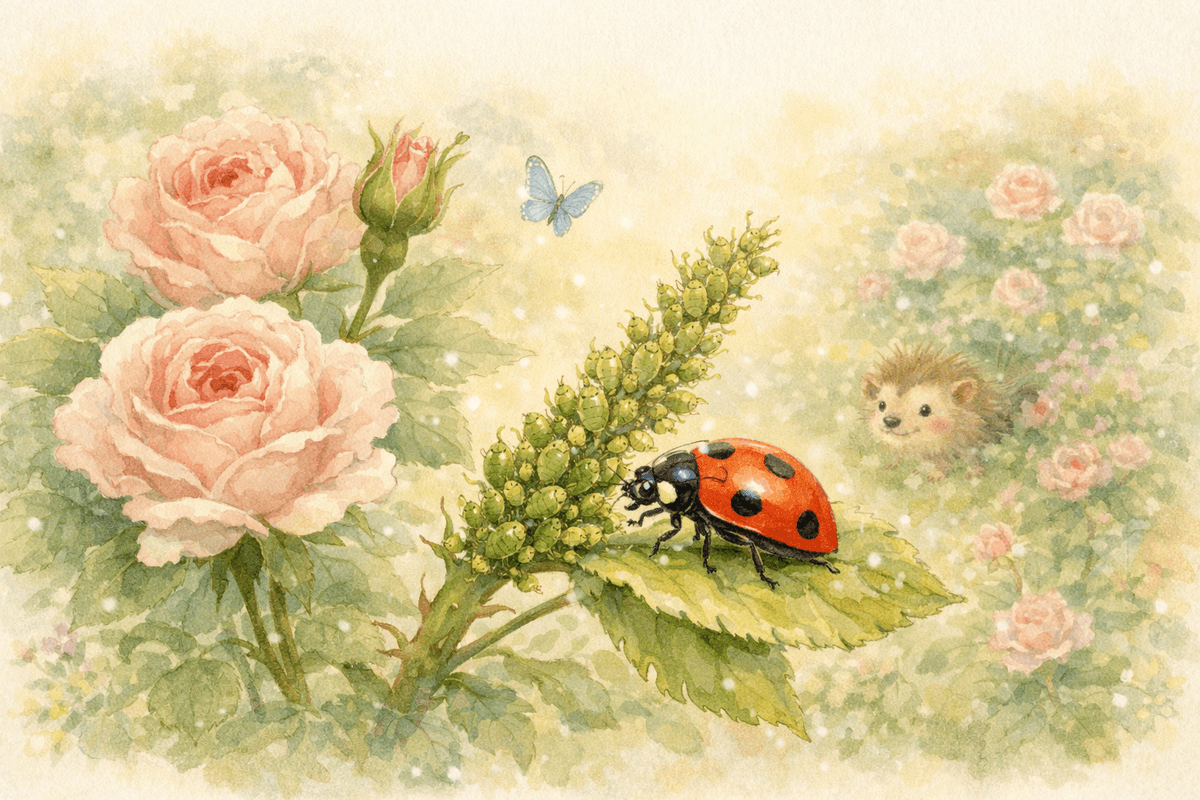
You walk out into the garden, coffee in hand, ready to admire your roses…
…and there they are.
Clusters of tiny green freeloaders, sipping away like they own the place.
Aphids.
Before you reach for anything drastic—pause.
This is one of those moments where working with nature is far more effective than fighting it.
What Are Aphids (and Why Are They on Your Roses)?
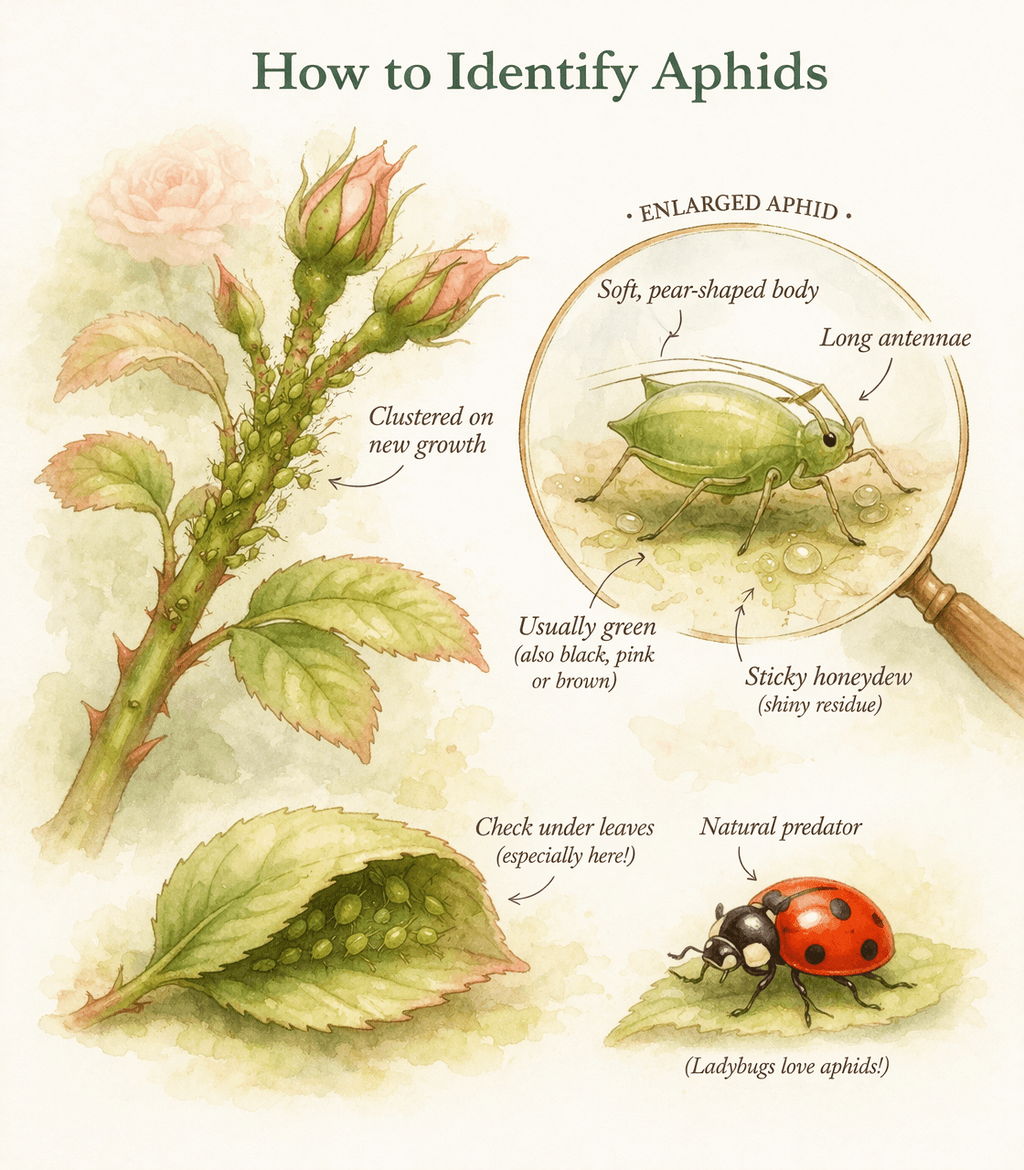
Aphids are soft-bodied insects that gather on new growth—especially tender rose buds and stems.
They:
Suck sap from plants
Cause curled or distorted leaves
Leave behind sticky honeydew (which can lead to sooty mold)
The frustrating part? They show up fast in spring.
The reassuring part?
They’re also one of the easiest pests to manage naturally.
Step 1: Start With the Simplest Fix (Water)
This is your first move—and honestly, often your best.
What to do:
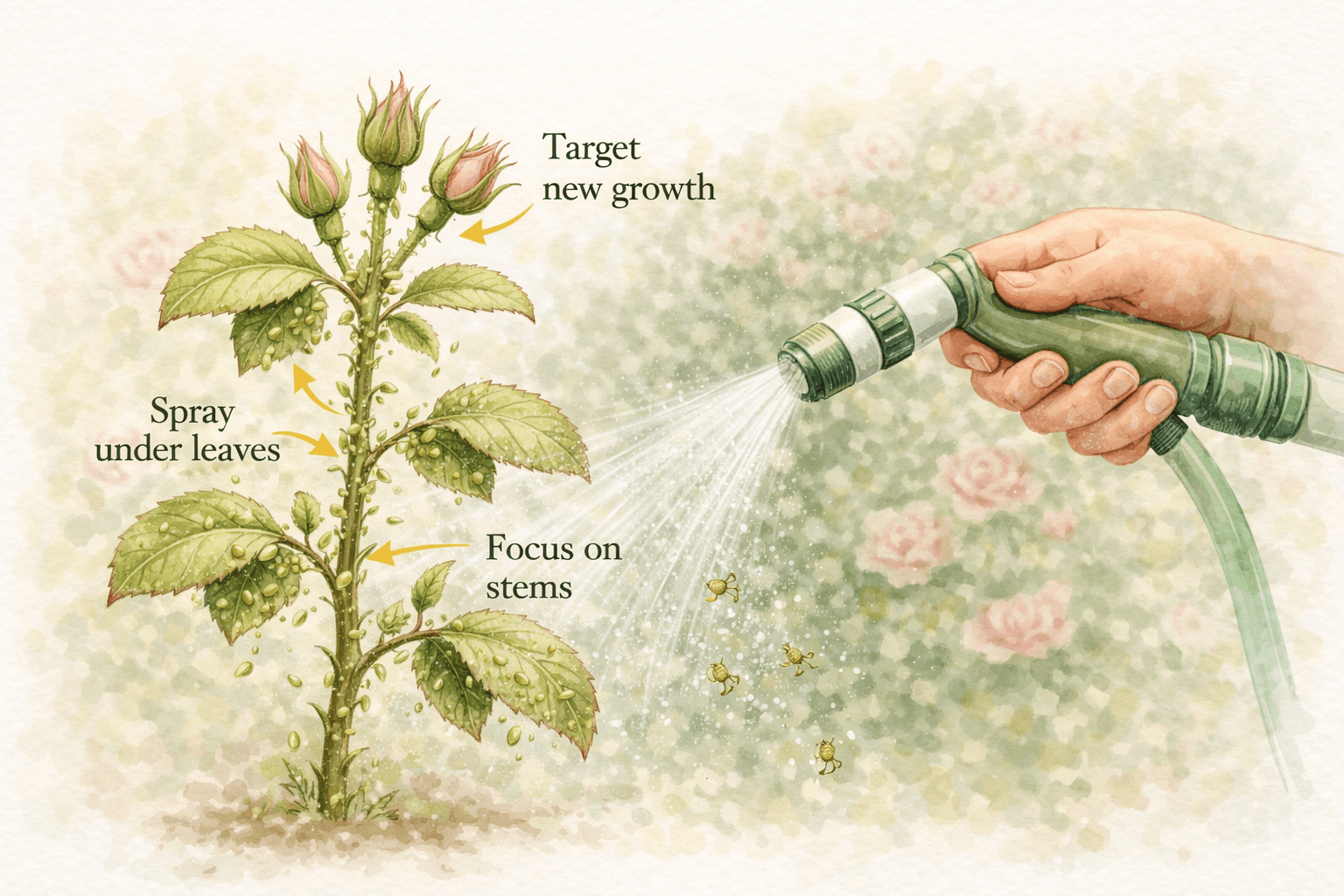
Use a firm spray from a hose
Focus on buds and undersides of leaves
Do this in the morning (so plants dry during the day)
Why it works:
Aphids are weak. Once knocked off, many don’t make it back.
👉 Do this every few days for a week and you’ll often see a massive drop.
Step 2: Let the Good Bugs Handle It
Your garden already has a built-in pest control team.
Aphid predators include:
Ladybugs
Lacewing larvae (absolute aphid machines)
Hoverfly larvae
What helps them:
Avoid spraying chemicals (even organic ones too often)
Plant pollinator-friendly flowers nearby (yarrow, dill, alyssum)
👉 If you see aphids and ladybugs?
You’re watching the system work.
Step 3: Use a Gentle Soap Spray (If Needed)
If things are getting out of hand, step in lightly.
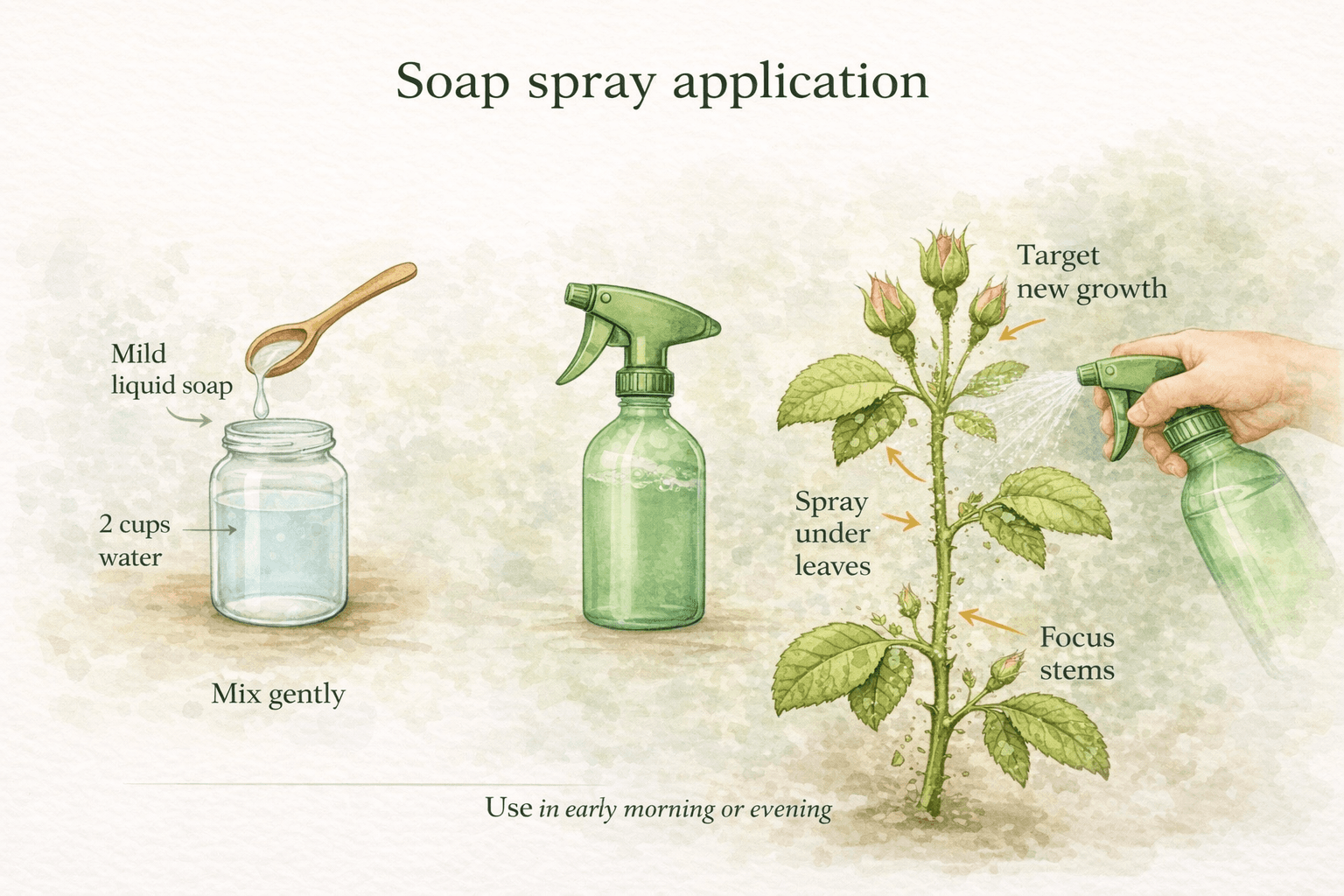
Simple DIY spray:
1 liter water
A few drops of mild dish soap
How to use:
Spray directly on aphids (not just leaves)
Test a small area first
Apply in the evening (to avoid sun burn on leaves)
This works by breaking down their outer layer—not poisoning your garden.
Step 4: Prune the Worst Offenders
If one stem looks like an aphid nightclub…
Just remove it.
Why this helps:
Instantly reduces population
Prevents spread
Encourages fresh, clean growth
Step 5: Strengthen Your Roses
Healthy plants = fewer problems.
Water deeply (not constantly)
Avoid over-fertilizing (soft growth attracts aphids)
Give them good airflow
Think of this less as “fighting pests” and more as making your garden less appealing to them in the first place.
Odd Garden Truth
Aphids aren’t a sign you’re doing something wrong.
They’re a sign your garden is alive.
The goal isn’t to eliminate them completely—
it’s to keep things in balance.
Quick Plan (Save This)
Spray with water every few days
Watch for beneficial insects
Use soap spray if needed
Prune heavily infested growth
Focus on plant health
Final Thought
A garden without pests is a garden without life.
But a garden overrun with pests?
That’s just a garden waiting for a little guidance.
And now you’ve got it.
Related reads
A few more posts that pair well with this one.
Slugs in the Garden: What They’re Really Doing Here
→Slugs thrive in Western Washington’s damp climate. Learn when slug season starts and natural PNW slug control methods that actually work.
Horsetail: The Prehistoric Plant That Won’t Quit
→Horsetail is one of the toughest weeds in Pacific Northwest gardens. Learn how to identify it, why it thrives, and the best ways to control it naturally.
Learning the Garden by Studying the Wild
→By learning our local wild spaces and native fauna, we grow better gardens—more resilient, balanced, and deeply connected to place.
Not finding the answers?
Have a gardening question or topic you'd like me to write about? Send a request and I'll see what I can dig up.
Enjoying this post?
If you love the whimsy and want to support more PNW garden guides, you can buy me a coffee.
🌼 Buy Me a Coffee