
How to Start Gardening in the Pacific Northwest | Beginner Guide
Gardening in the Pacific Northwest can feel confusing at first.
Wet winters. Dry summers. Moss, slugs, mystery soil.
Plants that thrive in Portland sulk in Bellingham. Sun that disappears in November and suddenly blazes in July.
It’s easy to think you need to know everything before you begin.
You don’t.
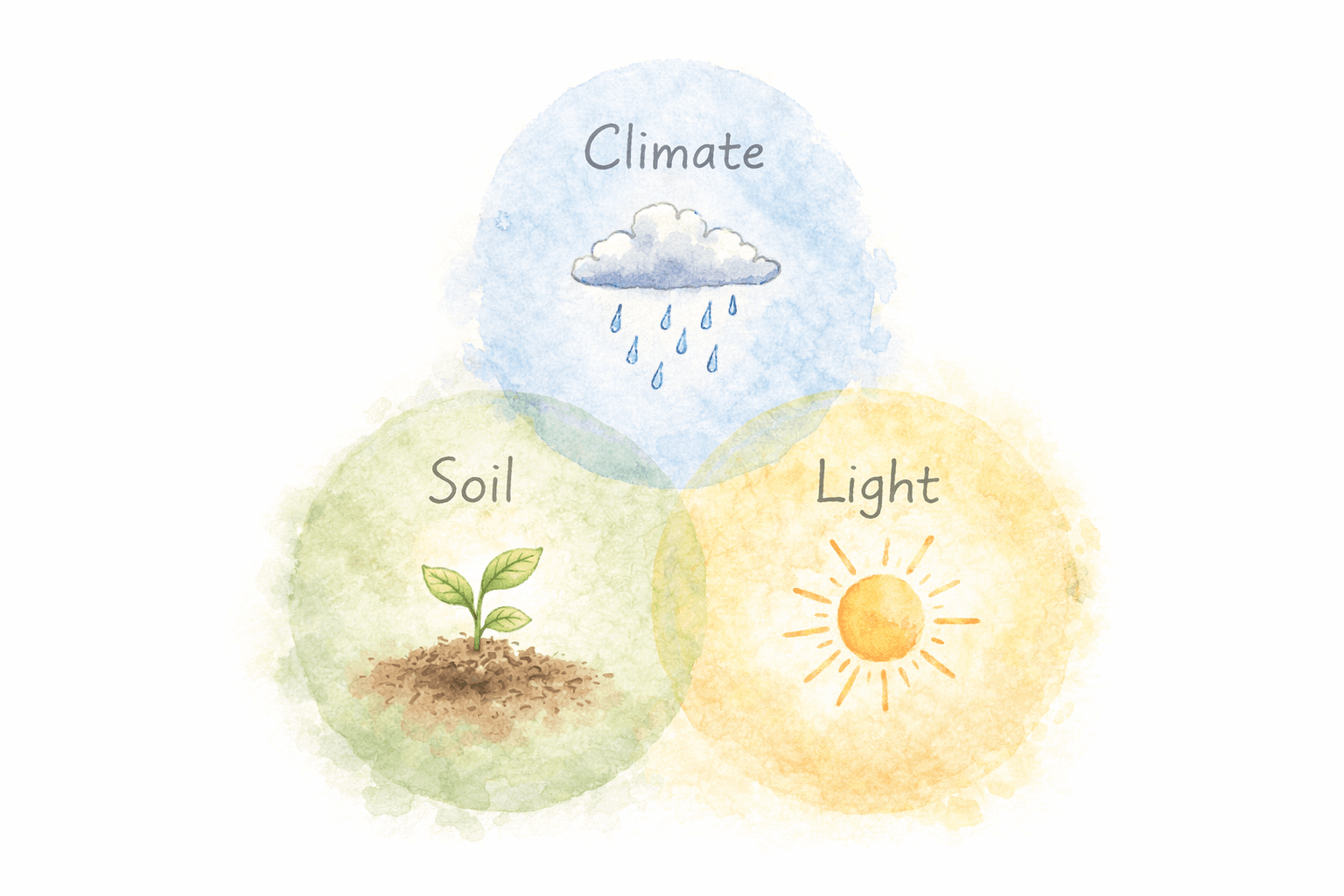
If you understand three things — your climate, your soil, and your light — the rest becomes much simpler. And with a few small wins, you’ll start to feel at home in your garden.
This guide will help you begin gently.
You don’t need a perfect garden.
You need a place to begin.
1. Understand Your Climate (Zone 8a & the PNW Rhythm)
Most of western Washington and Oregon fall into USDA Zone 8a or 8b. That means:
Winters are usually mild, but long and wet
Frost is possible, but rarely extreme
Summers are dry — sometimes surprisingly so
The real defining feature of Pacific Northwest gardening isn’t temperature.
It’s the rhythm:
Rainy season → slow spring → dry summer → long damp autumn.
That rhythm changes everything.
Roots sit in cold soil for months.
Summer watering becomes essential.
Fall planting is often better than spring planting.
Mulch is your best friend.
If something fails, it’s usually because it didn’t match the rhythm — not because you did something wrong.
In the Pacific Northwest, we don’t fight the rain. We garden with it.
2. Start With Your Soil (Don’t Overcomplicate It)
Pacific Northwest soil varies wildly. You might have:
Heavy clay that holds water
Sandy soil that drains too quickly
Rocky glacial leftovers
Or surprisingly lovely loam
But here’s the good news:
You don’t need a soil lab to begin.
Start with three simple steps:
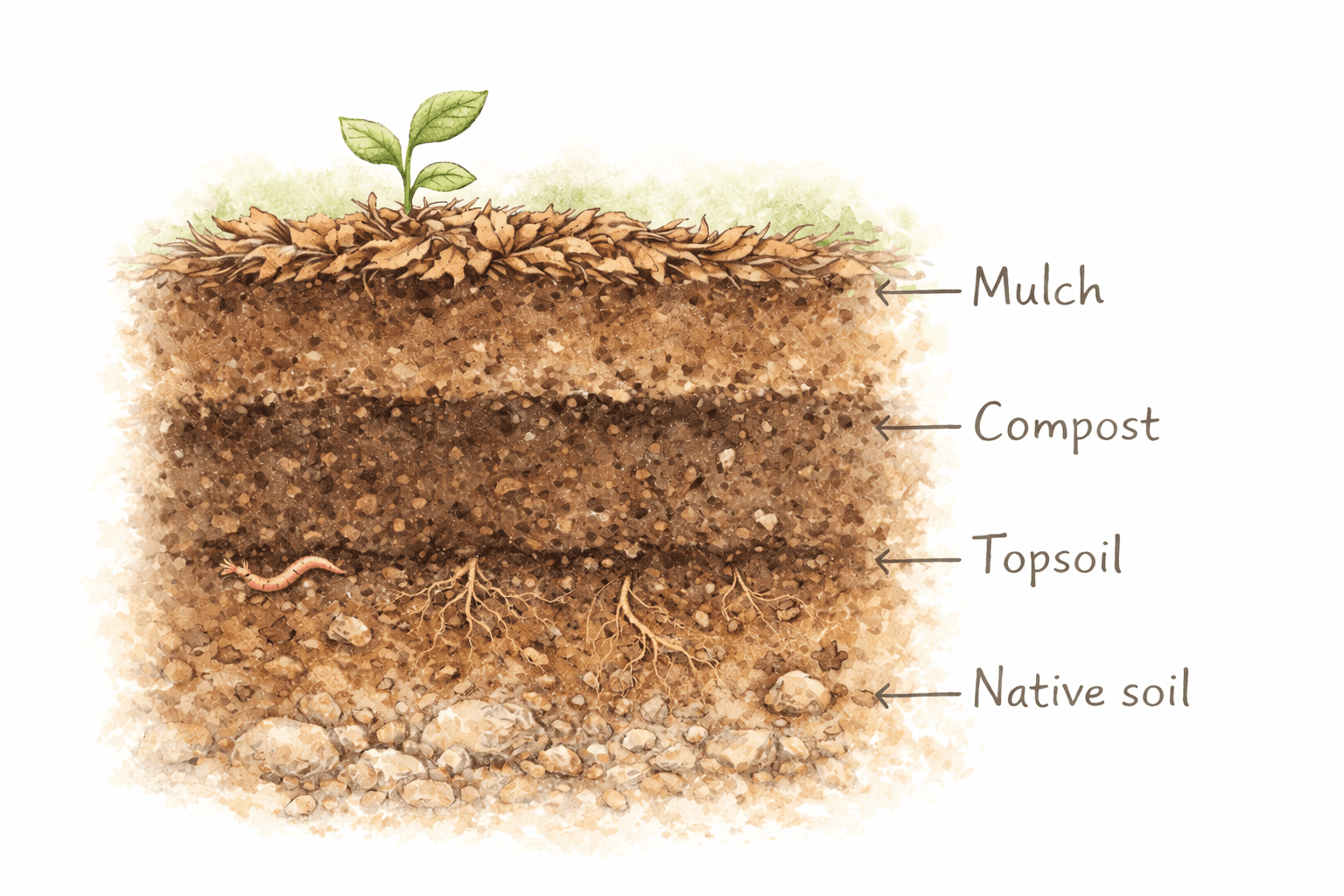
 Add 1–2 inches of compost to the top of your beds each year
Mulch to protect soil from winter rain and summer drying
Avoid over-tilling, especially in wet soil
Compost improves almost every soil type.
Mulch regulates moisture.
And leaving soil structure intact helps roots thrive.
You can refine later. For now, improve what you have.
👉 Read more in my guide to understanding your soil types.
3. Know Your Light (It’s More Subtle Than You Think)
PNW light is soft for much of the year — and then surprisingly intense in midsummer.
Walk your garden at three times:
Morning
Midday
Late afternoon
Notice where the sun lingers. Notice where it disappears behind trees or fences.
Many beginners assume they have “full sun” because an area gets sun at noon. But in our climate, consistent 6+ hour exposure matters.
When in doubt, start with plants that tolerate part sun. They’re forgiving.
4. Three Easy Wins (Build Confidence First)
Before redesigning everything, choose one small success.
Win #1: Plant One Reliable Perennial
Hellebores, hardy geraniums, salvia, or evergreen grasses are forgiving and resilient.
Win #2: Grow Herbs in a Pot
Thyme, chives, rosemary, or mint (in its own container!) offer quick reward.
Win #3: Improve One Corner
Instead of redoing your entire yard, pick a 3x3 foot space. Add compost. Add mulch. Add one plant. Watch it change.
Confidence grows in small spaces.
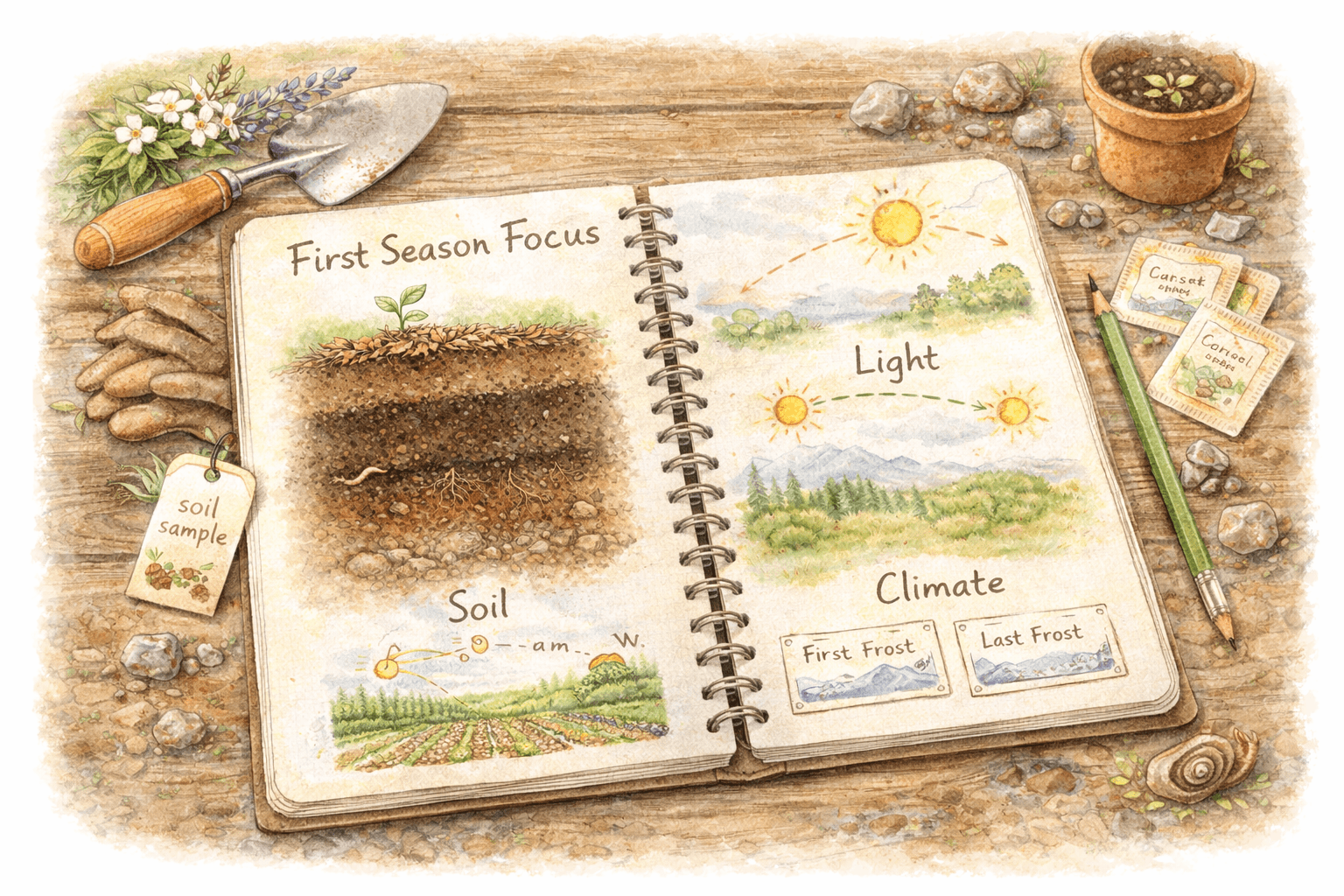
The first season is for learning your soil, not mastering your garden.
5. Common Beginner Mistakes (And Why They Happen)
You are not alone if you’ve:
Overwatered during winter
Planted something that hates soggy roots
Bought a sun-loving plant for a shady corner
Dug in clay when it was too wet
Most beginner mistakes come from trying too hard.
In the Pacific Northwest, restraint is powerful.
Water less in winter.
Improve soil slowly.
Observe before changing everything.
Gardening here rewards patience.
6. What To Do Next
If you’re just beginning, here’s a gentle path forward:
→ Visit the Pacific Northwest Gardening Calendar to see what’s in season
→ Learn how to understand your garden space more deeply
→ Start with this month’s simplest task and build from there
You don’t need a perfect plan.
You need:
A small experiment
A little compost
A willingness to notice what works
The Pacific Northwest is an extraordinary place to garden.
Mossy, generous, full of quiet resilience.
And you are allowed to grow into it slowly.
🌼 Looking for easy starter plants?
→ 5 Easy Plants for Beginner Gardeners in the Pacific Northwest
Related reads
A few more posts that pair well with this one.
How to Start Seeds Indoors in the Pacific Northwest
→Learn how to start seeds indoors successfully in the Pacific Northwest. Simple beginner steps, lighting tips, soil advice, and common mistakes to avoid.
The 10 Plants That Thrive on Neglect
→Looking for low-maintenance plants? These 10 hardy favorites tolerate drought, poor soil, and a little neglect—perfect for busy gardeners in the Pacific Northwest.
Garden Mistakes I Still Make Every June
→Even experienced gardeners make mistakes. Here are the common June gardening mistakes I still catch myself making in the Pacific Northwest—and what I'm trying to do differently.
Not finding the answers?
Have a gardening question or topic you'd like me to write about? Send a request and I'll see what I can dig up.
Enjoying this post?
If you love the whimsy and want to support more PNW garden guides, you can buy me a coffee.
🌼 Buy Me a Coffee