If your plants keep struggling… it might not be you.
You water them.
You plant them carefully.
You even talk to them a little (no judgment here).
And still… they just sit there. Not dead. Not thriving. Just… existing.
Most of the time, the problem isn’t soil.
It isn’t fertilizer.
👉 It’s light.
The Simple Truth Most Garden Tags Don’t Explain
When a plant label says:
“Full sun”
“Part shade”
“Shade”
…it sounds simple.
But in real gardens—especially here in the Pacific Northwest—light is rarely that clean.
We have:
Tall trees
Long shadows
Cloudy mornings
Bright but indirect afternoons
So a “full sun” plant might actually be sitting in 3 hours of weak light wondering what it did to deserve this life.
The 3 Types of Garden Light (Actually Explained)
Full Sun (6–8+ hours of direct sun)
This is the dream.
Direct, unobstructed sunlight
Usually mid-day sun (the strongest kind)
South or west-facing areas
Plants that love this:
Lavender
Tomatoes
Salvia
Coneflowers
👉 If you plant these in shade, they won’t die…
They’ll just disappoint you slowly.
Part Sun / Part Shade (3–6 hours)
This is where most gardens actually fall.
Morning sun + afternoon shade (ideal)
Or broken, dappled light through trees
Plants that thrive here:
Astilbe
Heuchera
Foxglove
Hydrangea
👉 This is your “quiet success” zone — not flashy, but reliable.
Shade (0–3 hours, or indirect light)
Not all shade is equal.
There’s:
Bright shade (lots of ambient light)
Deep shade (almost no direct sun)
Plants for shade:
Ferns
Hosta
Lungwort (with the best names in gardening)
Brunnera
👉 Put a sun-loving plant here and it will slowly fade into sadness.
The Trick That Changes Everything
Before you plant anything…
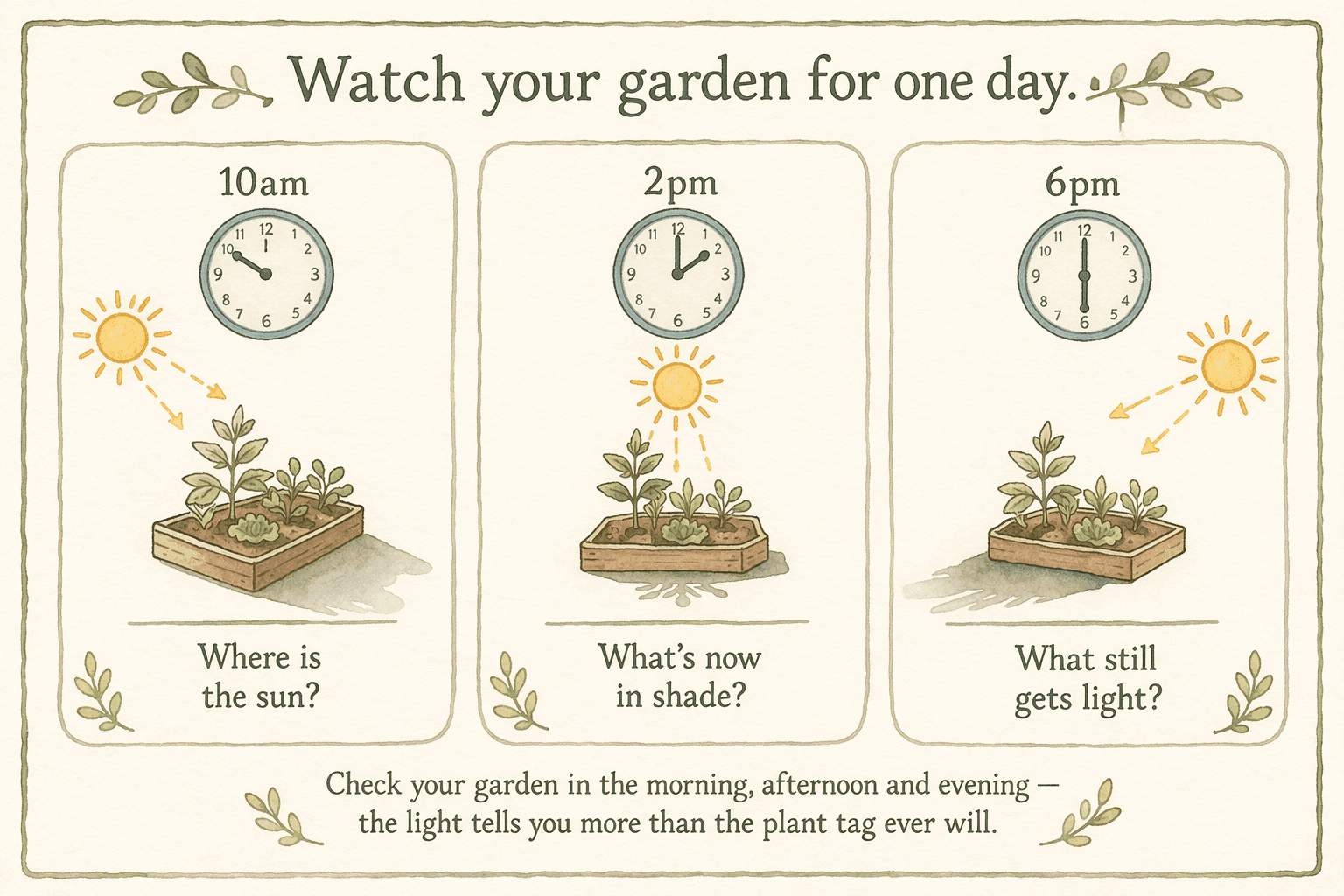
👉 Watch your garden for one day.
10am → Where is the sun?
2pm → What’s now in shade?
6pm → What still gets light?
You’ll start to see:
Moving shadows
Bright pockets
Hidden sunny spots
Most people plant first… and observe later.
Flip that, and everything improves.
Watch your garden at 10am, 2pm, and 6pm—the light tells you everything.A Quick Reality Check (PNW Edition)
In places like Washington State:
“Full sun” is often less intense than you think
“Part shade” is extremely common
Trees = beautiful… but demanding neighbors
👉 This is why shade plants often outperform sun plants here.
A Simple Way to Get It Right
Next time you’re at the garden center:
Instead of asking:
Ask:
Then match:
Sunny spot → sun lovers
Dappled light → flexible plants
Deep shade → woodland plants
That one shift will save you:
Money
Time
Mild emotional distress
The Odd Garden Way
A thriving garden isn’t about doing more.
It’s about noticing more.
Light moves.
Plants respond.
And once you see it…
👉 You start planting with intention instead of hope.
Try This Next
Walk outside today and look at your space differently.
Not as “my garden.”
But as:
Sunny zones
Shady corners
In-between places
That’s where your real garden begins.