

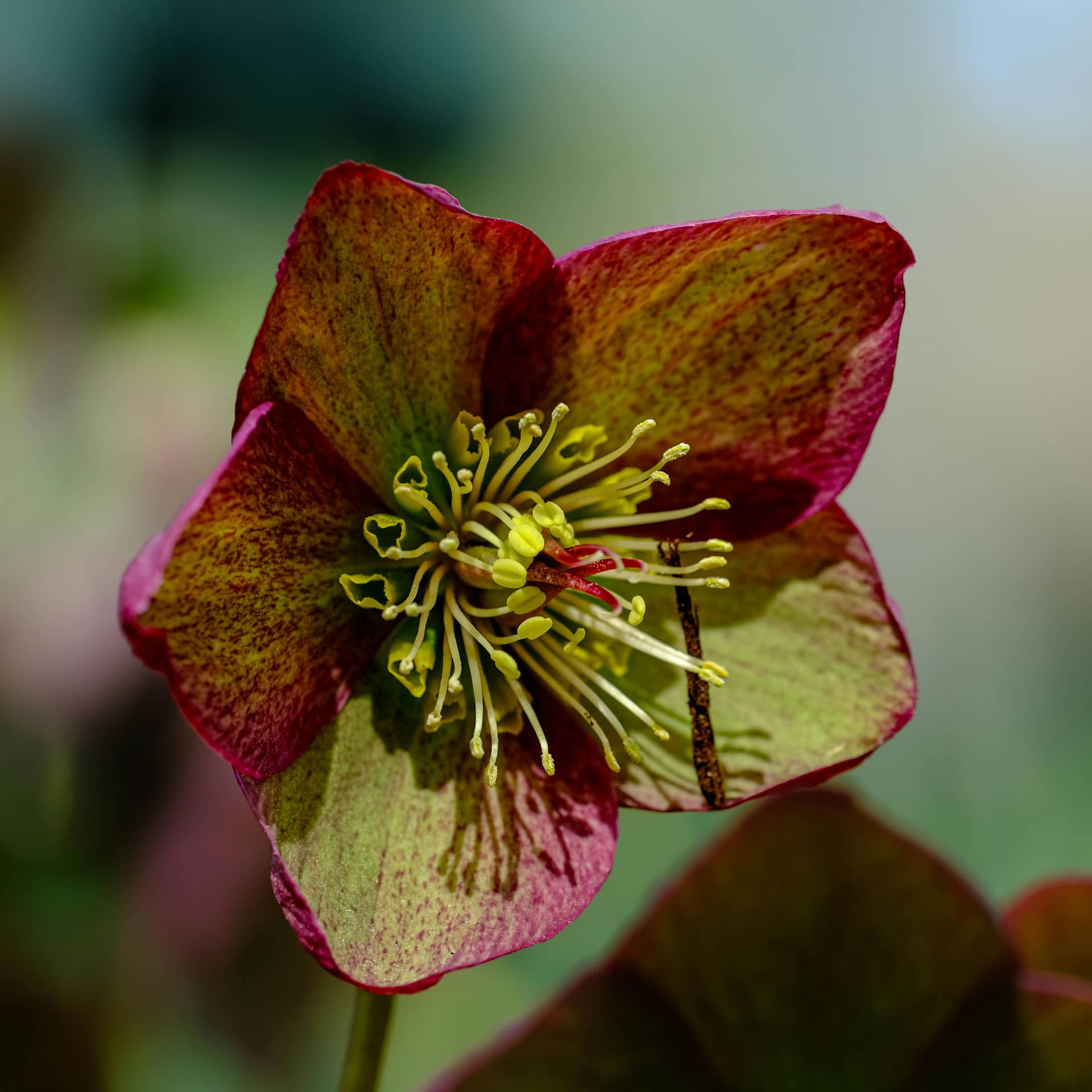
Helleborus orientalis (Lenten Rose) Hybrids
The most colours and forms. Think freckles, doubles, mauves, greens — the whole buffet.

There’s a moment in late winter when the garden feels like it has given up.
The beds are soggy, the sky is grey in that very specific PNW-grey way, and everything looks like it needs a wool sweater and a hot drink.
And then — quietly, shyly, as though they don’t want to make a fuss — the hellebores appear.
They lift their nodding, papery faces above the mulch and leaf litter, glowing softly against the cold. If you’ve never crouched down in February to admire a hellebore at eye-level, you’re missing one of the great tiny joys of gardening.
They are the rebels of winter: blooming when nothing else dares to.
Here are some photos from my garden show all the variety in color:
Hellebores (Helleborus spp.), often called Lenten roses or Christmas roses, have a kind of Victorian melancholy beauty — moody, elegant, and just a little dramatic.
What makes them so adored?
While the rest of the garden hits snooze, hellebores get up early and start putting makeup on.
Depending on the variety, they’ll flower:
December (Christmas roses)
January–March (orientalis hybrids)
Sometimes straight through spring
You get colour when you crave it most.
Soft plum, dusty rose, moss green, parchment cream, speckled freckles, plum picotee edges…
They look like something Beatrix Potter would paint on a rainy afternoon with Peter Rabbit nibbling nearby.
Some varieties even bloom with:
Double petals like Victorian tea gowns
Black flowers (yes, nearly jet) for gothic woodland moments
Apple-blossom pinks fit for a fairytale garden
Every bloom feels like a little character in the larger garden story.
On those surprise warm February days, sleepy bumblebee queens emerge to check if the world is still functioning.
And thank goodness — hellebores are there waiting with pollen and nectar.
They’re one of the first reliable food sources of the year.
Even when not flowering, hellebores bring a strong winter silhouette — especially alongside:
ferns
heucheras
carex grasses
mossy stones
early bulbs like snowdrops
They create a mini woodland ecosystem, right at ground level.
Here’s the lovely thing: hellebores are both refined and remarkably tough.
Perfect for dappled shade or part shade.
Under deciduous trees is their favourite spot — winter sun, summer shade. I grow mine under my apple trees.
Rich, organic, well-drained. “Woodland floor vibes” is the goal.
They say regular water the first year but to be honest in Bellingham I have just relied on the rain and they have been fine
After that: steady but not fussy.
This is a delightful ritual:
Late January (or when buds poke up)
Snip off the tired, leathery old leaves
Instantly the blooms are revealed, like pulling back a stage curtain
Removing old leaves also reduces fungal spots on blooms.
Hellebores famously hate being moved — they sulk.
If you must divide them, early spring is best, and then leave them alone for a year so they can forgive you.
The most colours and forms. Think freckles, doubles, mauves, greens — the whole buffet.
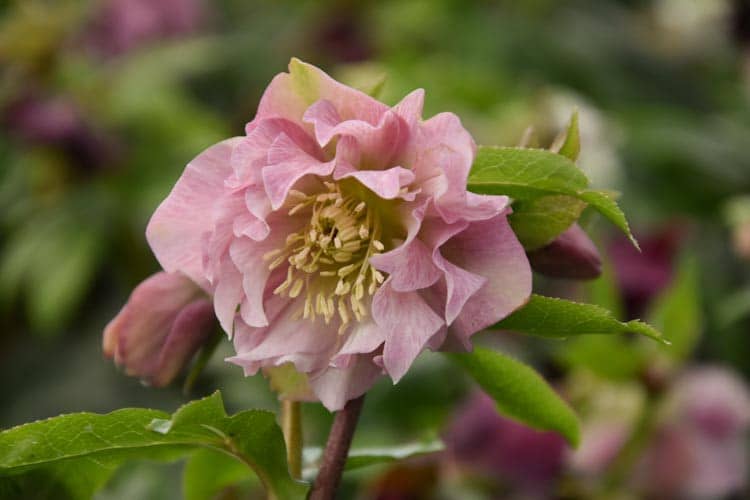
Frilly, romantic, swoony. They look like a secret wedding bouquet.
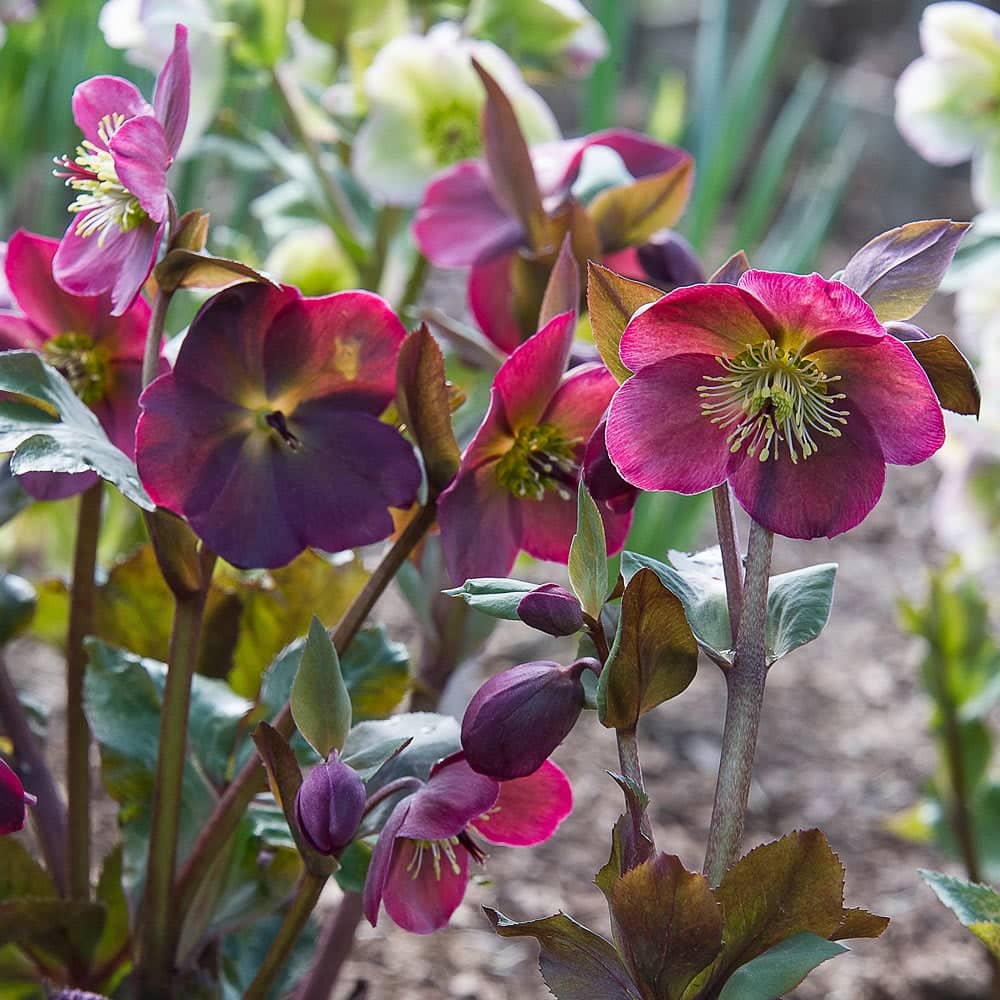
Variegated leaves + strong blooms = year-round beauty.
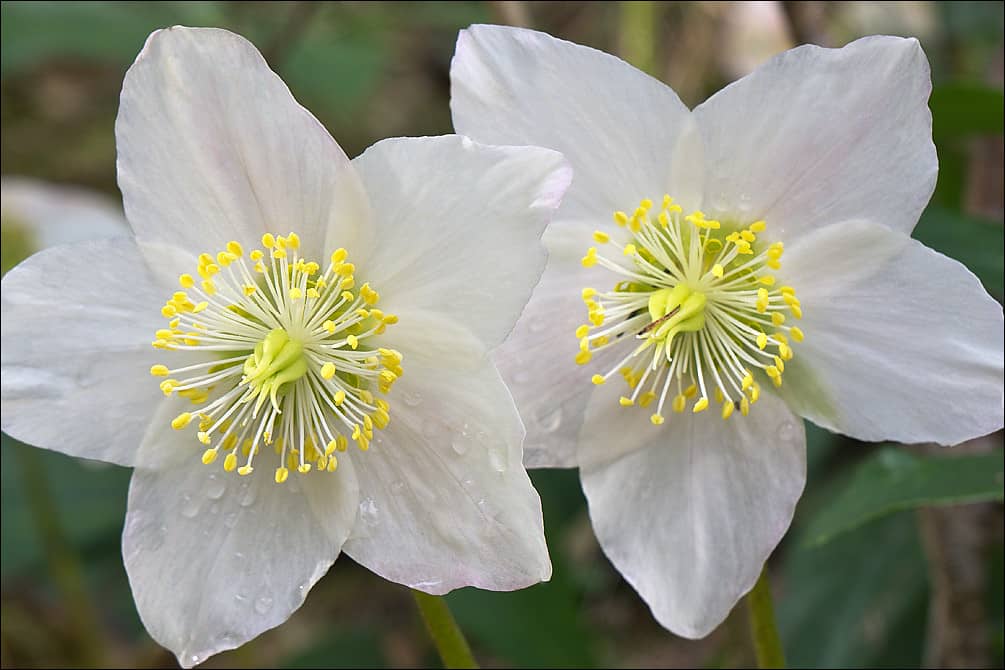
Elegant white blooms in deep winter — pure magic with a bit of frost.
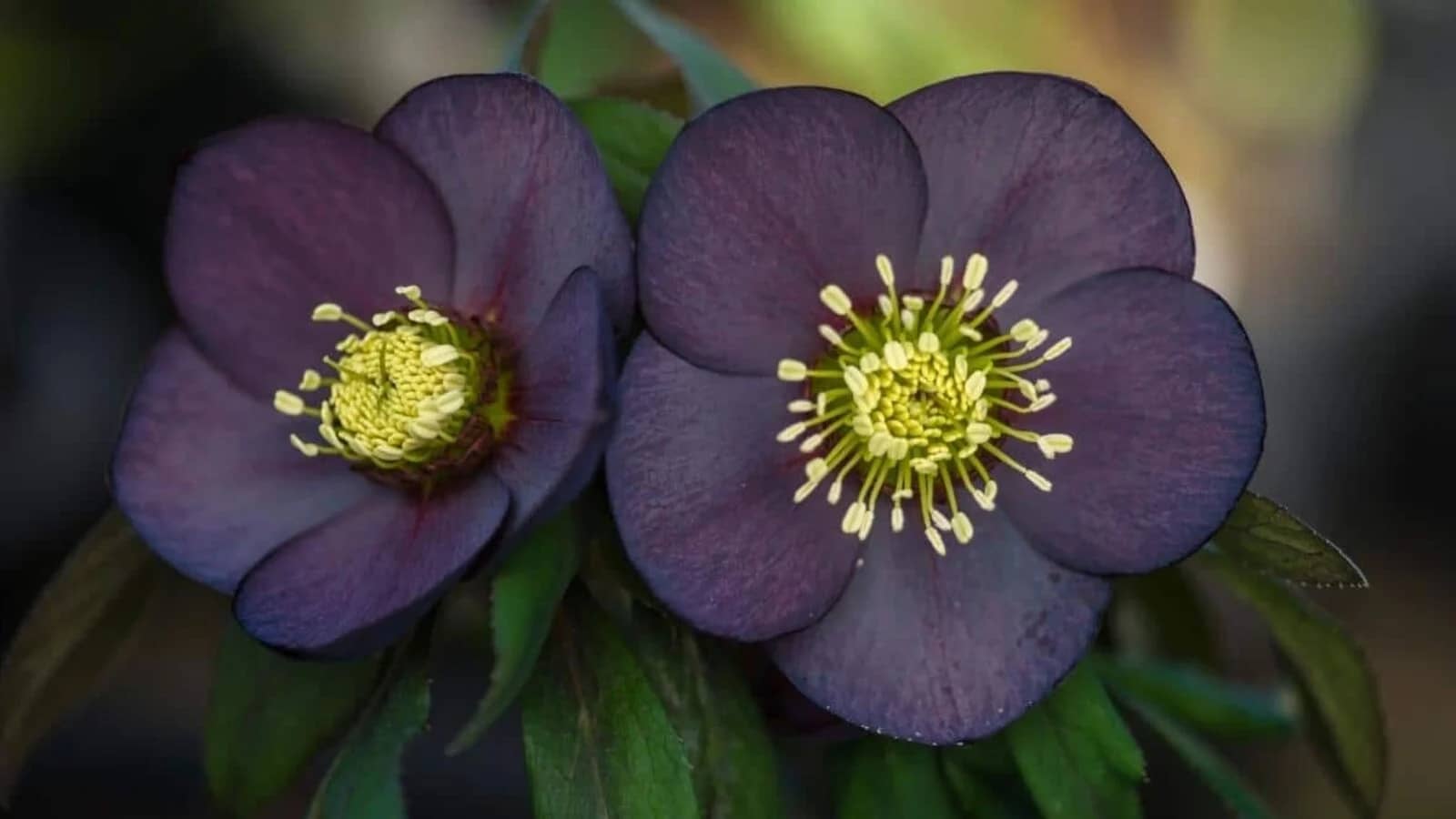
Almost-black petals with a velvety sheen. For your dramatic inner goth gardener.
They are perfect for creating little “scenes” in your beds.
Try pairing them with:
Snowdrops for a February duet
Ferns for year-round texture
Epimedium (heart-shaped leaves + early flowers)
Mossy stone edging for woodland coziness
Carex ‘Evergold’ for contrasting brightness
Place them near a path so you can admire them without bending into a contortionist.
Hellebores are a reminder that the garden is never really asleep.
Beneath the soil, even in the bleak midwinter, small rebellions are brewing.
They ask nothing from you except a bit of compost and permission to shine when the world is still yawning.
They belong in every PNW garden — especially one that values magic, wildlife, and plants with personality.
As enchanting as hellebores are, there’s one important thing to know:
they’re toxic to dogs, cats, and humans if eaten.
Most animals instinctively avoid them — the leaves are leathery and incredibly bitter — but if you have:
a curious puppy,
a garden grazer, or
a pet who samples plants like they’re running a tasting menu,
it’s wise to plant hellebores where they’re less tempting to nibble.
They’re perfectly safe to grow, just not for snacking — for pets or people.
A few more posts that pair well with this one.
Want more bees and butterflies in your garden? Discover 10 easy flowers that thrive in Pacific Northwest gardens and provide nectar for pollinators all season.
A gentle guide to planting trees, shrubs, perennials, and annuals — and how to blend them into a border that feels alive in every season.
Tomato plants full of flowers but no tomatoes? Learn the most common reasons tomatoes fail to set fruit and what you can do to encourage a healthy harvest in the Pacific Northwest.
Not finding the answers?
Have a gardening question or topic you'd like me to write about? Send a request and I'll see what I can dig up.
Enjoying this post?
If you love the whimsy and want to support more PNW garden guides, you can buy me a coffee.
🌼 Buy Me a Coffee