

Where Do I Even Start With My Garden? (A Simple First Step Guide)
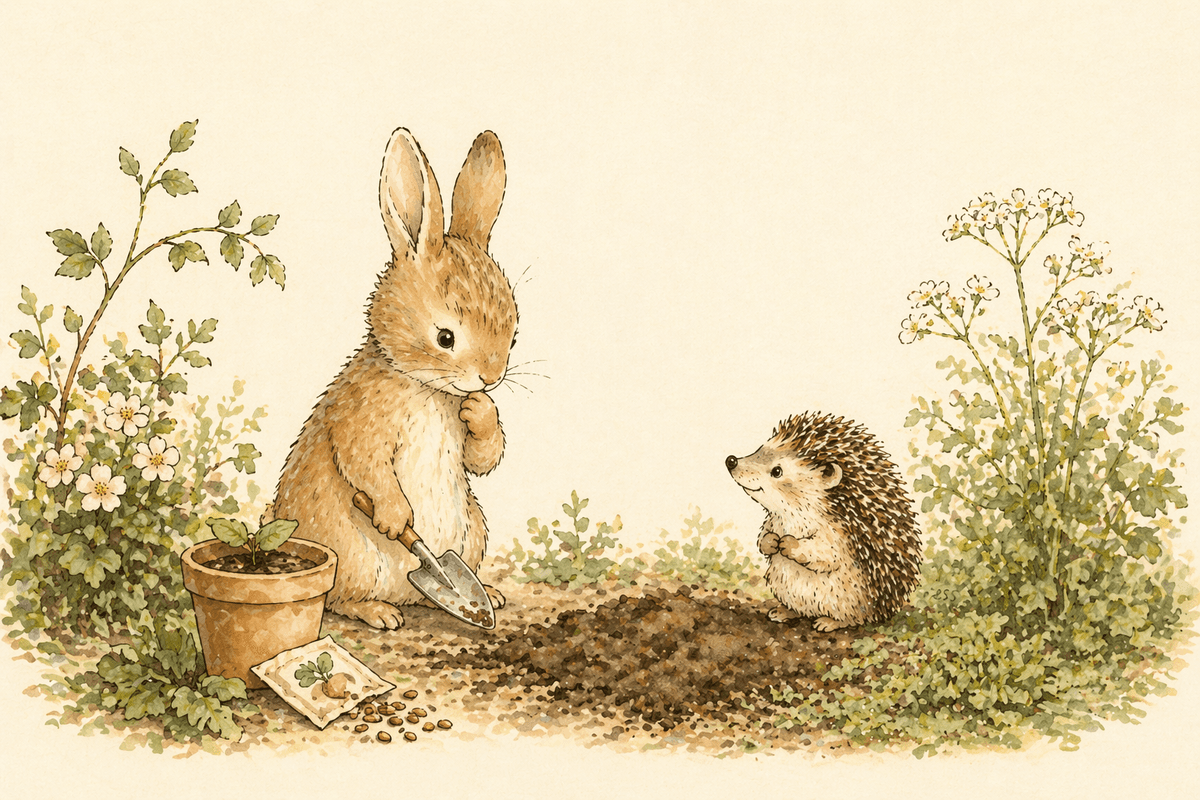
There’s a moment most gardeners know well.
You stand at the edge of your yard—maybe it’s mostly lawn, maybe it’s a bit wild—and you try to imagine what it could be.
You’ve seen the photos. Soft pathways. Layered planting. Something that feels calm, full, alive.
And then…
Nothing.
No clear first step. No obvious path from this to that.
So you do what most of us do:
You wait. Or you buy a few plants and hope it somehow comes together.
It’s not that you lack ideas.
It’s that no one really shows you how to begin.
The Truth Most Garden Advice Skips
Most garden content starts at the wrong place.
It shows you:
The finished garden
The plant list
The “before and after”
But it skips the part in the middle—the part where you’re standing in your yard thinking:
“Okay… but what do I actually do first?”
That gap? That’s where people get stuck.
So instead of trying to design your whole garden today, we’re going to do something much simpler.
We’re going to start where you stand.
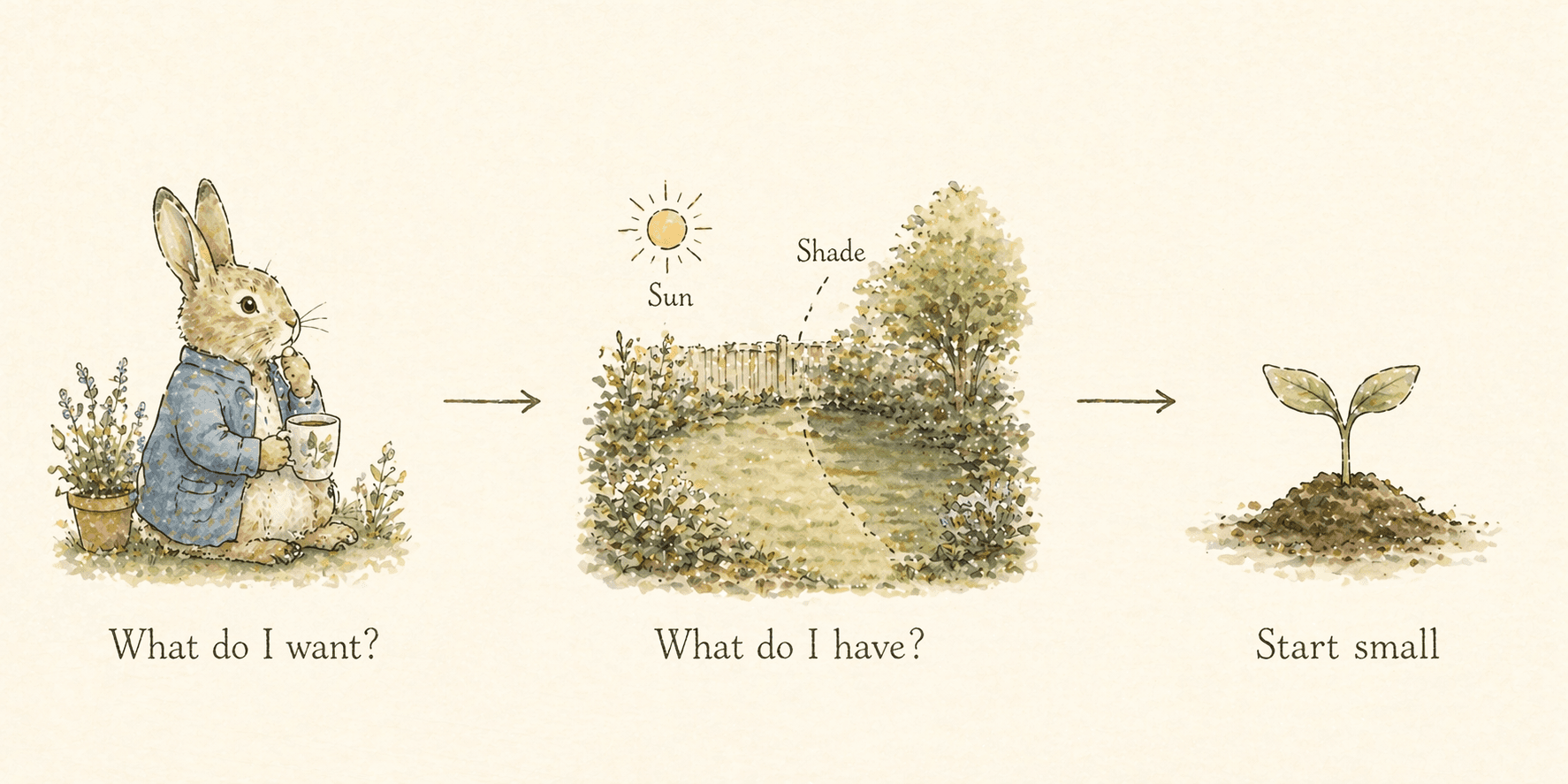
Step 1: Decide What You Want From Your Garden
Not what it should look like.
Not what Pinterest says.
What do you want from it?
Take a minute (ideally outside, with a cup of tea ☕) and ask yourself:
Do I want a quiet place to sit?
Do I want to grow food?
Do I want birds and bees visiting?
Do I want something low effort?
Do I want it to feel full and a little wild?
You don’t need a perfect answer. Just a direction.
Because here’s the thing:
A garden designed for relaxing looks very different from one designed for growing vegetables.
And both look different from one designed to attract wildlife.
There’s no wrong choice—but there is a starting point.
Step 2: Look at What You Already Have
Before you change anything, take a proper look at your space.
Not quickly. Not in passing.
Actually observe it.
Try this (it matters more than you think):
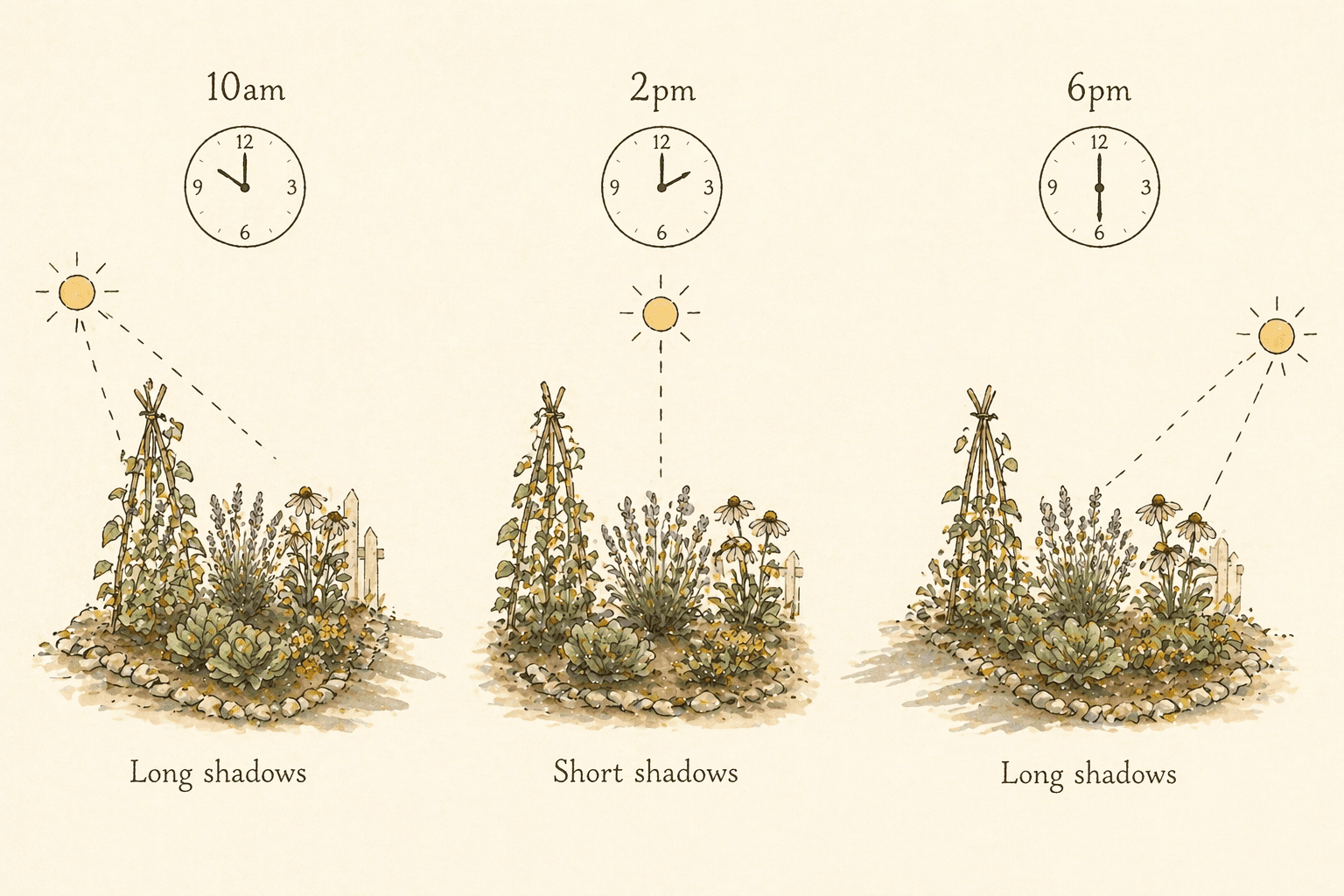
Check your garden at three times in one day:
Morning (around 10am) → Where is the sun?
Afternoon (around 2pm) → What’s now in shade?
Evening (around 6pm) → What still gets light?
You don’t need to measure anything. Just notice.
Which areas stay bright
Which areas are always shady
Which spots change throughout the day
This alone will save you from a lot of frustration later.
And then ask:
Is the soil dry or heavy and damp?
Is the space flat, sloped, awkward?
Where do you naturally walk already?
You’re not judging your garden here.
You’re just getting to know it.
A Different Way to Think About Starting
Most people think:
“I need a full plan before I begin.”
You don’t.
What you actually need is:
A direction (what you want from the space)
A clear view of reality (what you already have)
That’s it.
Those two things are enough to move forward.
What We’re Not Doing (Yet)
We are not:
Picking plants
Designing layouts
Buying anything
That comes later—and it becomes much easier once you’ve done these first steps.
A Small Task (That Changes Everything)
Before you leave this page, do this:
Go outside
Stand in your garden
Say (out loud or in your head):
“This doesn’t need to be finished. It just needs to begin.”
Then notice:
Where you’d naturally sit
Where your eye goes
What feels empty (in a good way)
That’s your starting point.
What Comes Next
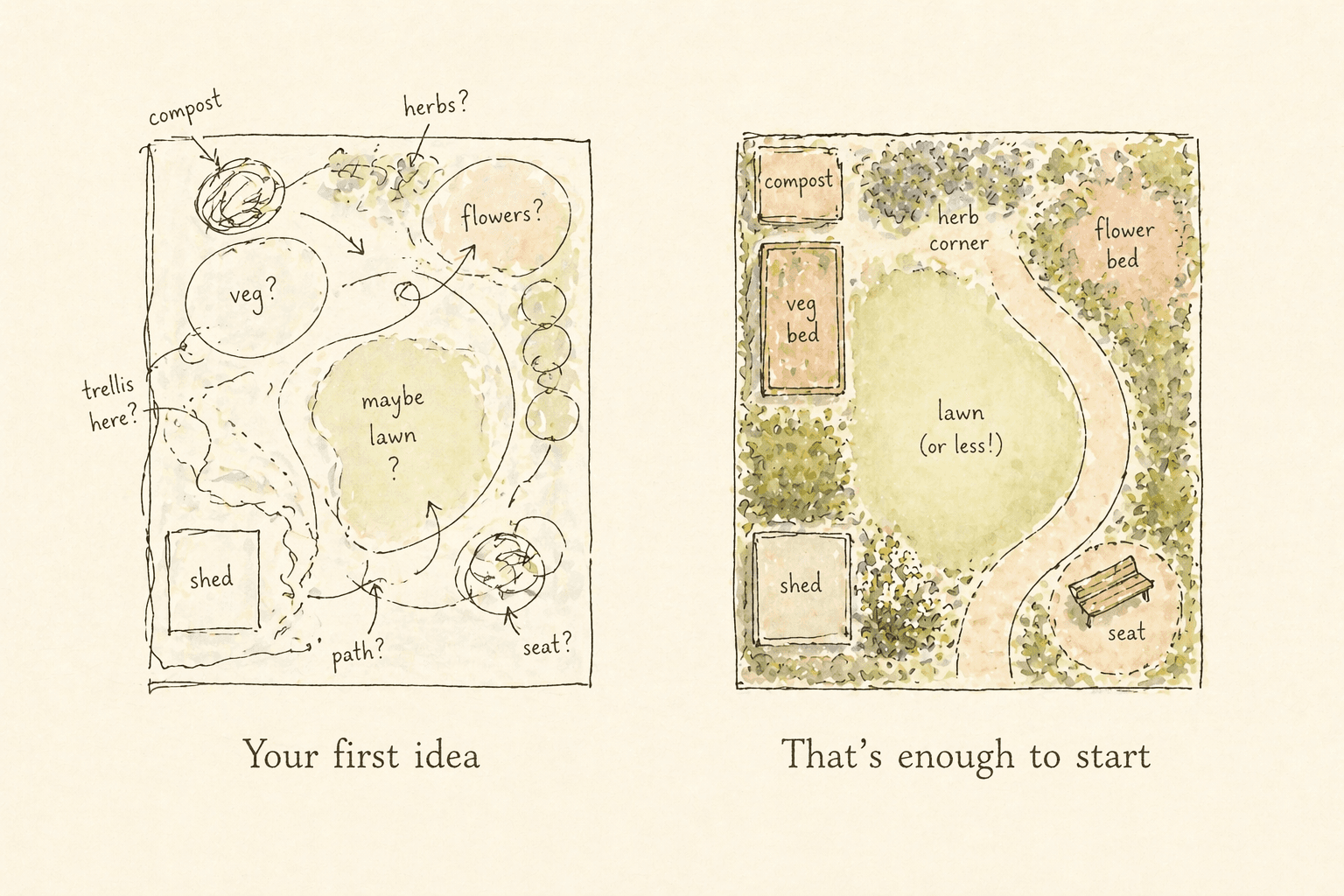
In the next post, we’ll do something most people avoid:
We’ll draw a garden plan.
Not a perfect one.
Not even a good one.
A bad one.
And it will unlock everything.
A Gentle Reminder
You are not behind.
You are not doing it wrong.
You’re just at the beginning—and beginnings are meant to be a little unclear.
That’s where all good gardens start
Related reads
A few more posts that pair well with this one.
Garden Design for Beginners
→A step-by-step series to help you move from an empty space to a garden that works—covering planning, structure, planting, and the final details.
Why Your Garden Needs Structure Before Plants
→A beautiful garden doesn’t start with plants—it starts with structure. Discover how to shape your space first so everything else falls into place.
Garden Mistakes I Still Make Every June
→Even experienced gardeners make mistakes. Here are the common June gardening mistakes I still catch myself making in the Pacific Northwest—and what I'm trying to do differently.
Not finding the answers?
Have a gardening question or topic you'd like me to write about? Send a request and I'll see what I can dig up.
Enjoying this post?
If you love the whimsy and want to support more PNW garden guides, you can buy me a coffee.
🌼 Buy Me a Coffee