

Sketching Your Garden (Badly Is Perfect)
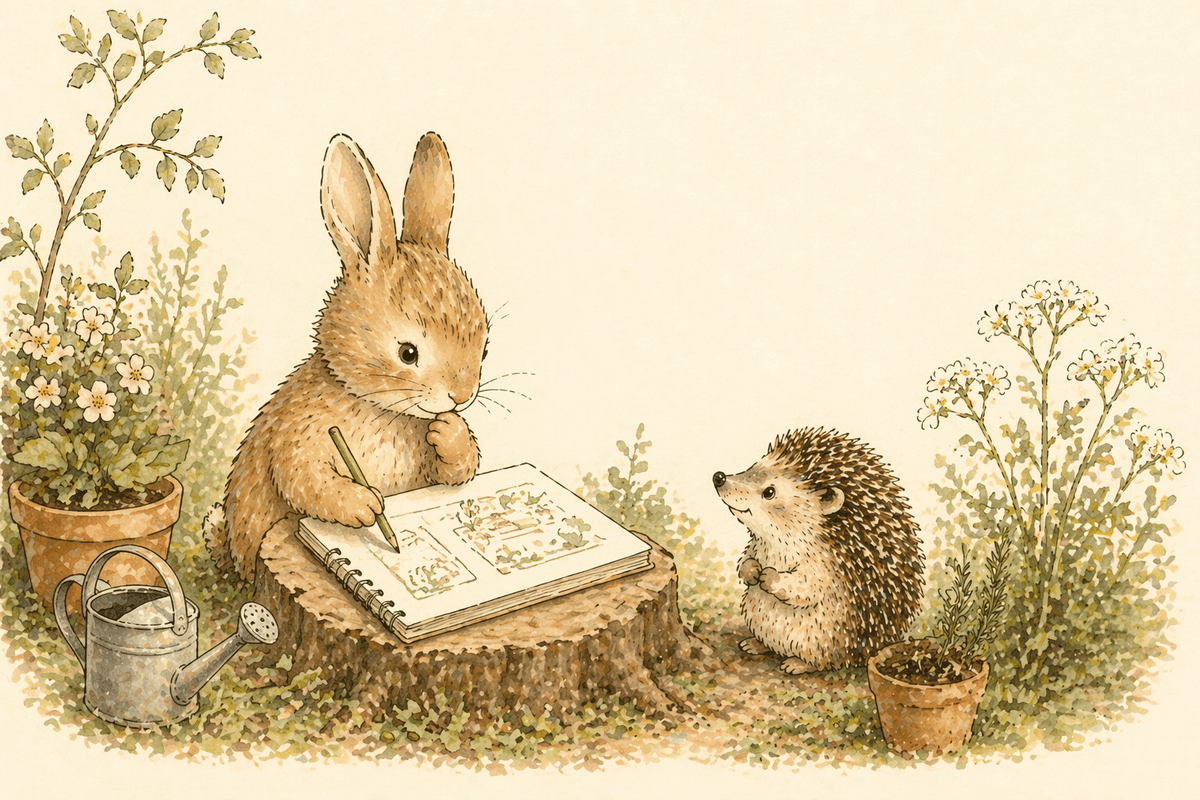
There’s a moment that stops almost everyone.
You’ve stood in your garden.
You’ve thought about what you want.
You’ve started to notice the light, the space, the shape of things.
And then comes the next step…
“I guess I need a plan.”
And suddenly, everything feels harder.
Because now it sounds like you need:
measurements
scale drawings
straight lines
something good
So most people do nothing.
The Truth About Garden Plans
You do not need a good plan.
You need a starting plan.
Something messy.
Something unclear.
Something that might not even work.
Because:
A bad plan you can change is infinitely better than a perfect plan that doesn’t exist.
Step 1: Draw the Worst Plan Possible
I mean that quite literally.
Grab:
a scrap of paper
a pencil
(optional) a cup of tea ☕
And draw your garden.
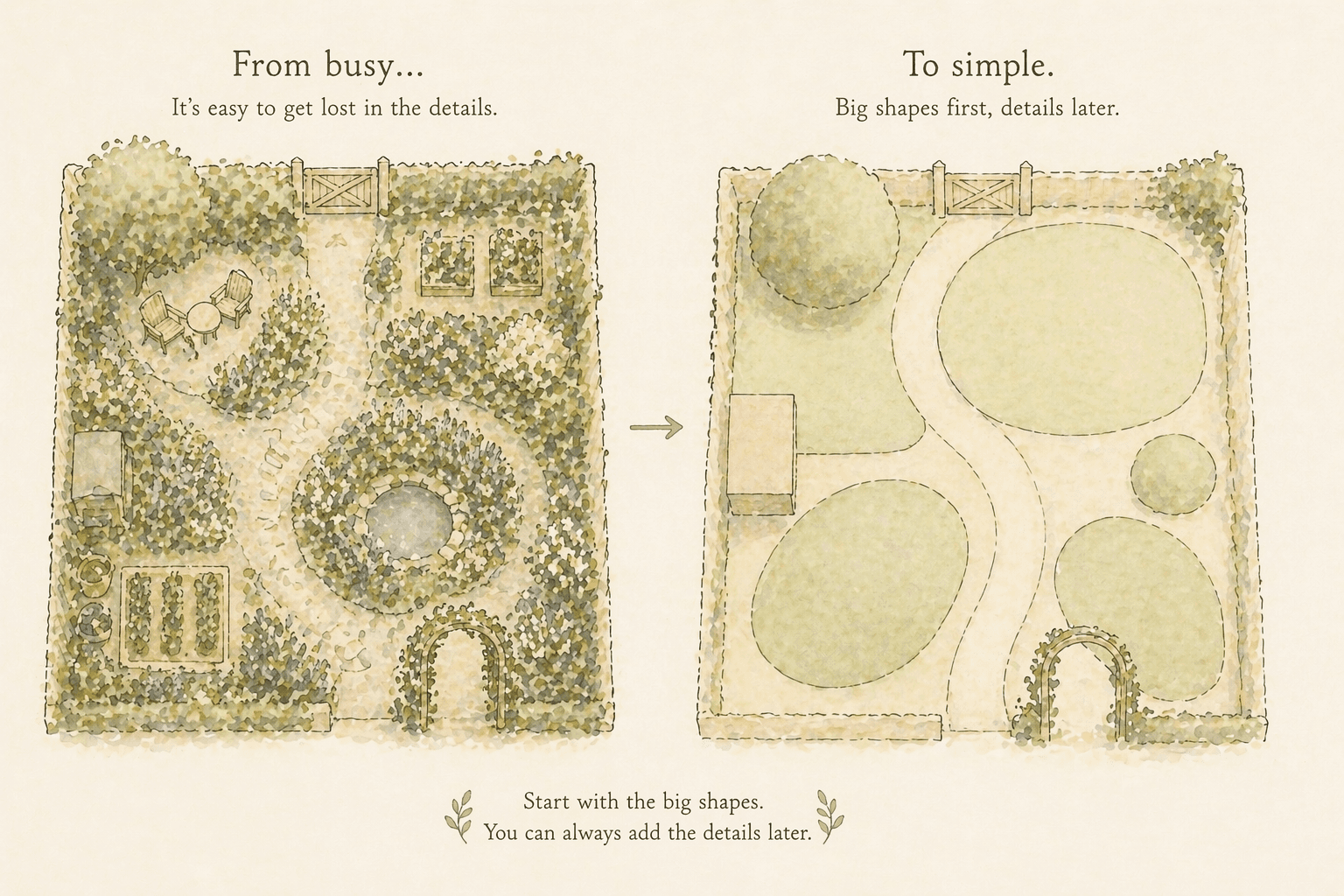
Not to scale.
Not neatly.
Not correctly.
Just… draw.
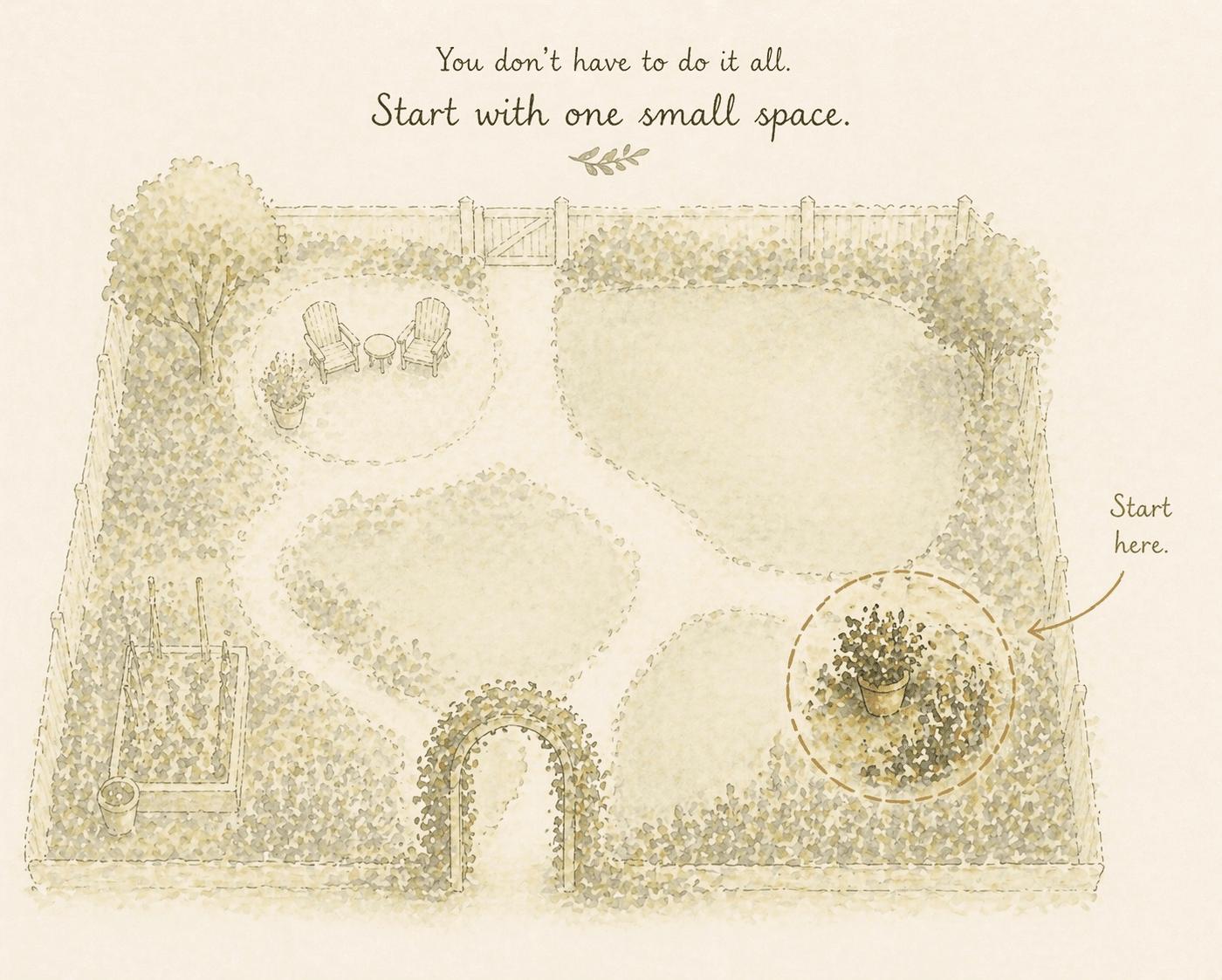
A circle for where a bed might go
A line for a path that kind of makes sense
A blob for a tree
A square for a seating area
Add notes if you want:
“veg?”
“maybe flowers?”
“sit here?”
It should feel a bit ridiculous.
That’s a good sign.
What This Actually Does
Something subtle happens when you do this.
You move from:
imagining → deciding
stuck → moving
overwhelmed → curious
Your brain stops trying to solve everything at once
…and starts playing.
And that’s where good gardens begin.
What a “Good Enough” Plan Looks Like
You’re not aiming for detail.
You’re aiming for:
rough zones
simple shapes
a general idea of flow
You don’t need plant names.
You don’t need spacing.
You don’t need to get it right.
You just need something you can look at and say:
“Okay… I could start here.”
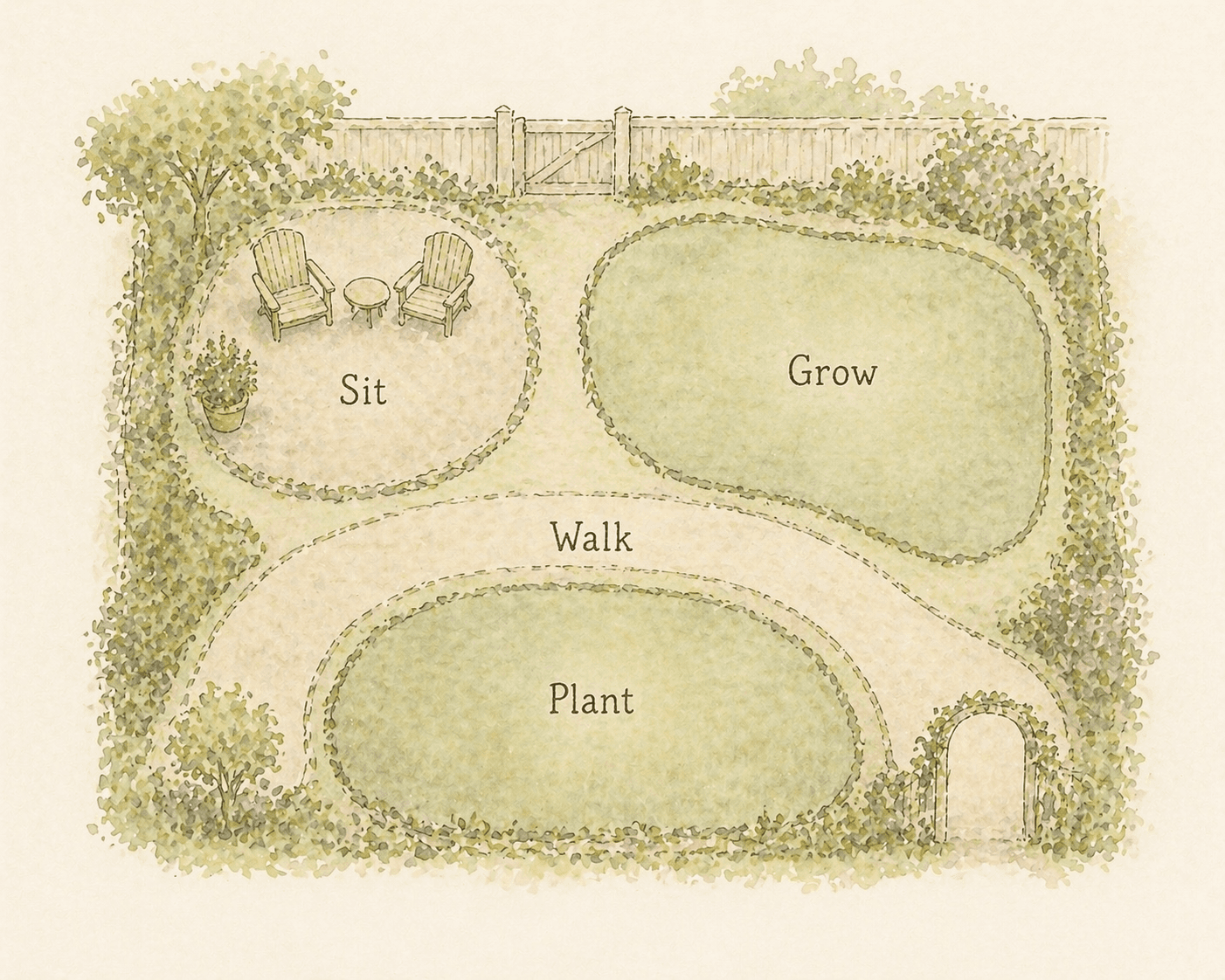
Step 2: Think in Zones, Not Plants
This is where most beginners get stuck.
They jump straight to:
“Which plants should I buy?”
Instead, think:
Where might I sit?
Where might I grow something?
Where might something taller go?
Where do I want to walk?
Your sketch becomes a map of intent, not detail.
Step 3: Keep It Loose
Your first sketch is not permanent.
In fact, it shouldn’t be.
You might:
redraw it tomorrow
move things around
completely change your mind
That’s not failure—that’s design.
Gardens are shaped over time, not decided in a moment.
A Small Shift That Changes Everything
Instead of asking:
“Is this the right plan?”
Try asking:
“Is this enough to begin?”
If the answer is yes—you’re ready.
What Comes Next
In the next post, we’ll take your rough sketch and turn it into something more grounded.
We’ll add structure.
Paths.
Edges.
The “bones” of the garden that make everything else feel intentional.
A Gentle Reminder
No one sees your first sketch.
It doesn’t have to be beautiful.
It doesn’t have to be clever.
It just has to exist.
And once it does, everything gets easier
Related reads
A few more posts that pair well with this one.
Garden Design for Beginners
→A step-by-step series to help you move from an empty space to a garden that works—covering planning, structure, planting, and the final details.
Why Your Garden Needs Structure Before Plants
→A beautiful garden doesn’t start with plants—it starts with structure. Discover how to shape your space first so everything else falls into place.
The Final Layer: Color, Seasons, and Making It Yours
→Bring your garden to life with color, seasonal interest, and small details. A simple guide to creating a garden that feels personal and evolves over time.
Not finding the answers?
Have a gardening question or topic you'd like me to write about? Send a request and I'll see what I can dig up.
Enjoying this post?
If you love the whimsy and want to support more PNW garden guides, you can buy me a coffee.
🌼 Buy Me a Coffee