
How to Water a Garden Properly (PNW Beginner Guide)
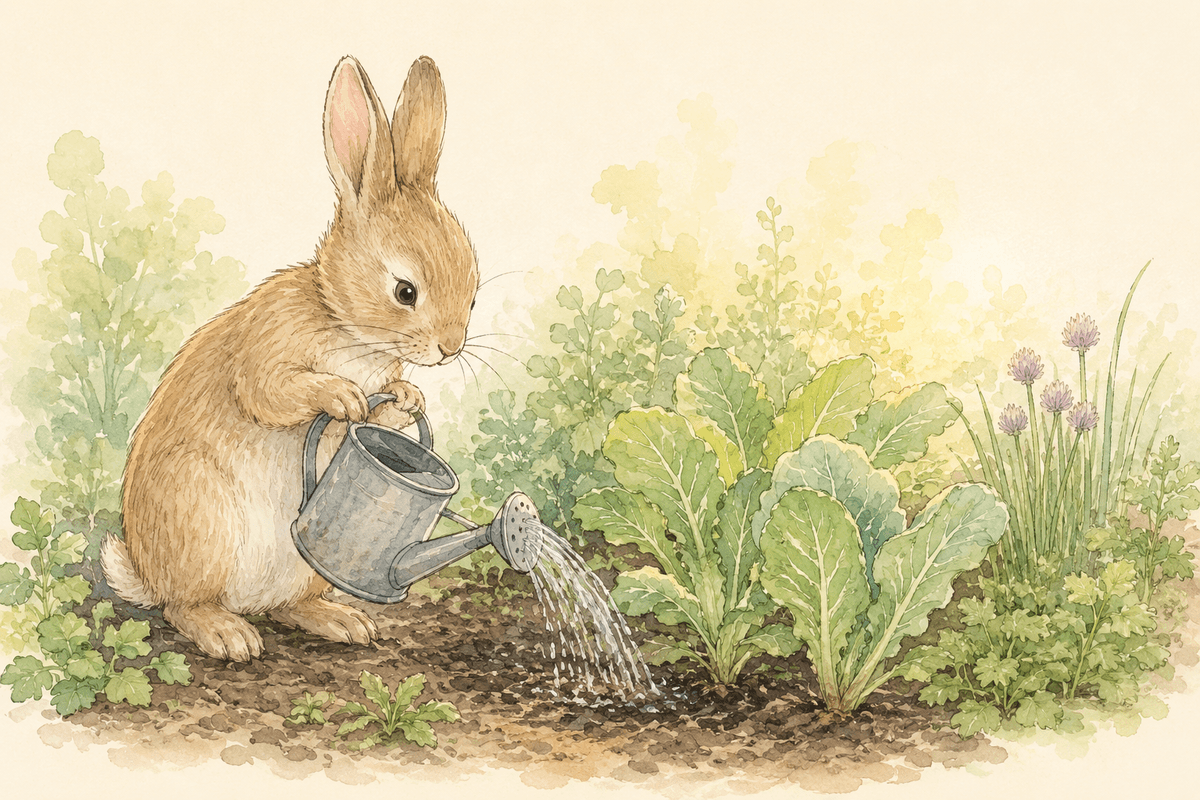
One of the biggest beginner gardening mistakes is watering too often, too lightly, or at the wrong time of day.
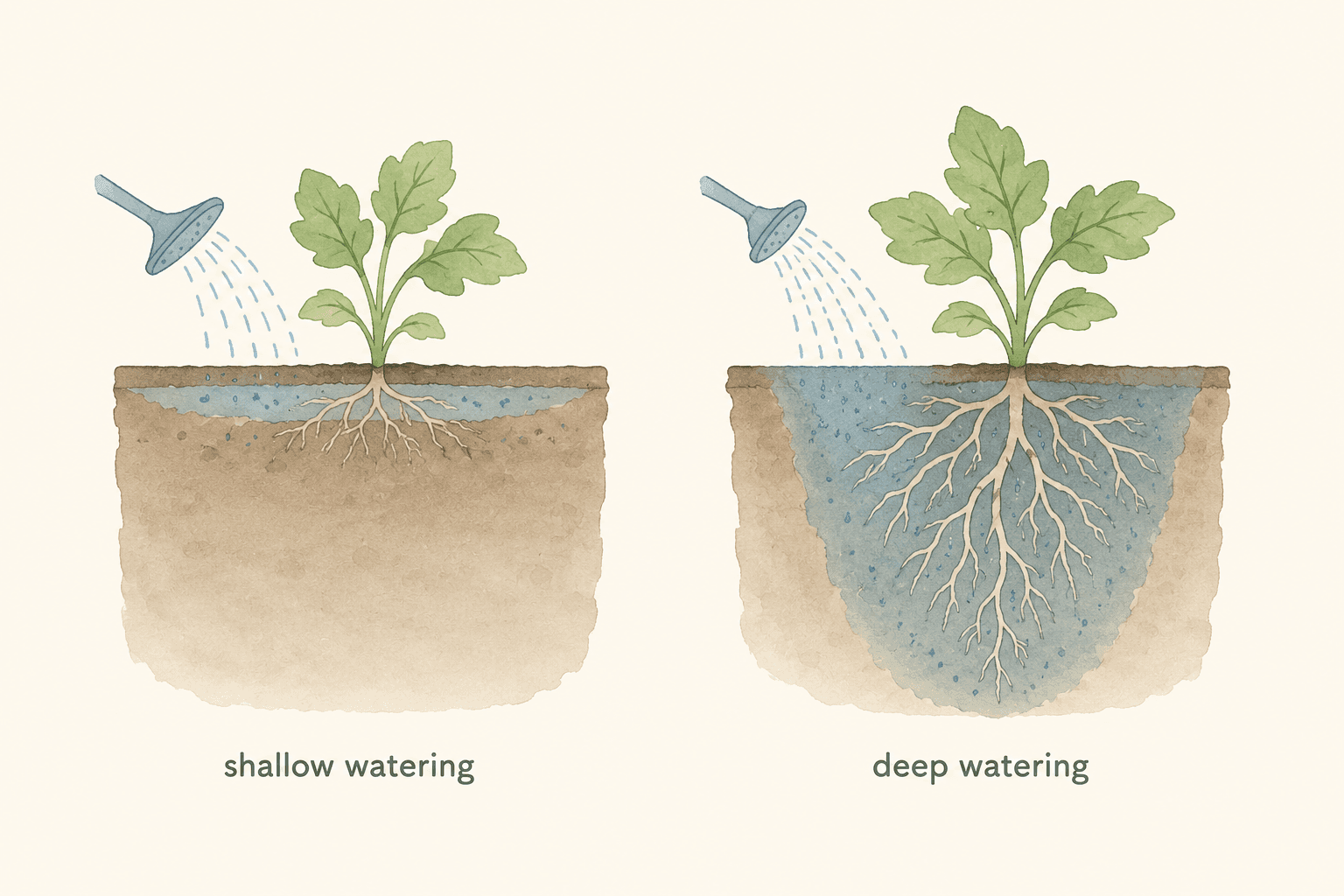
It feels helpful to give plants a little water every day. But in many cases, shallow watering actually creates weaker plants with shallow roots that dry out faster.
In the Pacific Northwest, this gets even more confusing because spring is wet, early summer can suddenly turn dry, and containers often need water far more often than garden beds.
The good news is that watering becomes much simpler once you understand a few basic principles.
Most Plants Prefer Deep Watering
A quick sprinkle only wets the top layer of soil.
That encourages roots to stay near the surface, where the soil dries out quickly. Plants become more dependent on constant watering and struggle more during heat.
Deep watering does the opposite.
When water soaks farther into the soil, roots grow deeper to reach it. That usually creates healthier, more resilient plants over time.
For many gardens, watering deeply a few times a week is better than giving tiny amounts every day.
Containers Dry Out Faster Than Garden Beds
Not all gardens hold water the same way.
Containers dry out very quickly, especially in sunny weather or wind. Raised beds also dry faster than in-ground gardens because more soil surface is exposed to air.
Plants in the ground usually stay moist longer.
That means a watering schedule that works for one part of your garden may not work for another.
A container in full sun may need water daily during warm weather, while an established in-ground plant nearby could be perfectly fine for several more days.
How to Check if Soil Actually Needs Water
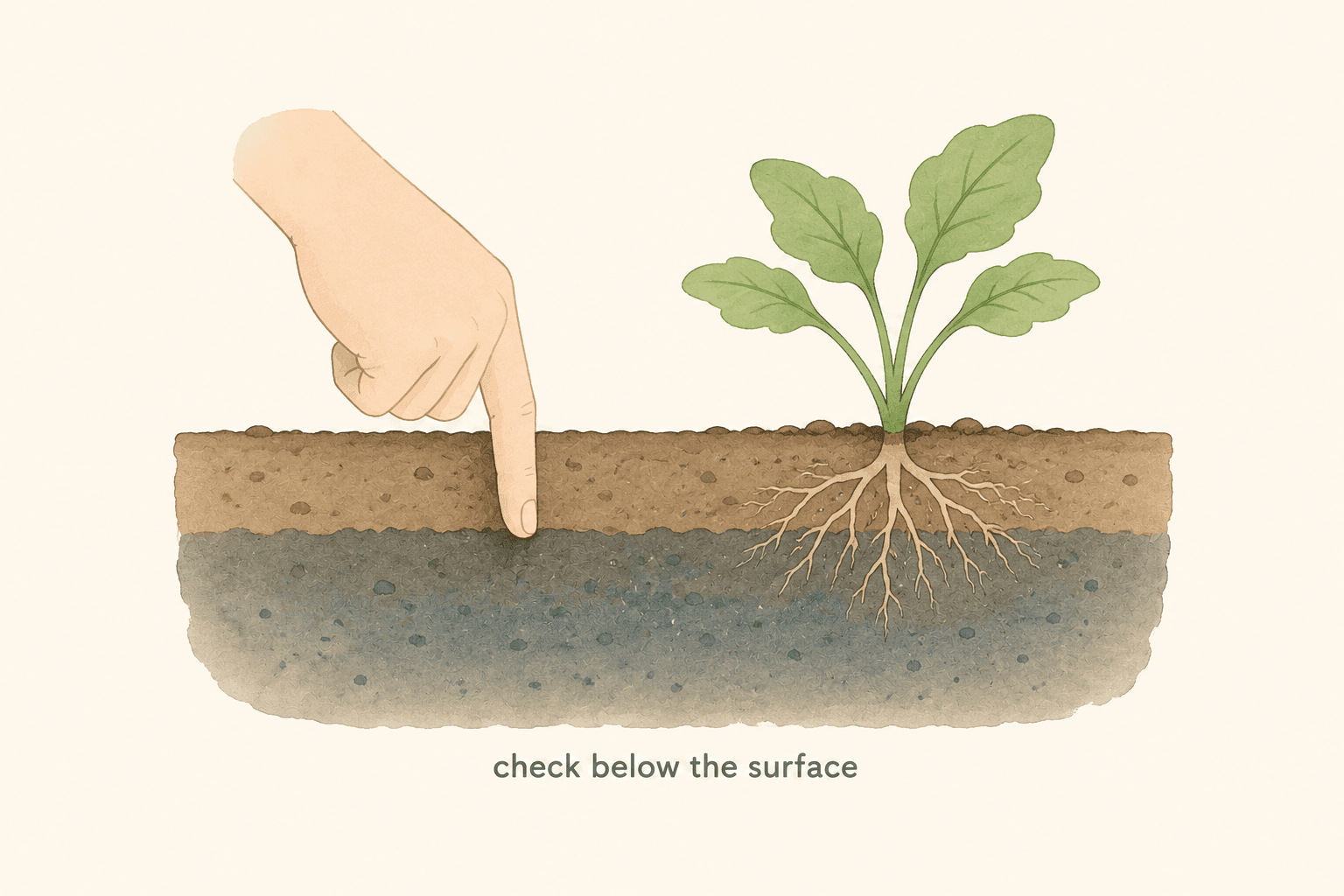
Instead of watering on a strict schedule, check the soil itself.
One of the simplest methods is to press your finger a couple inches into the soil.
If the soil still feels cool and slightly moist below the surface, it’s usually okay to wait.
If it feels dry deeper down, it’s probably time to water.
This becomes much more reliable than watering automatically every evening.
Signs You May Be Overwatering
Many beginners assume drooping plants always need more water.
But overwatered plants can droop too.
Common signs of overwatering include:
yellowing leaves
constantly damp soil
mushy stems
fungus gnats
slow growth
In the PNW, this often happens in spring when rain is already keeping the soil moist.
Adding extra water on top of that can stress plants instead of helping them.
Morning Is Usually the Best Time to Water
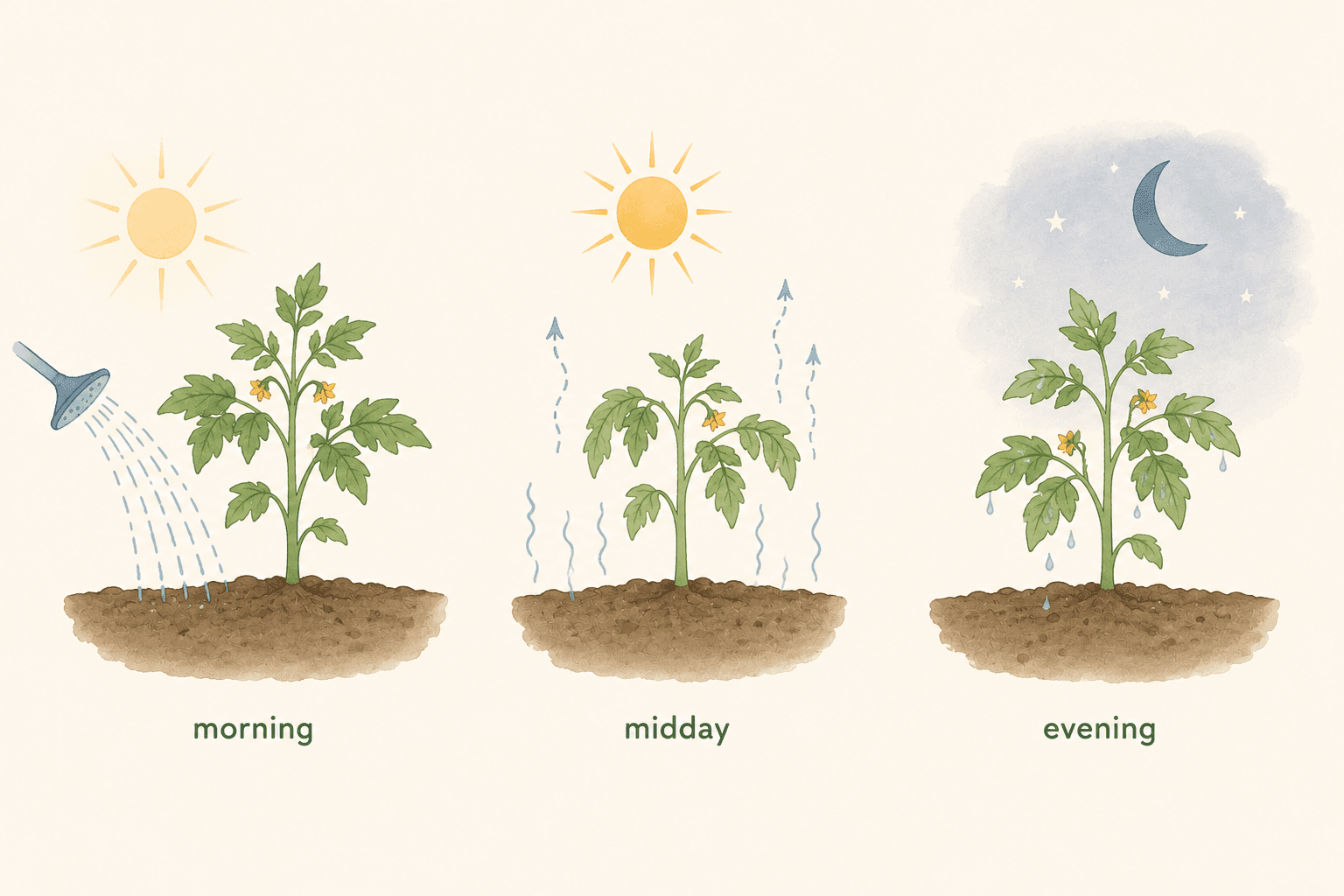
Morning watering gives plants time to absorb moisture before the heat of the day.
It also allows leaves to dry faster, which can help reduce mildew and fungal issues.
Evening watering is sometimes necessary during heat waves, but constantly leaving plants damp overnight can create problems for some plants.
Final Thoughts
Watering a garden is less about following perfect rules and more about learning to observe your soil and plants over time.
Most gardens do better with deeper watering, fewer shallow sprinkles, and a little patience between waterings.
And once you stop treating watering like a daily emergency, gardening usually becomes much calmer — for both you and your plants.
Related reads
A few more posts that pair well with this one.
What to Deadhead in June (And What to Leave Alone)
→Not sure which flowers to deadhead in June? Learn what to trim, what to leave alone, and how deadheading can keep your garden blooming longer in the Pacific Northwest.
The 10 Plants That Thrive on Neglect
→Looking for low-maintenance plants? These 10 hardy favorites tolerate drought, poor soil, and a little neglect—perfect for busy gardeners in the Pacific Northwest.
What to Plant in August (Zone 8a & 8b Pacific Northwest Guide)
→Discover what to plant in August in the Pacific Northwest (Zone 8a & 8b). Find the best vegetables, herbs, and flowers to sow now for autumn and winter harvests.
Not finding the answers?
Have a gardening question or topic you'd like me to write about? Send a request and I'll see what I can dig up.
Enjoying this post?
If you love the whimsy and want to support more PNW garden guides, you can buy me a coffee.
🌼 Buy Me a Coffee