
Pruning Apple Trees in the Pacific Northwest
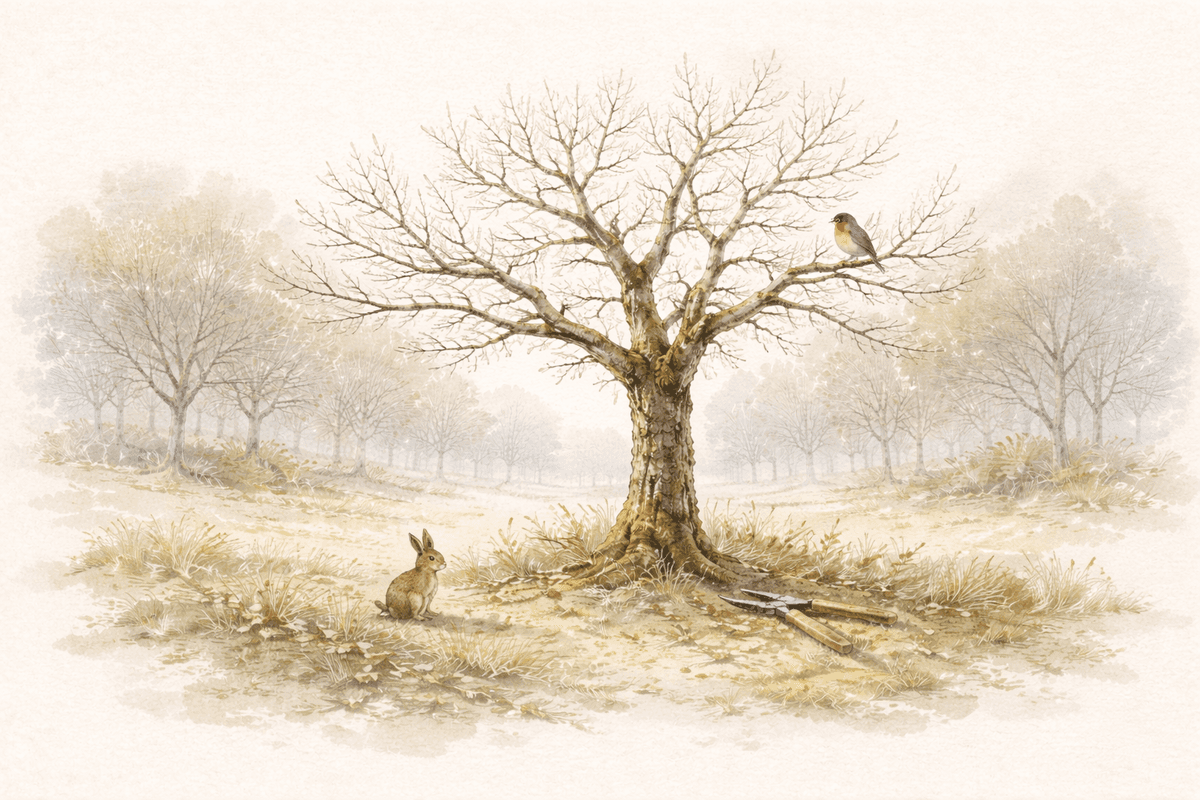
Pruning apple trees in the Pacific Northwest is best done in winter, when the tree is dormant and its structure is visible.
Leaves are gone. Fruit is long past. What remains is the shape the tree has been growing into — for better or worse.
This is the season to correct it.
In a wet climate, pruning isn’t only about fruit production. It’s about airflow, drying time, and reducing the places where moisture can linger. A tree that stays open and balanced through winter is better prepared for spring growth and summer fruit.
When to Prune
In zone 8a and across much of western Washington and Oregon, pruning is typically done between January and early March.
The coldest weather has usually passed, but new growth hasn’t started yet. Cuts made during this window heal cleanly and are less likely to invite disease.
If you have a choice, prune on a dry day. Fresh cuts exposed to constant rain take longer to seal.
Reading the Tree
Before making any cuts, take a moment to step back.
In winter, the structure of the tree is visible. Without leaves or fruit, patterns emerge that point to where the tree struggled last season — for light, for space, or for balance.
Pruning works best when it responds to those patterns rather than forcing a shape all at once.
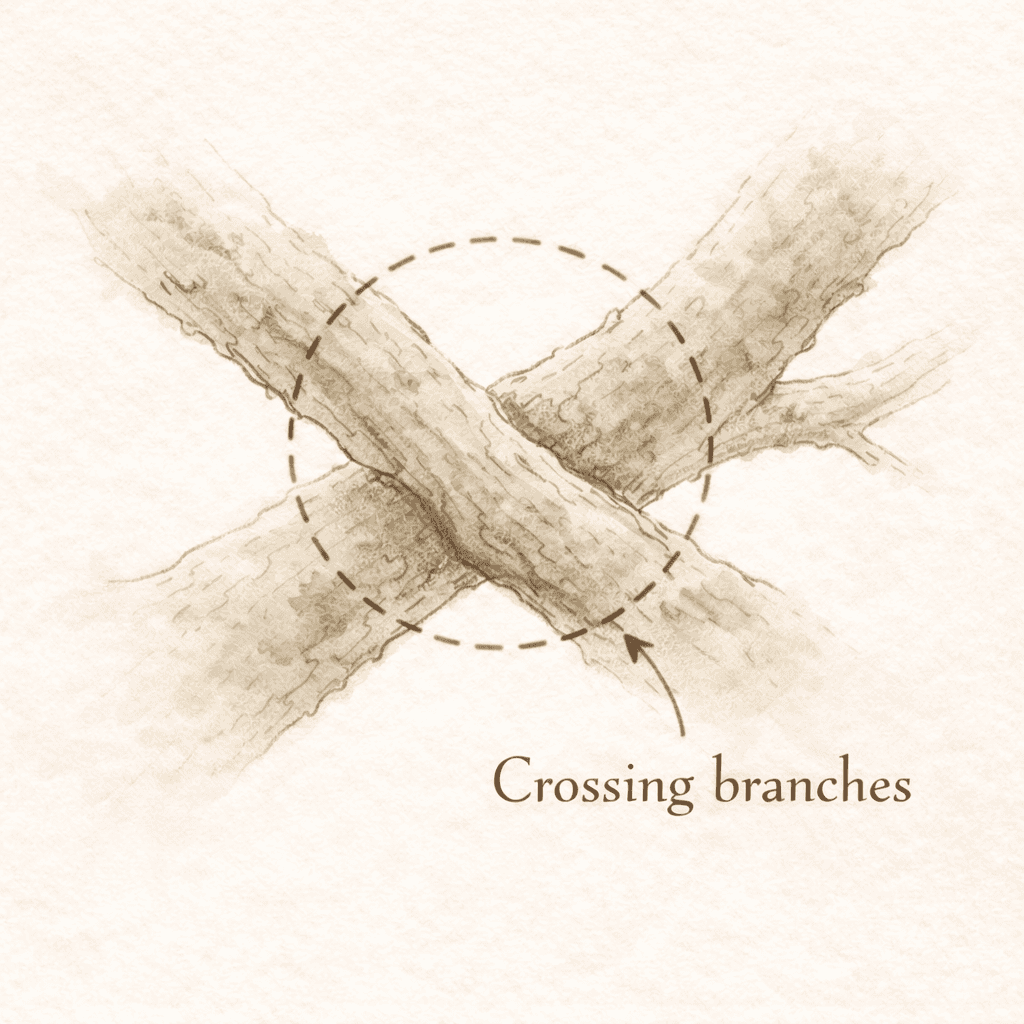
Crossing Branches
Branches that cross or rub against each other create points of friction. Over time, movement from wind and rain can damage the bark and weaken both branches.
When two branches compete for the same space, removing one helps reduce stress and keeps the structure of the tree open and stable.
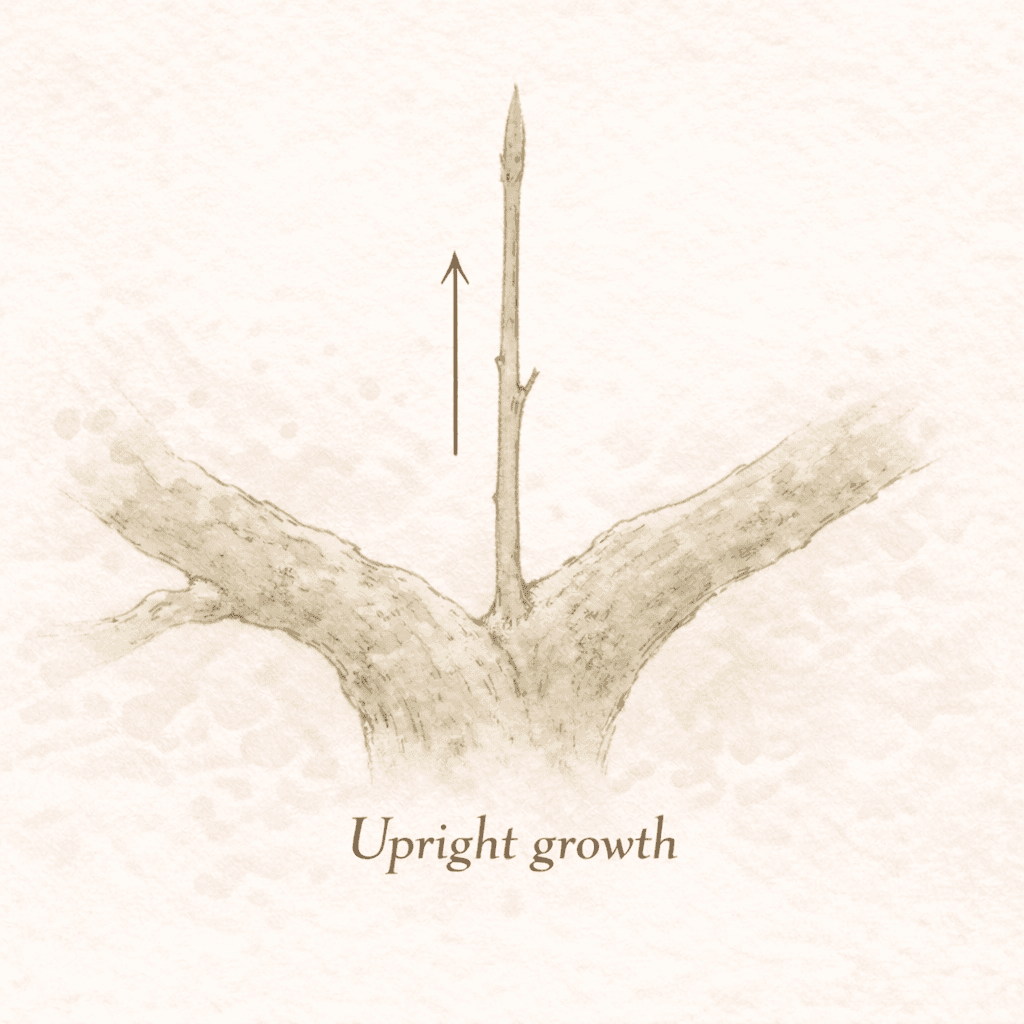
Upright growth
Fast-growing vertical shoots crowd the canopy and rarely produce fruit. Thinning them helps keep growth balanced and productive.
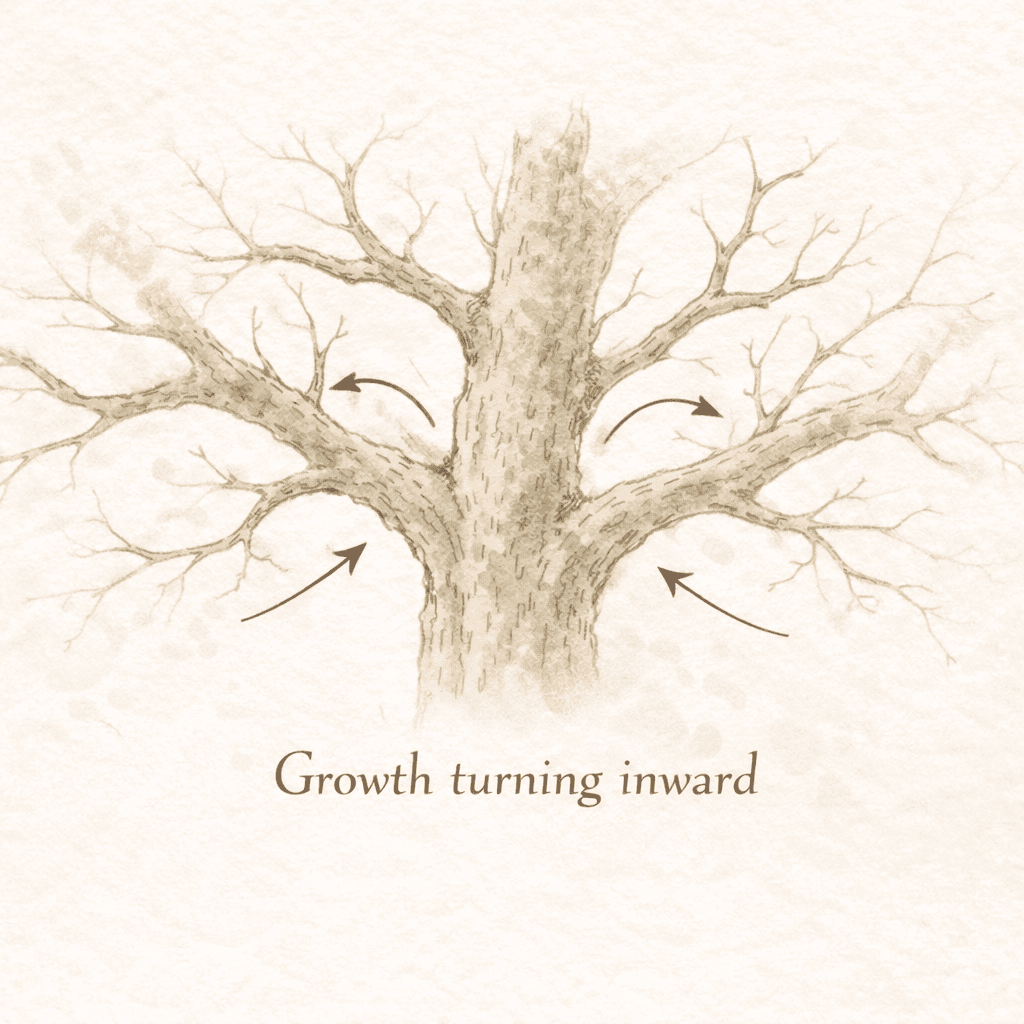
Inward-Growing Growth
Growth that turns inward toward the center of the tree crowds the canopy. This reduces airflow and limits the light reaching fruiting wood.
In a wet climate, a crowded center also takes longer to dry after rain. Pruning inward-growing shoots helps maintain an open structure and supports healthier growth.
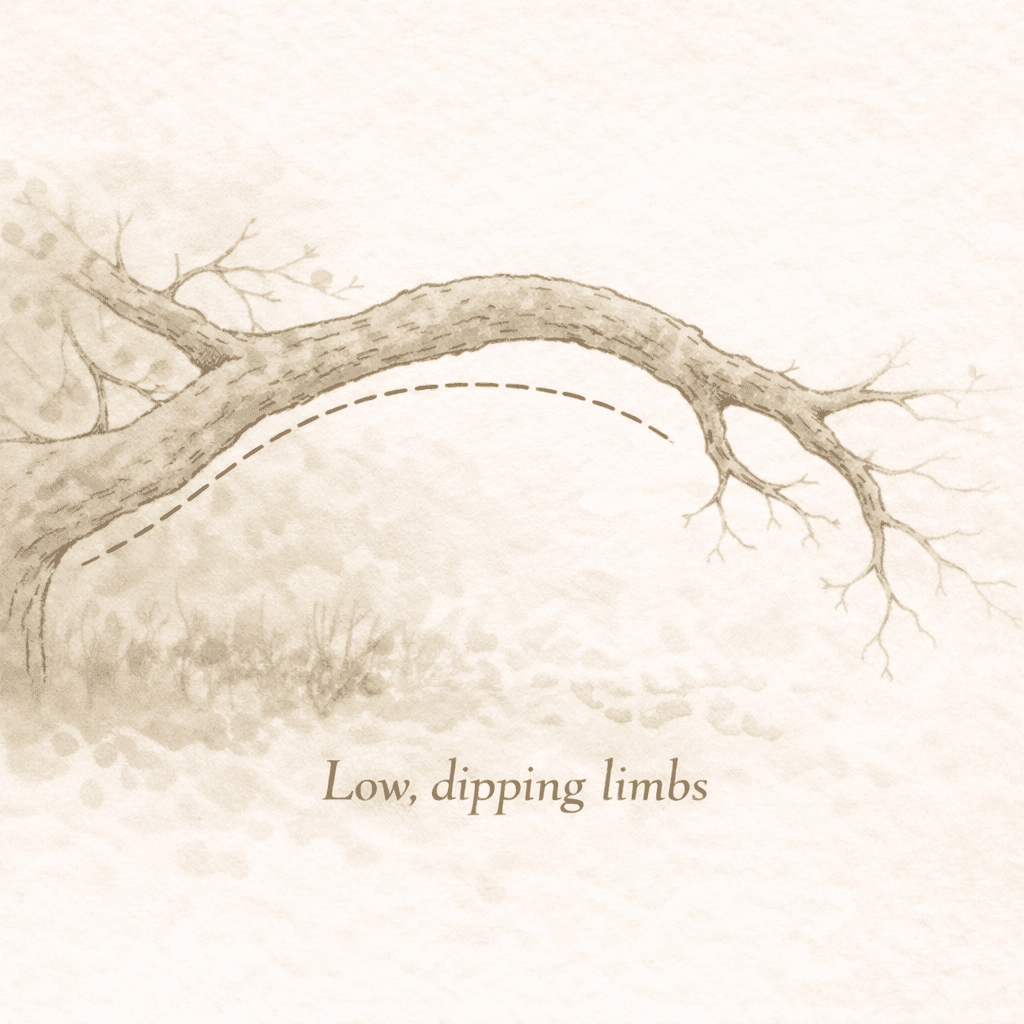
Low, Downward-Growing Limbs
Low limbs often show where the tree carried more weight than it could comfortably support. Over time, these branches dip downward and crowd the lower canopy.
Reducing or removing low, downward-growing limbs helps rebalance the tree and prevents fruit from pulling branches too close to the ground.
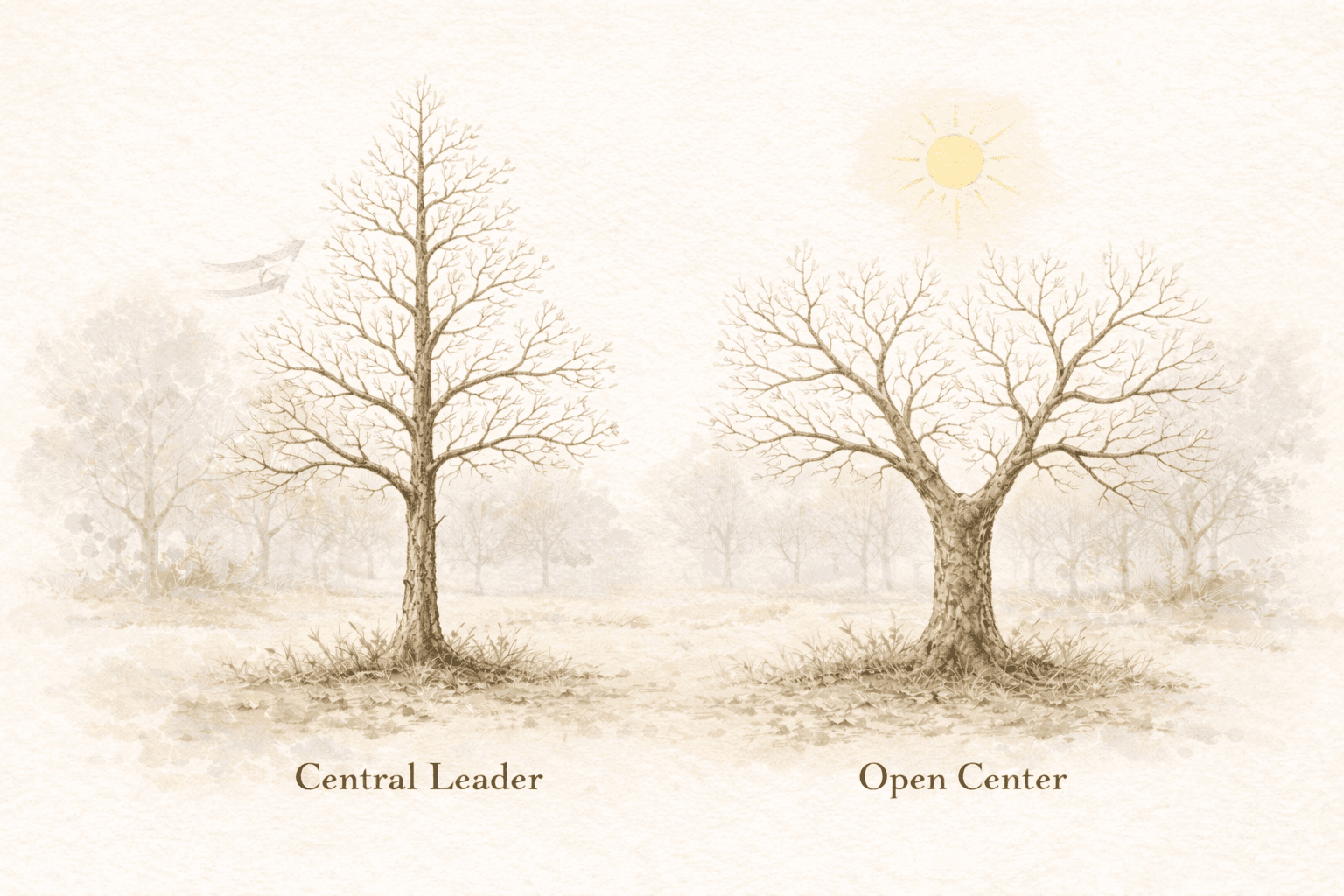
Central Leader and Open Center
Apple trees are commonly trained in one of two forms.
A central leader structure keeps a single main trunk with branches spaced along it. This form provides strength and is often used for younger trees or sites exposed to wind.
An open center structure removes the main leader and encourages outward-growing branches. This opens the canopy to light and airflow and is often preferred in older trees or in wetter gardens where drying time matters.
Both approaches aim for the same outcome: a tree that can support fruit without crowding itself.
How to Make a Pruning Cut
Once you’ve decided what to remove, how you make the cut matters.
A good pruning cut heals cleanly and reduces the chance of disease — especially important in a wet climate.
Cut Just Outside the Branch Collar
At the base of every branch is a slightly raised area where it meets the trunk or larger limb. This is the branch collar.
Make cuts just outside this collar, not flush against the trunk and not leaving a long stub. Cutting too close damages the tree’s ability to seal the wound. Leaving a stub slows healing and creates an entry point for rot.
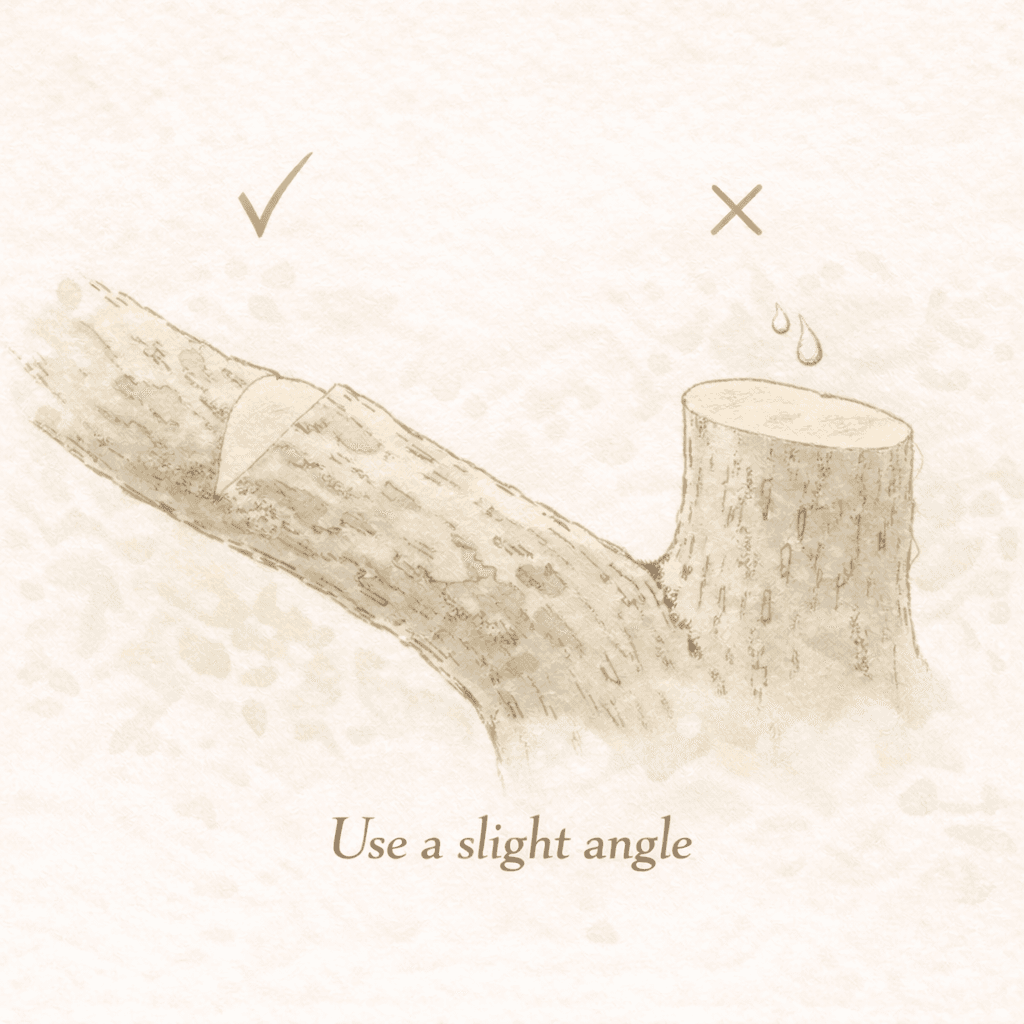
Use a Slight Angle
Cuts should be made at a slight angle, following the natural direction of the branch. This helps water shed away from the cut surface rather than collecting on it.
Avoid steep angles or straight, blunt cuts that leave flat surfaces exposed to rain.
One Clean Cut Is Better Than Many
Use sharp, clean tools and make deliberate cuts. Tearing bark or sawing back and forth damages tissue and makes healing harder.
If a branch is heavy, support it or remove it in stages to prevent tearing as it falls.
Common Pruning Mistakes
Most pruning mistakes come from moving too quickly.
Removing too much at once can push the tree into excessive leafy growth. Leaving stubs slows healing. Focusing only on the outline of the tree can leave the interior dense and damp.
In the Pacific Northwest, airflow matters. A tree that dries quickly after rain is less likely to develop disease.
A Seasonal Practice
Pruning apple trees is not a one-time correction. It’s a seasonal practice that shapes the tree over years.
Each winter offers a chance to adjust what didn’t work before — to remove stress, reduce crowding, and guide future growth.
The results show up later, in blossoms, in fruit set, and in branches that hold their weight without breaking.
Related reads
A few more posts that pair well with this one.
When to Prune Roses in the Pacific Northwest (Zone 8 Guide)
→Wondering when to prune roses in Washington State? Here’s exactly when to prune roses in the Pacific Northwest — how to know it’s time, and how to prune with confidence.
How to Prune Hydrangeas (Without Killing Them)
→Confused about pruning hydrangeas? Learn how to identify your type, when to prune, and exactly what to cut—without killing your plant. A simple, PNW-friendly guide.
Why Late Winter Is the Secret Season for Planting Bare-Root Trees & Shrubs
→Late winter and early spring are ideal for planting bare-root trees and shrubs in the Pacific Northwest. Learn when and how to plant for strong roots.
Not finding the answers?
Have a gardening question or topic you'd like me to write about? Send a request and I'll see what I can dig up.
Enjoying this post?
If you love the whimsy and want to support more PNW garden guides, you can buy me a coffee.
🌼 Buy Me a Coffee