
When to Prune Roses in the Pacific Northwest (Zone 8 Guide)
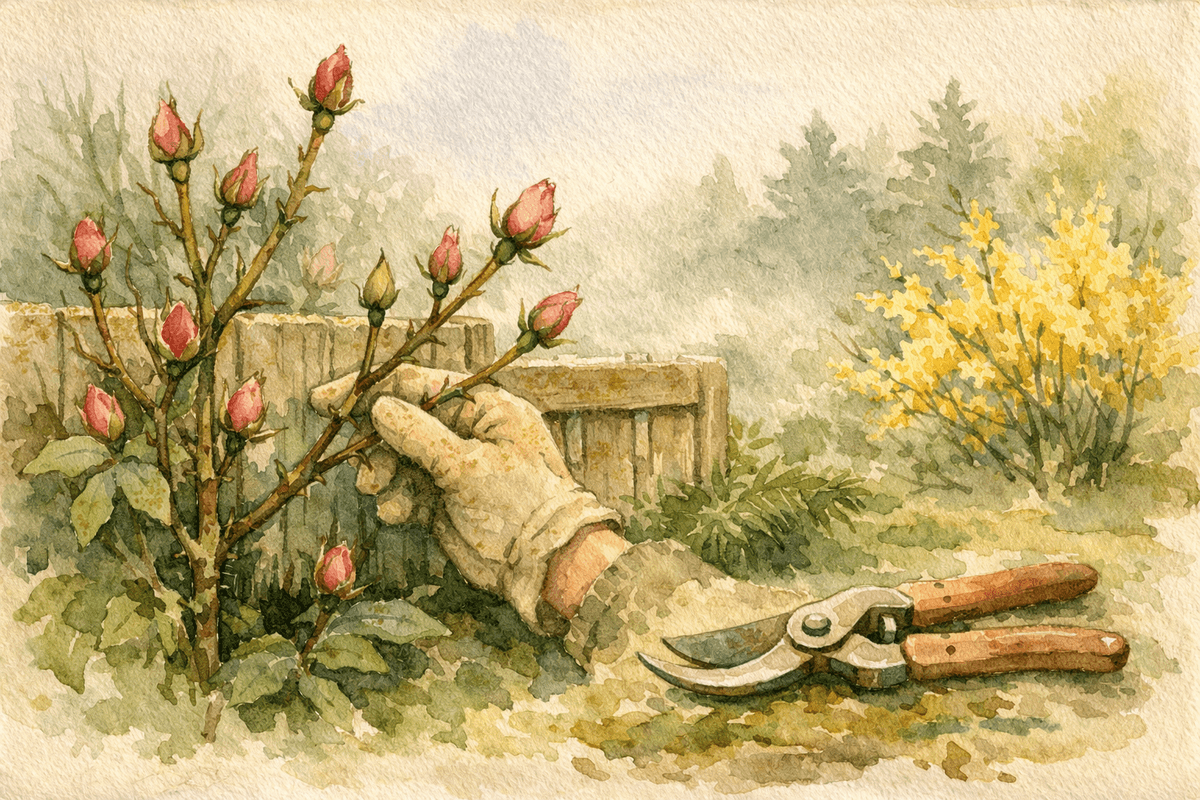
There’s a particular March feeling in the Pacific Northwest.
The rain softens. The light shifts. You step outside and notice your roses — bare, thorned, quietly alive — and you feel that familiar urge:
Is it time? Should I cut them back now?
If you garden in Seattle or anywhere in Western Washington (Zone 8a), here’s the reassuring truth:
You’re probably right on schedule.
The Short Answer (For Skimmers)
In most of Western Washington, prune roses:
Late February through March
When buds begin to swell but before leaves fully unfurl
It’s less about the calendar and more about what the plant is telling you.
Why Timing Is Different in the PNW
Unlike colder regions, we don’t have deep freezes that hold plants dormant for long stretches. Our winters are:
Mild
Wet
Often hovering in the 40s
That means roses begin waking up earlier — sometimes quietly, before we’re paying attention.
Pruning in late winter to early spring helps:
Remove winter damage
Improve airflow (important in our damp climate)
Reduce fungal issues like black spot
Encourage strong, balanced growth
If you’re unsure about frost timing in your area, review your local patterns in our PNW Frost Dates (A Gentle Guide) — but generally, rose pruning happens well before your last frost.
How to Know It’s Time (Plant Signals)
Instead of watching the calendar, watch for these:
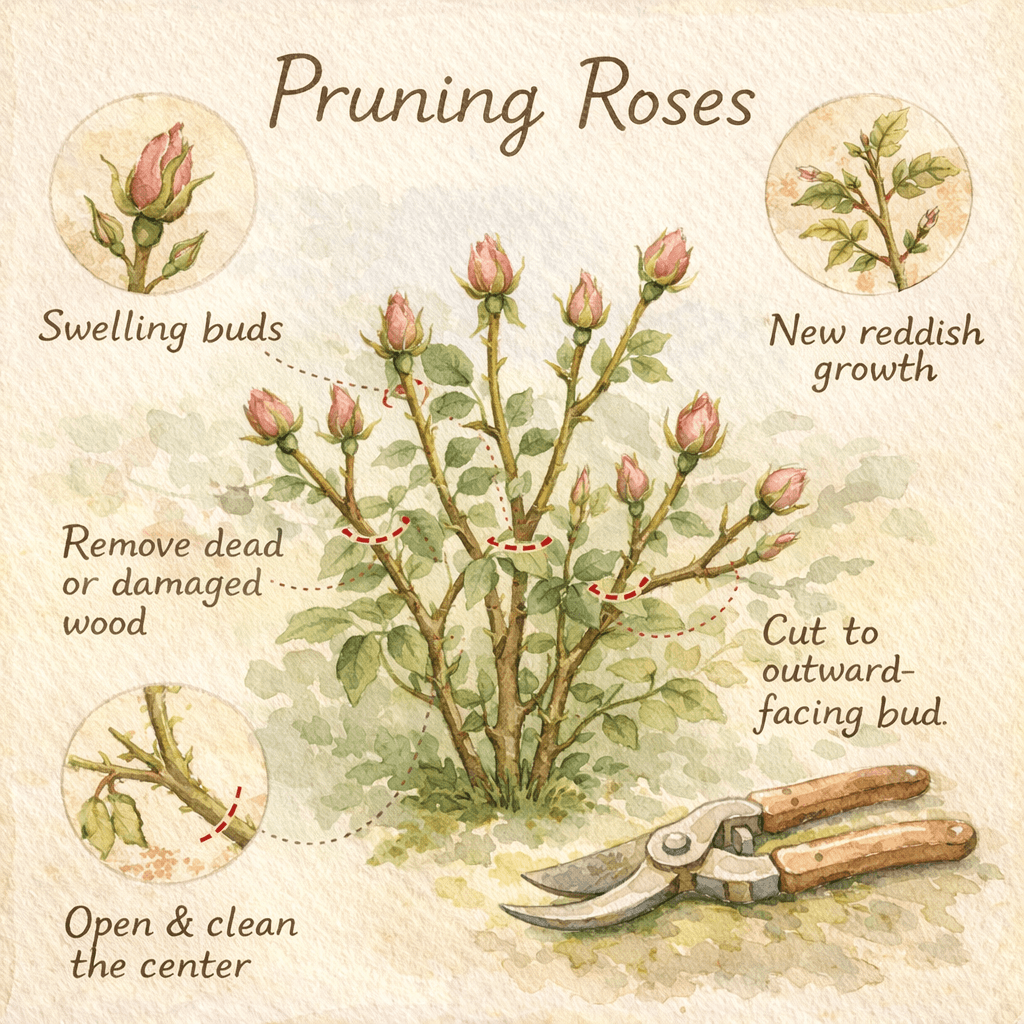
Swollen buds
Little red or green nubs along the canes begin to plump up.
A hint of reddish growth
New shoots may just be starting to show.
Forsythia in bloom
In the PNW, blooming forsythia is the classic signal that it’s time to prune roses.
When you see bright yellow shrubs lighting up neighborhoods in March? Grab your pruners.
How to Prune Roses (Without Overthinking It)
You don’t need to be aggressive. You just need to be intentional.
- 1
Remove the 3 D’s
- Dead
- Diseased
- Damaged
Cut back to healthy green wood.
- 2
Cut to an outward-facing bud
This encourages the plant to grow outward rather than into a tangled center.
- 3
Open the center
Aim for a vase shape. Airflow matters in our damp climate.
- 4
Use clean, sharp tools
Wipe blades between plants to reduce disease spread. That’s it. You don’t need perfection — roses are resilient.
What Happens If You Prune Too Early?
This is one of the biggest fears.
If you prune and we get a surprise cold snap:
New tips may get lightly damaged
You might lose a bit of early growth
But the plant will recover.
Roses are tougher than we give them credit for.
In Western Washington, the greater risk is often waiting too long and allowing dense, disease-prone growth to take off.
Rose Types & Timing Differences
Most modern garden roses can be pruned in late February or March, but there are a few nuances:
Hybrid Teas & Floribundas → Prune harder in early spring
Climbing Roses → If they bloom once in early summer, prune after flowering
Rugosa Roses → Light shaping is usually enough
Shrub Roses → Moderate pruning in early spring
If you’re unsure what type you have, start conservatively. You can always trim more later.
A Gentle PNW Reminder
In the Pacific Northwest, we garden in moisture.
That means pruning isn’t just about shape — it’s about:
Light
Air circulation
Preventing fungal issues
Think of pruning as opening windows inside the plant.
If You’re Standing There Wondering…
If you’re outside on a bright March morning, pruners in hand, asking:
Is it time?
Look at the buds.
If they’re swelling — yes.
Make the cuts. Step back. Trust the plant.
Spring is underway.
Related reads
A few more posts that pair well with this one.
Pacific Northwest Gardening Calendar (Zone 8a–8b)
→A month-by-month Pacific Northwest gardening calendar for Zone 8a–8b. What to plant, prune, and watch for in real PNW conditions.
Pruning Apple Trees in the Pacific Northwest
→A quiet winter guide to pruning apple trees in the Pacific Northwest, with diagrams, common mistakes, and shaping for light and airflow.
When and How to Prune Rhododendrons in the Pacific Northwest
→Learn when and how to prune rhododendrons in the Pacific Northwest, from deadheading and shaping to rejuvenating old, overgrown shrubs.
Not finding the answers?
Have a gardening question or topic you'd like me to write about? Send a request and I'll see what I can dig up.
Enjoying this post?
If you love the whimsy and want to support more PNW garden guides, you can buy me a coffee.
🌼 Buy Me a Coffee