
When to Start Seeds in Washington State

Starting seeds feels hopeful.
Tiny trays on a windowsill. Packets spread across the table. A sense that something is about to begin.
But in Washington State, timing matters more than enthusiasm.
In Washington, seed starting isn’t about racing spring — it’s about syncing with it.
Start too early, and you’ll have leggy plants outgrowing their pots before the soil is ready.
Start too late, and you miss the gentle cool-season window our climate does so well.
The good news? Once you understand your frost date and a few simple crop groups, seed starting becomes predictable — not stressful.
Washington State Is Not One Climate
The first thing to understand is this:
Washington isn’t one gardening zone.
Western Washington — from Bellingham to Seattle to Olympia — has:
Cool springs
Long damp winters
Mild summer heat
Generous cloud cover
Eastern Washington has:
Colder winters
Hotter summers
Lower humidity
Larger temperature swings
That means your last frost date is the anchor for everything.
If you’re not sure what yours is, start here:
→ Pacific Northwest Frost Dates
Once you know your last frost date, you can count backward with confidence.
Your Last Frost Date Is the Anchor
Most of Western Washington falls somewhere between late March and early May for the final frost.
Many gardeners around Seattle and Bellingham use:
Mid-April as a rough benchmark.
But check your specific city — even small elevation changes matter.
From there, you count backward based on the crop.
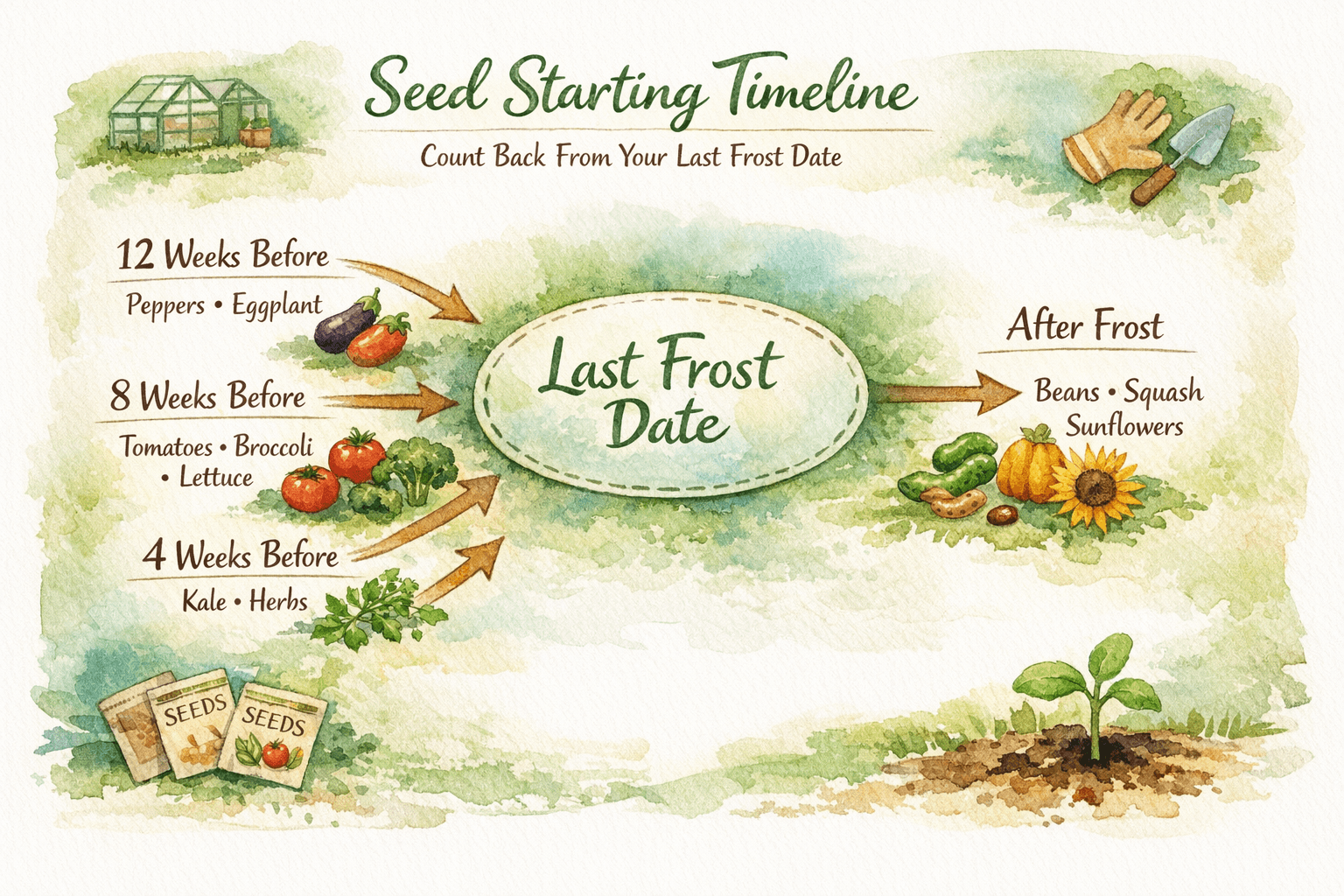
Seed Starting Timeline for Washington State
Below is a simplified, reliable framework for most Washington gardeners.
10–12 Weeks Before Last Frost
(Late January – February in much of Western WA)
Start indoors:
Peppers
Eggplant
Onions (from seed)
Some slow-growing flowers
These need a long head start because they germinate and grow slowly.
Important: You’ll need strong light. A bright window usually isn’t enough in February here.
6–8 Weeks Before Last Frost
(Late February – March for many Western WA gardens)
Start indoors:
Tomatoes
Broccoli
Cabbage
Cauliflower
Lettuce
Kale
Many herbs
This is the sweet spot for cool-season crops.
Start them too early, and they’ll sit root-bound waiting for soil to warm.
2–4 Weeks Before Last Frost
(March – April in much of Western WA)
Direct sow outside:
Spinach
Arugula
Peas
Carrots
Radishes
Our cool, moist spring soil actually favors these crops.
Just keep an eye on slug pressure — seedlings are vulnerable.
After Last Frost (and Soil Has Warmed)
Direct sow:
Beans
Squash
Cucumbers
Corn
Sunflowers
Even if the frost date has passed, cold soil can stall these.
If nights are still dipping into the 40s, waiting a week often pays off.
The calendar matters — but the soil temperature matters more.
Indoor vs Direct Sowing in Washington
Because our springs are cool and damp, not everything benefits from an indoor start.
In fact, some crops prefer being sown directly in the soil they’ll grow in.
Direct sow works beautifully for:
Root crops
Peas
Greens
Hardy annual flowers
Save indoor seed starting for:
Warm-season crops
Long-season crops
Plants you want an early head start on
Remember: indoor seed starting isn’t mandatory. It’s a tool.
Common Seed Starting Mistakes in the PNW
Starting Too Early
The biggest mistake.
Plants don’t benefit from sitting indoors in oversized pots waiting for May.
Not Enough Light
February in Washington is not bright enough for seedlings without help.
If stems stretch and fall over, it’s usually a light issue.
Overwatering
Our climate is already damp.
Seedlings prefer evenly moist soil — not soggy trays.
A Gentler Way to Think About Timing
You don’t need to start everything at once.
You don’t need 15 varieties.
You don’t need a heated greenhouse.
Start with one tray.
Start with one crop you love.
If it grows, you’ll feel capable.
And that’s more important than perfect timing.
Start with one tray. One crop. One small win
FAQ: When to Start Seeds in Washington State
- When should I start tomato seeds in Washington State?
Most gardeners in Western Washington start tomato seeds indoors 6–8 weeks before their last frost date — often in March. Eastern Washington gardeners may start slightly earlier depending on their frost date and growing season length.
- Can I start seeds in February in Washington?
Yes, but only certain crops. Slow-growing plants like peppers and onions benefit from an early February start indoors. Most vegetables, including tomatoes, do better started in March.
- When is it safe to plant seedlings outside in Washington?
It’s generally safe after your last frost date — but soil temperature matters too. Even without frost, cold soil can slow growth. Waiting until the soil warms slightly often results in stronger plants.
- Do I need grow lights to start seeds in Washington?
In late winter, natural light in Washington is usually not strong enough for sturdy seedlings. Grow lights help prevent leggy, weak plants, especially for crops started in February or early March.
- What vegetables can I direct sow in early spring in Washington?
Cool-season crops like peas, spinach, arugula, radishes, and carrots can often be sown directly into the soil 2–4 weeks before your last frost date.
Final Thought
Seed starting isn’t about racing the season.
In Washington, it’s about syncing with it.
The soil warms slowly. The light returns gradually. The rhythm is steady.
When you follow that rhythm instead of fighting it, seedlings feel less like a gamble — and more like a conversation with the season.
And that’s when gardening gets easier.
Related reads
A few more posts that pair well with this one.
What to Plant in March in Washington State (PNW Gardening Guide)
→Wondering what to plant in March in Washington State? A practical Pacific Northwest gardening guide covering vegetables, flowers, herbs, and trees you can plant now — indoors and out.
How to Start Seeds Indoors in the Pacific Northwest
→Learn how to start seeds indoors successfully in the Pacific Northwest. Simple beginner steps, lighting tips, soil advice, and common mistakes to avoid.
5 Easy Plants for Beginner Gardeners in the Pacific Northwest
→New to gardening in the PNW? These five easy, forgiving plants thrive in cool, rainy conditions and help beginner gardeners build confidence fast.
Not finding the answers?
Have a gardening question or topic you'd like me to write about? Send a request and I'll see what I can dig up.
Enjoying this post?
If you love the whimsy and want to support more PNW garden guides, you can buy me a coffee.
🌼 Buy Me a Coffee