


Why Your Tomato Plants Have Flowers but No Fruit
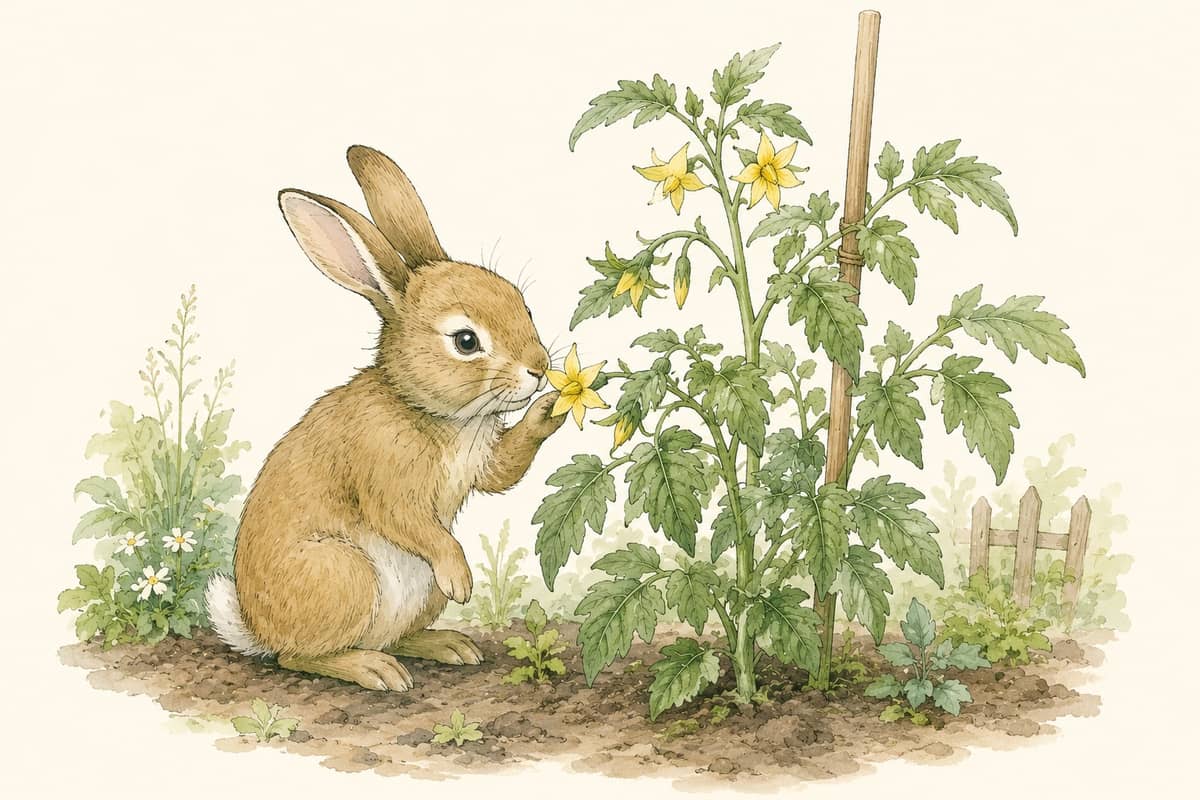
You finally have what you've been waiting for.
Your tomato plants are covered in bright yellow flowers.
A week passes.
Then another.
Still no tomatoes.
If you've found yourself checking the same flowers every morning wondering what they're waiting for, you're not alone.
The good news is that flowers are actually a great sign. They tell you your tomato plant is healthy enough to begin producing fruit.
The challenge is helping those flowers make the next step.
First, Don't Panic
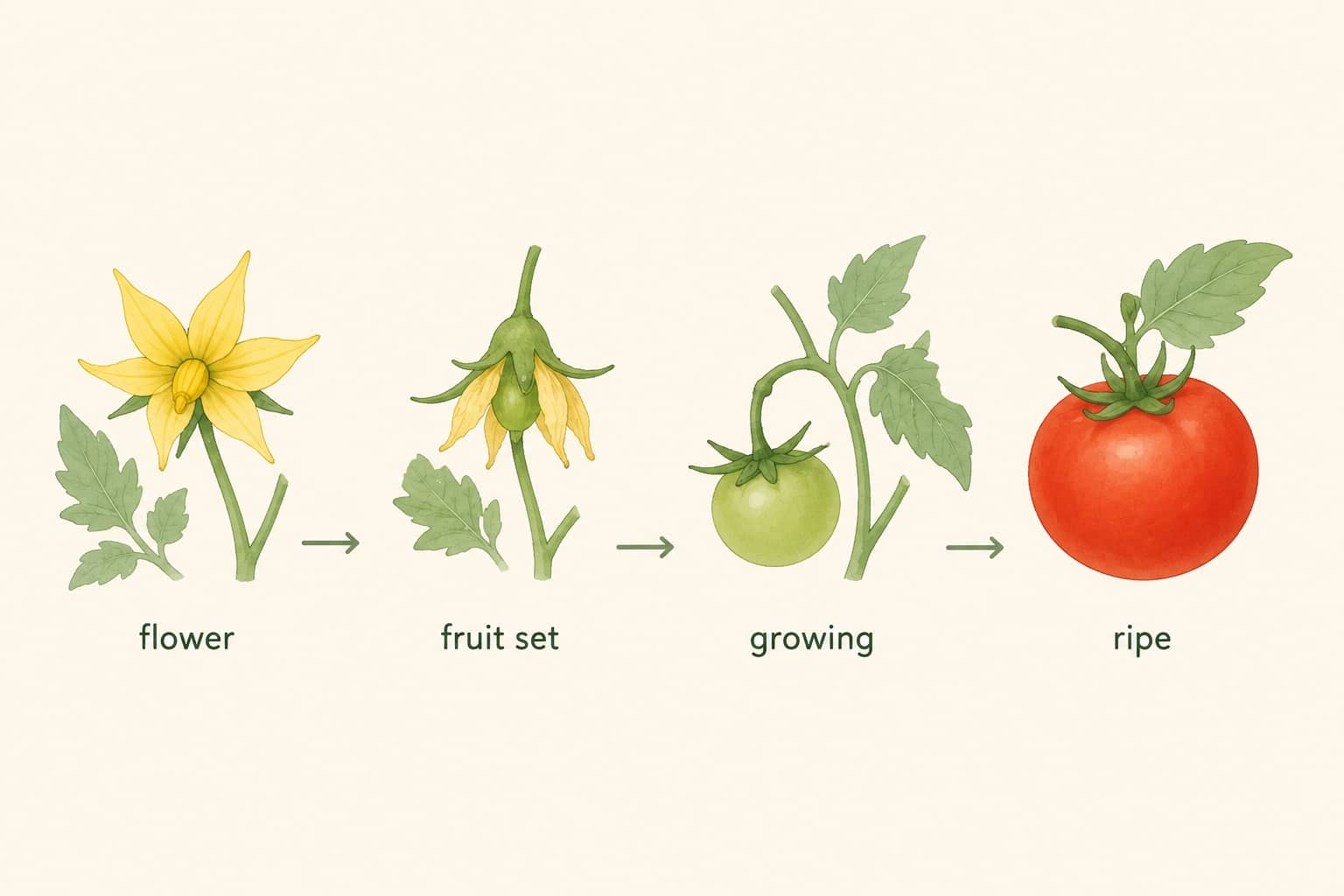
One of the biggest surprises for new gardeners is that flowers don't become tomatoes overnight.
After a flower is pollinated, it usually takes about a week before you notice a tiny green tomato beginning to form.
Sometimes it simply requires a little patience.
If flowers are dropping without leaving a tiny fruit behind, then it's worth looking a little closer.
Tomatoes Need Pollination
Unlike many fruit trees, tomato flowers contain both male and female parts.
They don't usually need bees to move pollen from flower to flower.
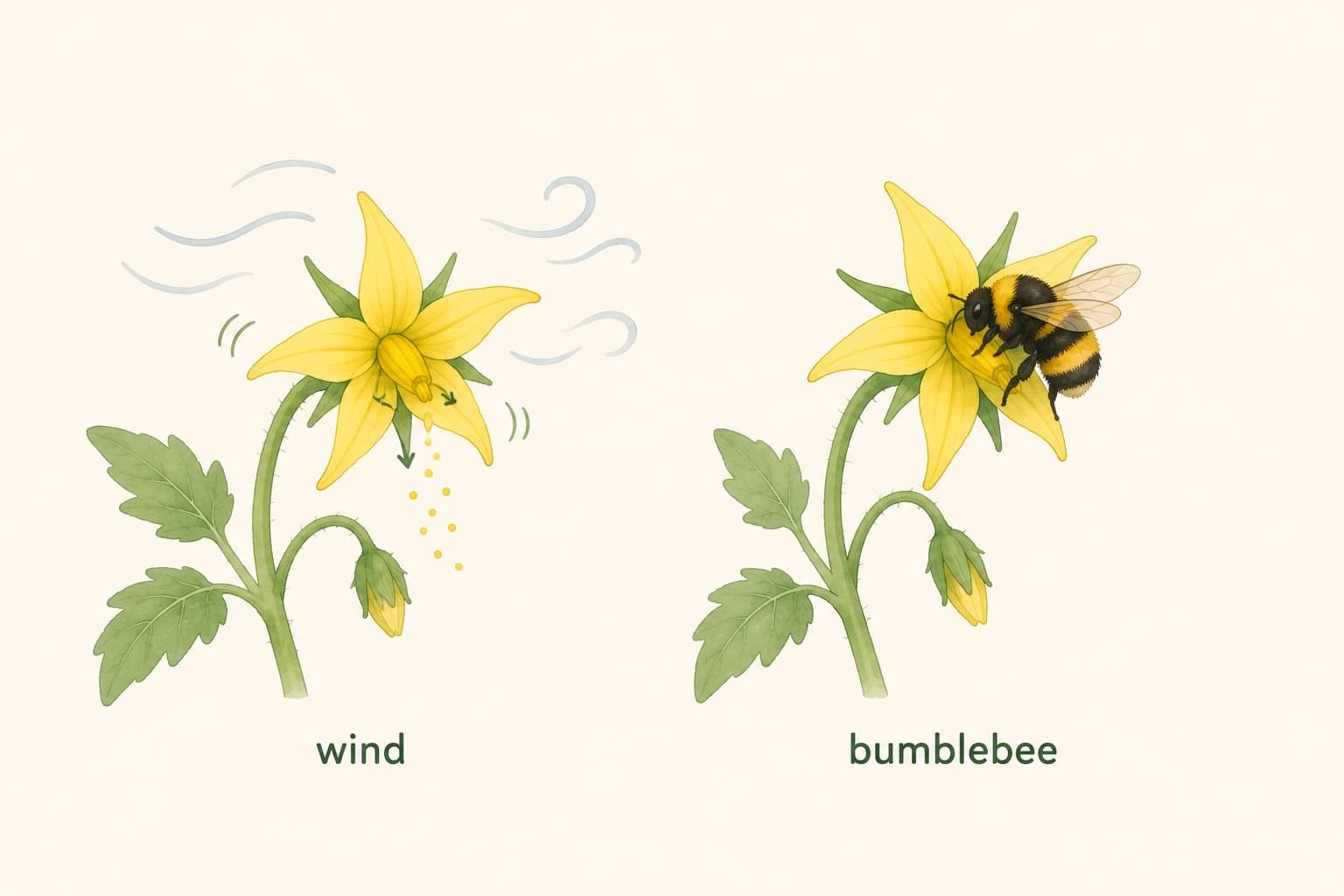
Instead, the pollen simply needs to be shaken loose inside the flower.
Wind often does the job.
So do visiting bees—especially bumblebees, whose buzzing naturally vibrates the flowers.
If your tomatoes are growing in a greenhouse or another sheltered area with very little airflow, pollination can sometimes be reduced.
A gentle shake of the flower clusters every few days can often help.
Temperature Matters More Than You Think
Tomatoes can be surprisingly fussy about temperature.
When daytime temperatures become very hot—or nighttime temperatures stay unusually warm—the pollen becomes less viable.
Flowers may bloom beautifully but fail to produce fruit.
In much of western Washington this isn't a constant problem, but it can happen during summer heat waves.
Fortunately, once temperatures become more favourable, new flowers usually begin setting fruit again.
Too Much Nitrogen
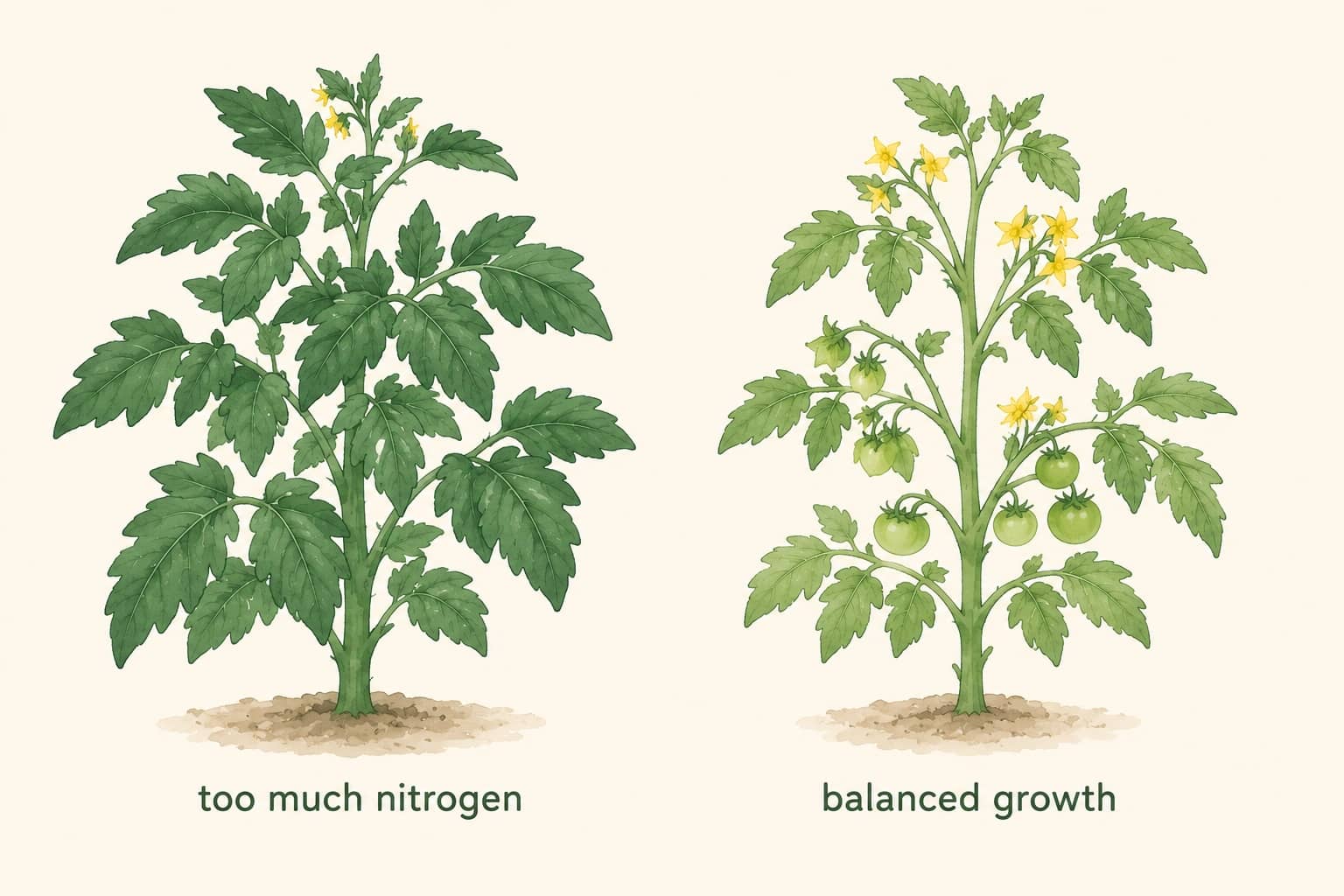
Large plants with deep green leaves often look impressive.
Sometimes they're actually growing too well.
Excess nitrogen encourages lush leafy growth instead of flowers and fruit.
If your tomato plant looks like a jungle but only has a handful of blossoms, fertilizer may be the culprit.
Choose a fertilizer formulated for tomatoes or fruiting vegetables rather than one designed primarily for leafy growth.
Inconsistent Watering
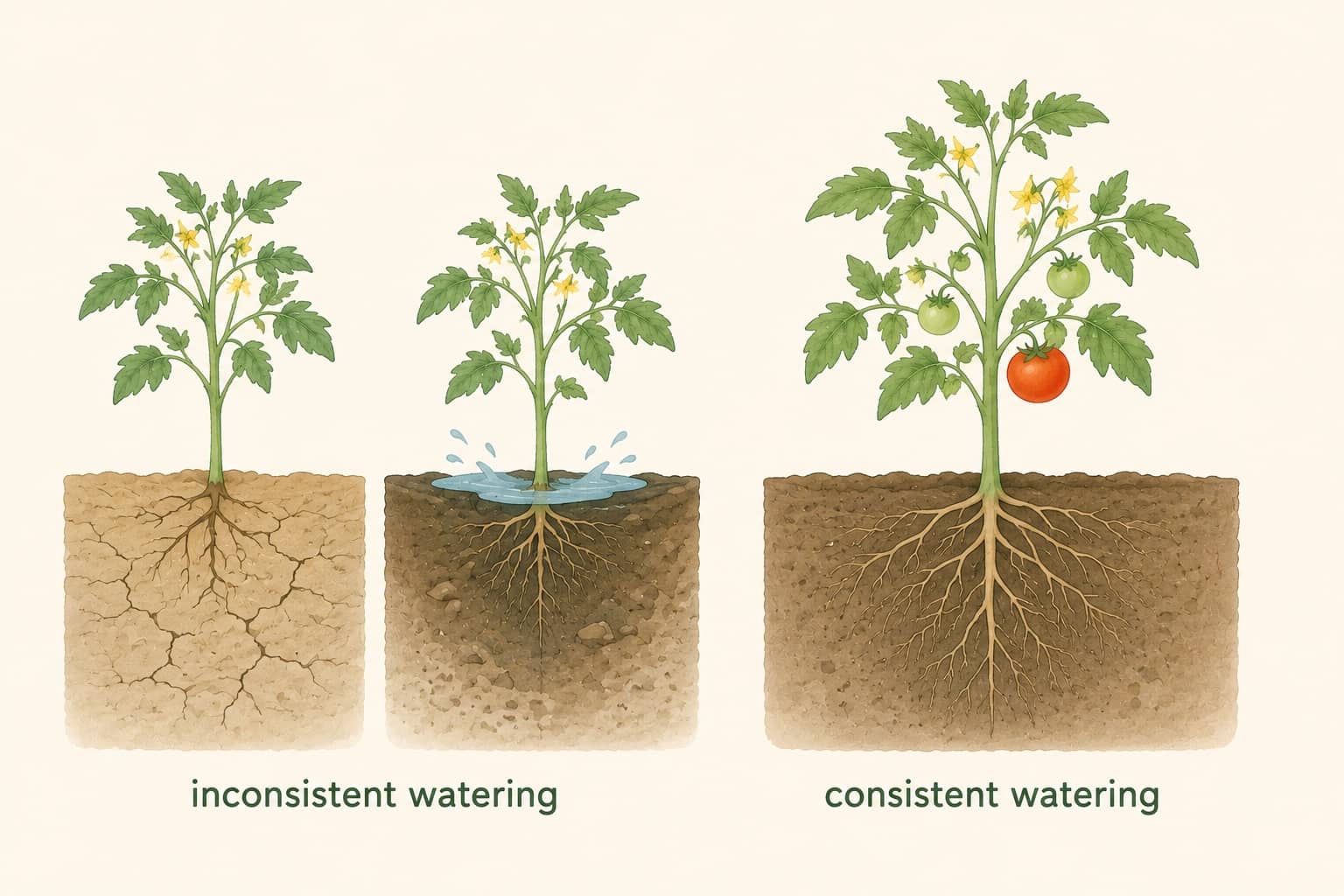
Tomatoes like consistency.
Repeated cycles of very dry soil followed by heavy watering can stress the plant.
That stress may reduce fruit set and contribute to later problems like blossom end rot.
Deep watering a few times each week is usually far more effective than frequent light watering.
Not Enough Sun
Tomatoes love sunshine.
Most varieties perform best with at least six to eight hours of direct sunlight each day.
Plants growing in too much shade often produce fewer flowers and less fruit.
If moving the plant isn't possible this year, it's something to keep in mind when choosing next year's planting location.
Sometimes the Plant Is Simply Young
It's easy to expect immediate results after the first flowers appear.
Many tomato plants simply need a little more time.
As long as the plant looks healthy and continues producing flowers, patience is often the best solution.
A Few Simple Ways to Improve Fruit Set
If your tomato plants have flowers but no fruit, try these simple steps:
Gently shake flower clusters every few days.
Water deeply and consistently.
Avoid overfeeding with nitrogen-rich fertilizers.
Make sure plants receive plenty of sun.
Encourage pollinators by planting nearby flowers.
Be patient—especially early in the season.
Final Thoughts
Seeing flowers without tomatoes can be frustrating, but it's rarely a sign that something is seriously wrong.
In most cases, your plants simply need the right combination of pollination, consistent watering, warm—but not scorching—weather, and a little time.
The flowers are already doing the hard work.
With a bit of patience, those tiny green tomatoes usually aren't far behind.
Related reads
A few more posts that pair well with this one.
Why Your Lettuce Suddenly Bolted (And What To Do About It)
→Wondering why your lettuce suddenly grew tall and turned bitter? Learn what causes lettuce to bolt in the Pacific Northwest and how to extend your harvest.
Beginner Raised Bed Garden
→Learn how to build a simple raised bed garden in the Pacific Northwest. Includes wood vs metal beds, where to place them, what soil to use, and easy crops for beginners.
What to Plant in August (Zone 8a & 8b Pacific Northwest Guide)
→Discover what to plant in August in the Pacific Northwest (Zone 8a & 8b). Find the best vegetables, herbs, and flowers to sow now for autumn and winter harvests.
Not finding the answers?
Have a gardening question or topic you'd like me to write about? Send a request and I'll see what I can dig up.
Enjoying this post?
If you love the whimsy and want to support more PNW garden guides, you can buy me a coffee.
🌼 Buy Me a Coffee