


Why Your Garden Needs Structure Before Plants
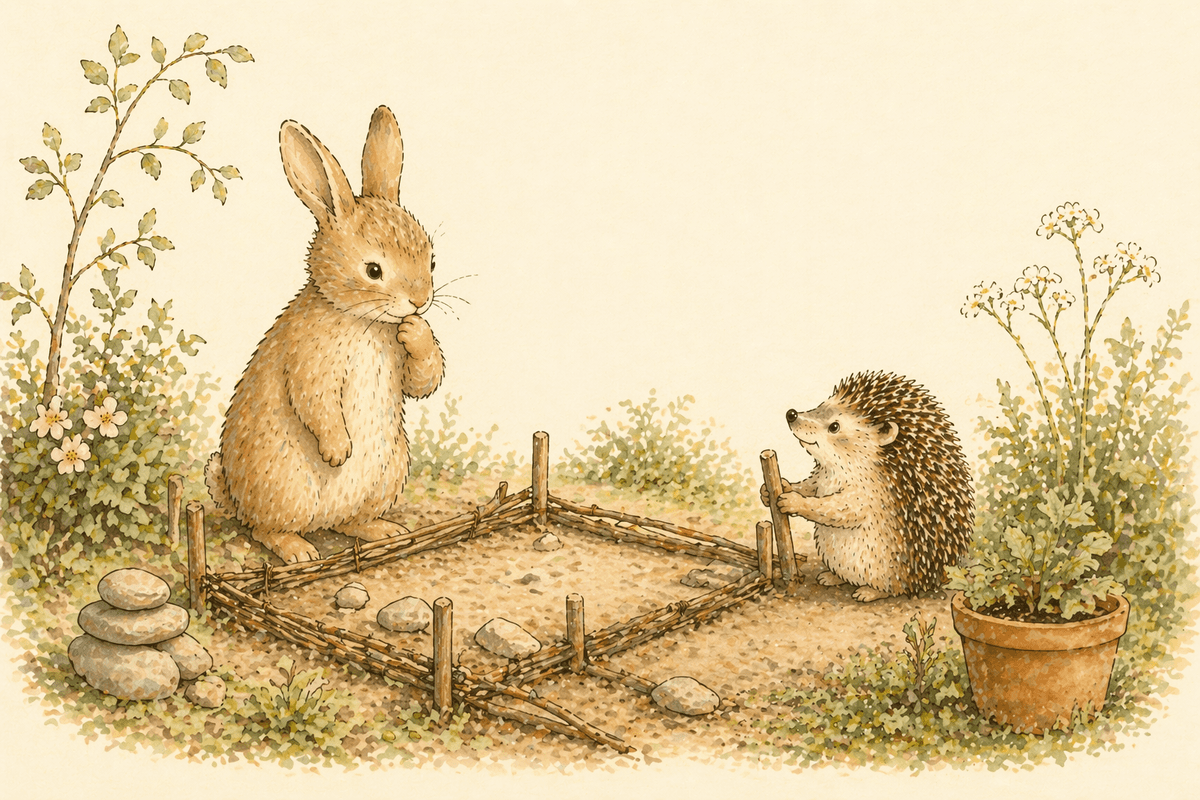
There’s a moment, after you’ve sketched your garden, where it all starts to feel possible.
You’ve got shapes.
You’ve got ideas.
You’ve even got a rough sense of where things might go.
And then the question appears:
“Should I start planting?”
Not yet.
The Part Most People Skip
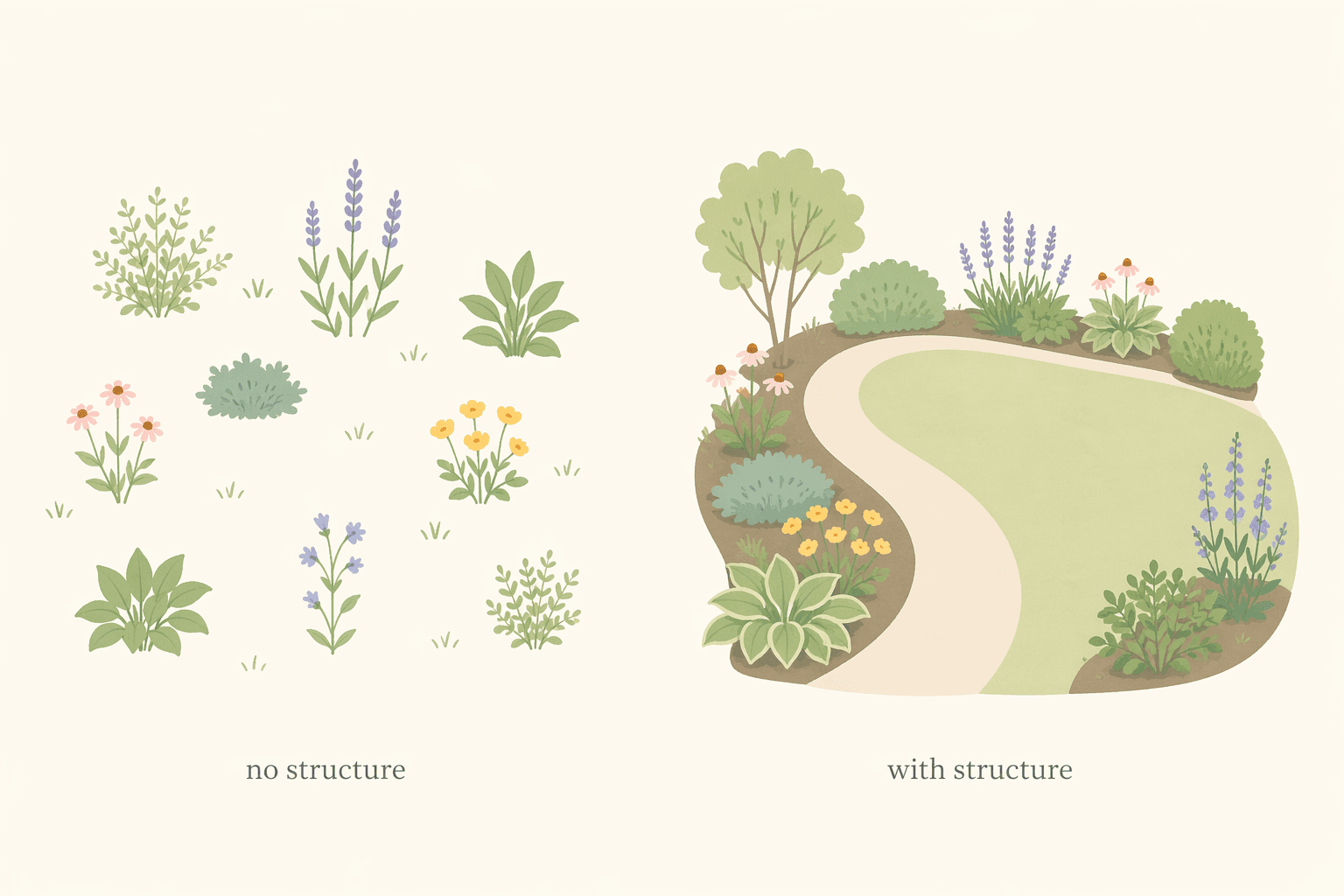
Most beginner gardens don’t fail because of bad plants.
They fail because there’s no structure.
Plants get added:
here and there
a bit randomly
wherever there’s space
And over time, the garden starts to feel:
messy
hard to move through
slightly confusing
Not because anything is wrong—
but because nothing is holding it together.
What Are “Garden Bones”?
Think of bones as the parts that don’t move.
The structure that stays in place while everything else grows around it.
Simple things like:
Paths
Edges
Seating areas
Raised beds
A tree in the right spot
They don’t have to be complicated.
They just have to be decided first.
Why This Matters So Much
When you place the structure first:
You know where to walk
You know where not to plant
You naturally create flow
Everything starts to feel intentional
Without it, planting becomes guesswork.
With it, planting becomes easy.
Step 1: Start With How You Move
Before anything else, look at your sketch and ask:
“How will I move through this space?”
Where do you enter?
Where do you naturally walk?
Where do you want to end up?
A path doesn’t have to be formal.
It can be:
stepping stones
worn grass
mulch
even just a line you don’t plant across
But it should exist.
What Good Paths Feel Like
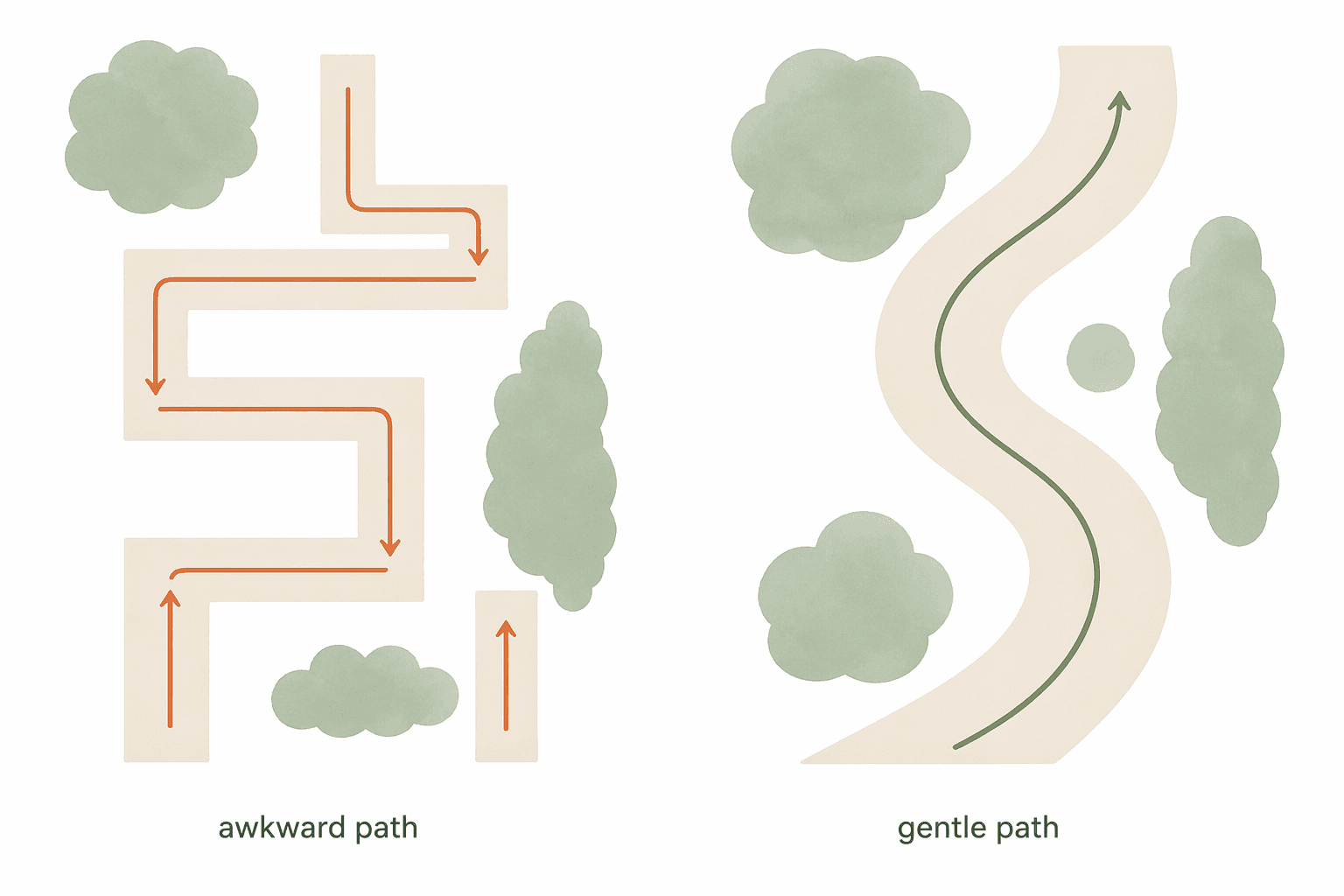
Paths should feel natural.
They should:
curve gently
lead somewhere
invite you forward
You shouldn’t have to think about where to walk.
Your body should just… go.
Step 2: Place a “Stopping Point”
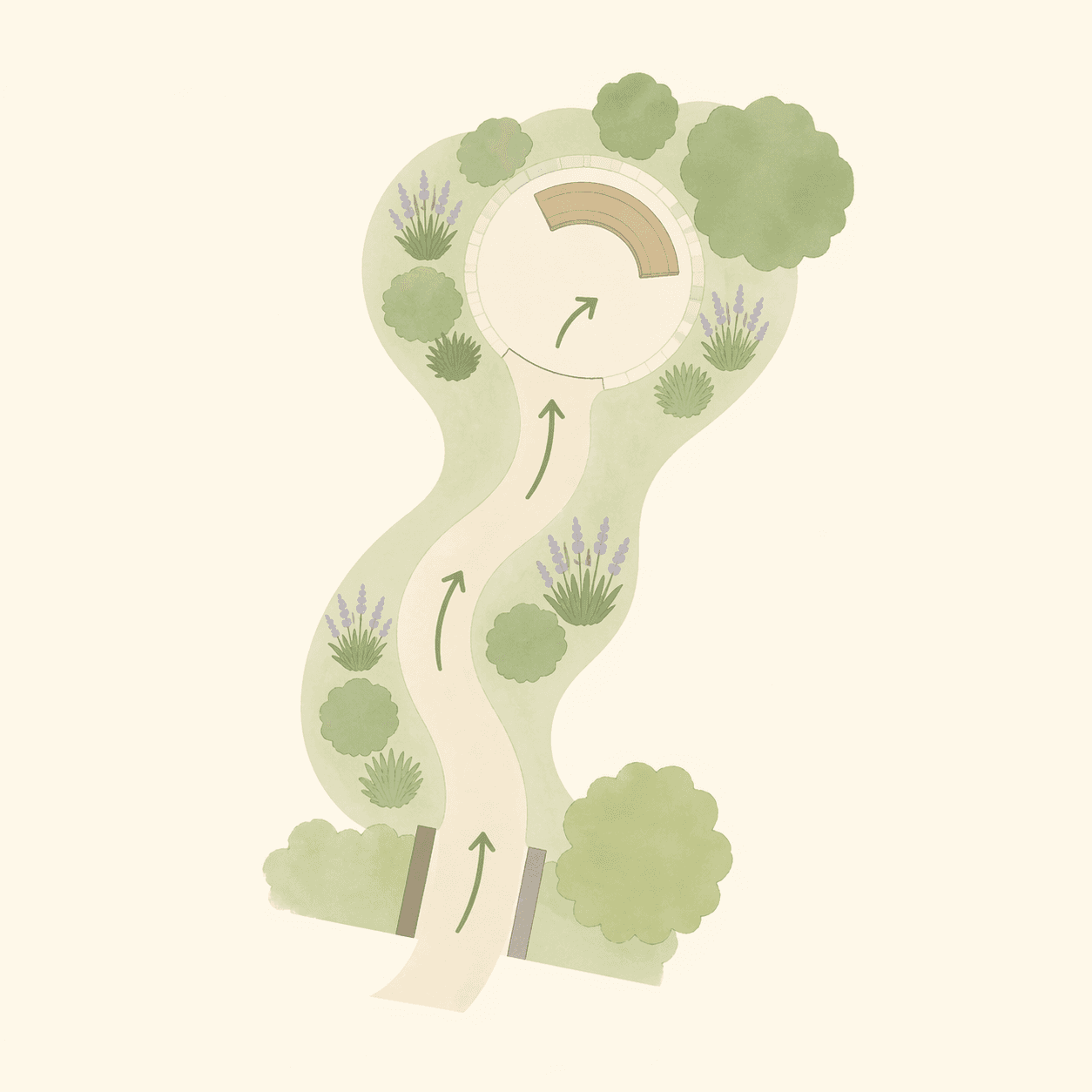
Every garden needs somewhere to pause.
A place to sit, stand, or just look.
It could be:
a bench
a chair
a pot
a tree
Something that gives the space a sense of purpose.
Without it, a garden can feel like something you pass through.
With it, it becomes somewhere you go.
Step 3: Define the Edges
This is one of the simplest—and most powerful—things you can do.
Edges tell your garden:
“This is where something begins.”
They can be:
a curved bed line
stones
wood
a shift from lawn to planting
Without edges:
things blur together
With edges:
everything feels intentional
Step 4: Leave Space
This is the part that feels wrong—but matters most.
Don’t fill everything.
Leave:
open ground
breathing room
space for things to grow
A garden that starts a little empty will always feel better than one that starts overcrowded.
A Simple Way to Think About It
Before plants, your garden should have:
A way to move
A place to pause
A sense of boundary
That’s it.
Everything else comes after.
What Comes Next
In the next post, we’ll finally start planting.
But not everything.
We’ll start with the big plants first—the ones that anchor the whole space and make everything else easier.
A Gentle Reminder
You don’t need to build everything at once.
Even one path…
one edge…
one place to sit…
Is enough to begin shaping your garden.
And once the bones are there, everything else starts to fall into place
Related reads
A few more posts that pair well with this one.
Planting the Big Stuff First (And Why It Matters)
→Start your garden the right way by planting trees and shrubs first. Learn how anchor plants shape your space and make everything else easier.
Sketching Your Garden (Badly Is Perfect)
→Struggling to plan your garden? Learn how to sketch a simple, imperfect layout that helps you finally get started—no design skills needed.
Where Do I Even Start With My Garden? (A Simple First Step Guide)
→Feeling stuck with an empty yard? Learn how to start your garden the right way with two simple steps—no overwhelm, no plant lists, just a clear place to begin.
Enjoying this post?
If you love the whimsy and want to support more PNW garden guides, you can buy me a coffee.
🌼 Buy Me a Coffee