
Understanding Your Garden Space

Sun, shade, soil — and how to read your space
When you first step into your garden, it can feel like a blank page.
Or worse — like a puzzle you’re not qualified to solve.
But here’s the quiet truth:
Your garden is already telling you what it wants.
You just need to learn how to read it.
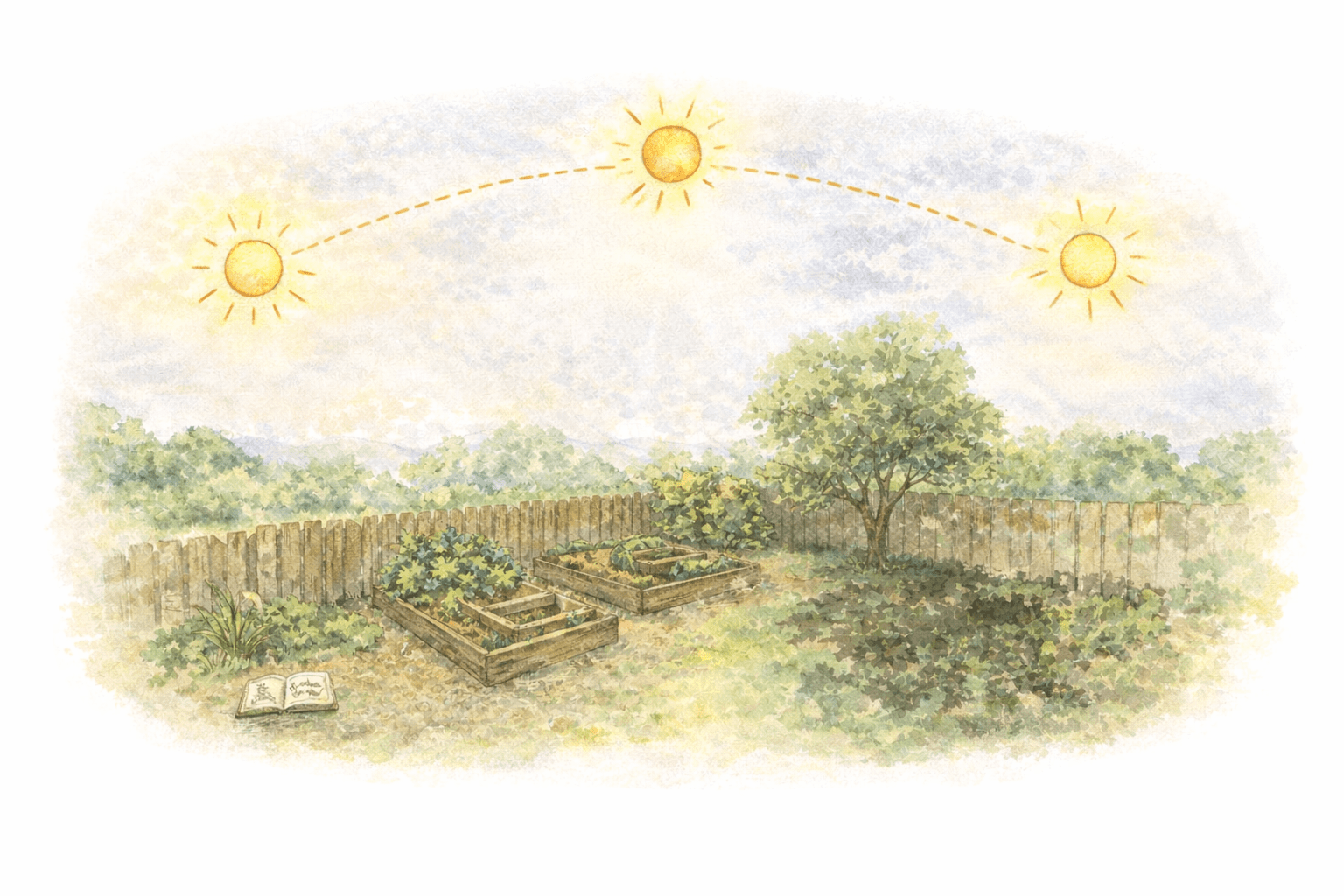
Step One: Follow the Light
Before you plant anything, watch the sun.
Spend a few days noticing:
Where does the morning light fall?
Which areas are bright at noon?
What stays shaded all afternoon?
In the Pacific Northwest, light matters more than we think. Our growing season is generous — but our direct sun can be limited, especially in spring.
A small yard can hold:
One warm, bright corner perfect for tomatoes
A dappled strip that loves ferns
A shady north fence that stays cool and mossy
Resist the urge to change the light.
Instead, plant for it.
Plant for the light you have — not the light you wish you had.
Step Two: Notice the Shade (It’s Not a Problem)
Shade is not a flaw.
It’s a feature.
There are different kinds of shade:
Full shade (very little direct light)
Part shade (morning or late-day sun)
Dappled shade (light filtered through trees)
Many gardens in the PNW are naturally part-shade gardens. That’s not limiting — it’s lush.
Think:
Hellebores
Japanese forest grass
Hydrangeas
Foxgloves
Ferns
Instead of fighting your shade, build a garden that belongs to it.
Shade is not a limitation. In the Pacific Northwest, it’s a gift
Step Three: Get Curious About Soil (Gently)
You don’t need lab tests on day one.
Start with your hands.
Pick up a small handful of soil and notice:
Is it sandy and crumbly?
Sticky like clay?
Dark and rich?
Full of worms?
Healthy soil smells earthy — like a forest floor after rain.
If you want a deeper dive, I’ve written more about identifying soil types in the Pacific Northwest here:
👉 Understanding Your Soil Types
But for now, just observe.
Observation builds better gardens than impulse buying ever will.
Step Four: Watch the Microclimates
Every garden has quiet little weather zones.
You might have:
A wind tunnel near a side fence
A heat-reflecting wall
A soggy corner that never quite dries
A sheltered patio that stays warm
These microclimates matter.
That warm wall might grow figs.
That soggy corner might love astilbe.
That windy spot might need shrubs for protection.
Instead of leveling your garden into sameness, work with its differences.
Step Five: Start Small
You don’t need to “design the whole garden” right now.
Start with one bed.
One border.
One container.
Watch what happens over a season.
What thrives?
What struggles?
Where does water collect?
Where do birds gather?
Gardening is not solved in a weekend.
It’s learned over time.
Your first season isn’t about building a garden. It’s about learning to see it.
A Gentle Reminder
Your first season is not about perfection.
It’s about awareness.
Before you plant:
Stand in your space in the morning.
Stand in it at dusk.
Notice where the light falls.
Notice where the wind moves.
Notice what already grows well.
Your garden is already halfway written.
You’re just filling in the rest.
🌼 Looking for easy starter plants?
→ 5 Easy Plants for Beginner Gardeners in the Pacific Northwest
Related reads
A few more posts that pair well with this one.
PNW 3-Pot Starter Garden (Beginner Project You Can’t Mess Up)
→Start gardening in the Pacific Northwest with this foolproof weekend project: three easy pots—herbs, pollinators, and shade plants—with a shopping list, watering plan, and simple troubleshooting.
What to Plant in August (Zone 8a & 8b Pacific Northwest Guide)
→Discover what to plant in August in the Pacific Northwest (Zone 8a & 8b). Find the best vegetables, herbs, and flowers to sow now for autumn and winter harvests.
Garden Mistakes I Still Make Every June
→Even experienced gardeners make mistakes. Here are the common June gardening mistakes I still catch myself making in the Pacific Northwest—and what I'm trying to do differently.
Not finding the answers?
Have a gardening question or topic you'd like me to write about? Send a request and I'll see what I can dig up.
Enjoying this post?
If you love the whimsy and want to support more PNW garden guides, you can buy me a coffee.
🌼 Buy Me a Coffee