


How to Start Seeds Indoors in the Pacific Northwest
Starting seeds indoors sounds complicated.
Heat mats. Grow lights. Domes. Labels. Charts.
But here’s the truth:
You only need a few simple things — and a little patience — to grow strong seedlings in a Pacific Northwest home.
Let’s walk through it step by step.
“You don’t need a greenhouse. You need light, patience, and a little consistency.”
Step 1: What You Actually Need (Not the Fancy Stuff)
Basic Seed Starting Supplies
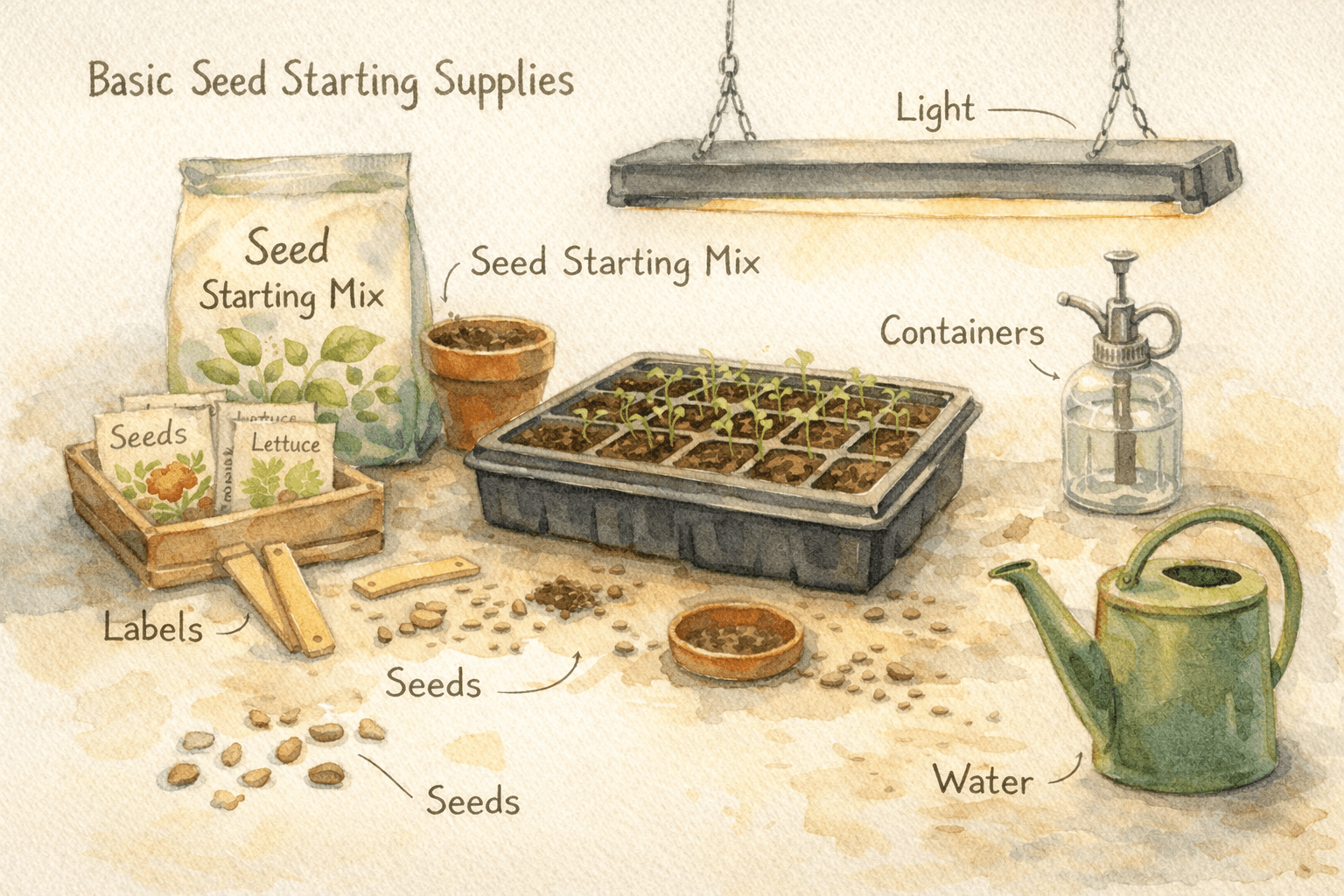
You need:
Seed starting mix (not garden soil)
Containers (cell trays, small pots, or even yogurt cups with holes)
Seeds
Light
Water
Labels (trust me)
That’s it.
PNW Tip:
Because our late winter light is weak and gray, a simple grow light makes a huge difference.
You can try a bright south-facing window — but expect leggy seedlings without supplemental light.
Step 2: Choosing the Right Soil (This Is Important)
Do not use garden soil.
Use seed starting mix — it’s lighter, drains well, and reduces disease risk.
Look for:
Fine texture
No big chunks of bark
Good drainage
Avoid:
Heavy compost
Potting soil with large wood chips
Anything labeled “moisture control”
Step 3: When to Start Seeds (In the PNW)
In western Washington (Zone 8a-ish), most seeds are started:
6–8 weeks before last frost
Typically February–April
For exact timing, see:
Step 4: How to Plant the Seeds
The Actual Process
- 1
Fill containers with moist (not soaking) seed mix
Add seed starting mix to your trays or pots, then lightly moisten it before planting. The soil should feel like a wrung-out sponge — damp, but not dripping. Starting with evenly moist soil helps seeds germinate more consistently and prevents dry pockets later.
- 2
Gently Firm the Soil
Use your fingers to lightly press the soil down. You’re not compacting it — just creating a level, stable surface so seeds don’t sink unevenly after watering. Think gentle, not packed tight.
- 3
Plant at the Proper Depth
Check the seed packet for guidance. A simple rule: plant seeds about twice as deep as they are wide. Very tiny seeds often need light to germinate — press them into the surface instead of burying them.
- 4
Cover Lightly (If Needed)
If the seed requires covering, sprinkle a thin layer of seed mix over the top. Don’t bury seeds deeply — most struggle to push through heavy soil. When in doubt, lighter is better.
- 5
Water Gently
Mist the surface or water carefully so you don’t displace seeds. Bottom watering works beautifully: place trays in a shallow container of water and let the soil absorb moisture from below. This keeps seeds in place and reduces mold issues — especially helpful in our damp Pacific Northwest homes.
Step 5: Light — The Most Common Mistake
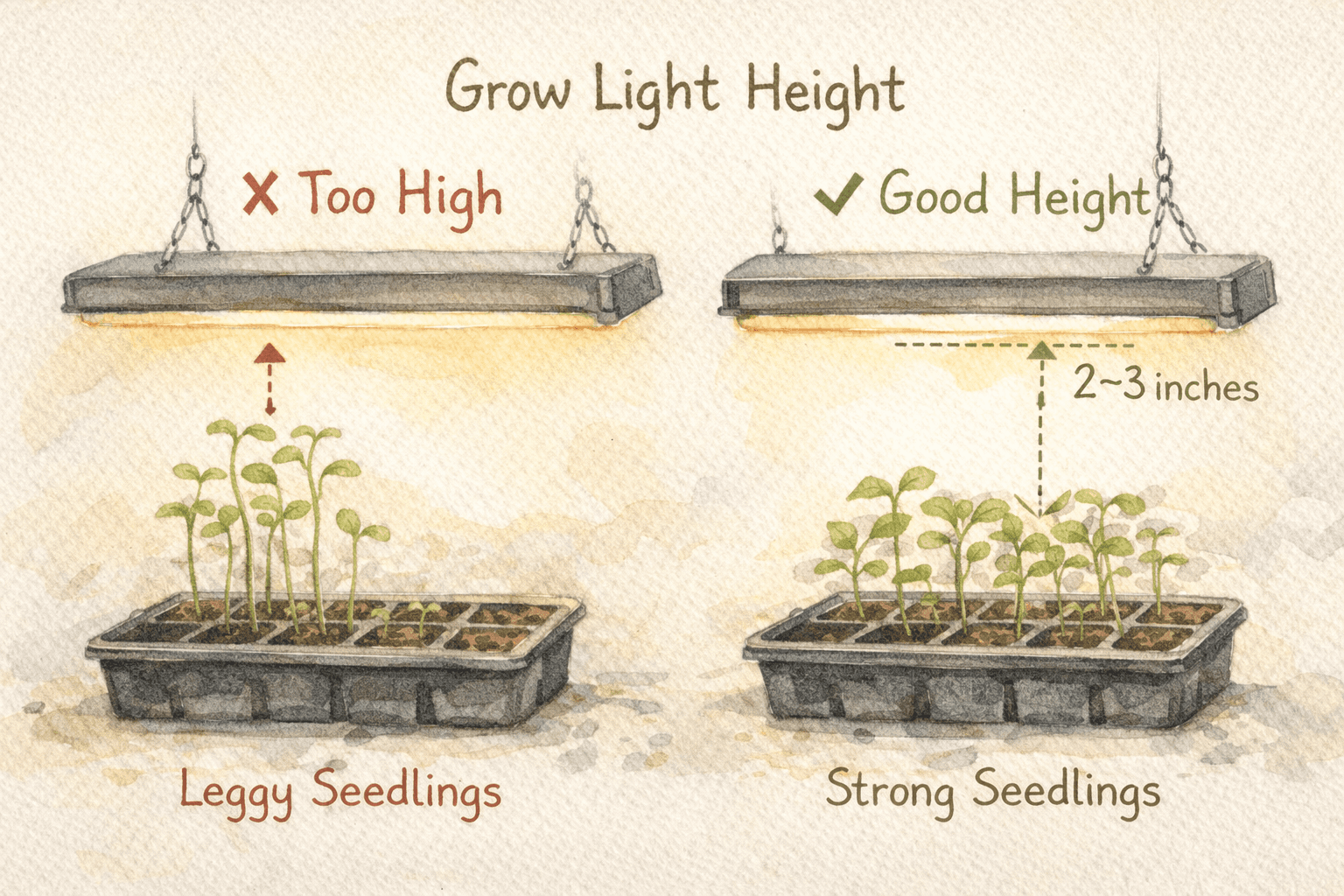
This is where most beginners struggle.
Seedlings need:
12–16 hours of bright light daily
Light positioned 2–3 inches above plants
Lights raised as plants grow
Without enough light:
They stretch
They flop
They fail
“Leggy seedlings usually need more light — not more water.”
PNW Reality:
March light here is not Texas light.
Don’t feel bad about using a simple LED shop light.
Step 6: Watering (The Gentle Way)
Keep soil:
Evenly moist
Never soggy
Never bone dry
Bottom watering works beautifully:
Place trays in shallow water and let them absorb from below.
This reduces mold and fungus gnats — common in damp PNW homes.
“Damp like a wrung-out sponge — never soggy, never dry.”
Step 7: Hardening Off (Do Not Skip This)
Before transplanting outdoors:
Expose seedlings gradually to:
Outdoor light
Wind
Temperature swings
Start with:
1 hour outside
Increase daily for 7–10 days
Skipping this step = shocked, sad plants.
Common Beginner Mistakes
Starting too early
Not enough light
Overwatering
Forgetting labels
Letting seedlings dry out once
Prefer a Printable Version?
Starting seeds is simple — but it’s easy to forget a step.
Download the Odd Garden Seed Starting Checklist (Pacific Northwest Edition)(PDF) and keep it beside your trays this spring.
What’s Easy to Start Indoors in the PNW?
Great beginner seeds:
Tomatoes
Peppers
Lettuce
Kale
Calendula
Basil
“Some seeds will fail. That’s not failure — that’s gardening.”
Gentle Encouragement
Some seeds will fail.
That’s normal.
Seed starting is not about perfection — it’s about learning your light, your timing, your rhythm.
The Pacific Northwest rewards patience.
Related reads
A few more posts that pair well with this one.
How to Start Gardening in the Pacific Northwest | Beginner Guide
→New to gardening in the Pacific Northwest? Learn how to start with climate, soil, and simple beginner wins—perfect for Zone 8a gardeners in Washington and Oregon.
The 10 Plants That Thrive on Neglect
→Looking for low-maintenance plants? These 10 hardy favorites tolerate drought, poor soil, and a little neglect—perfect for busy gardeners in the Pacific Northwest.
Garden Mistakes I Still Make Every June
→Even experienced gardeners make mistakes. Here are the common June gardening mistakes I still catch myself making in the Pacific Northwest—and what I'm trying to do differently.
Not finding the answers?
Have a gardening question or topic you'd like me to write about? Send a request and I'll see what I can dig up.
Enjoying this post?
If you love the whimsy and want to support more PNW garden guides, you can buy me a coffee.
🌼 Buy Me a Coffee